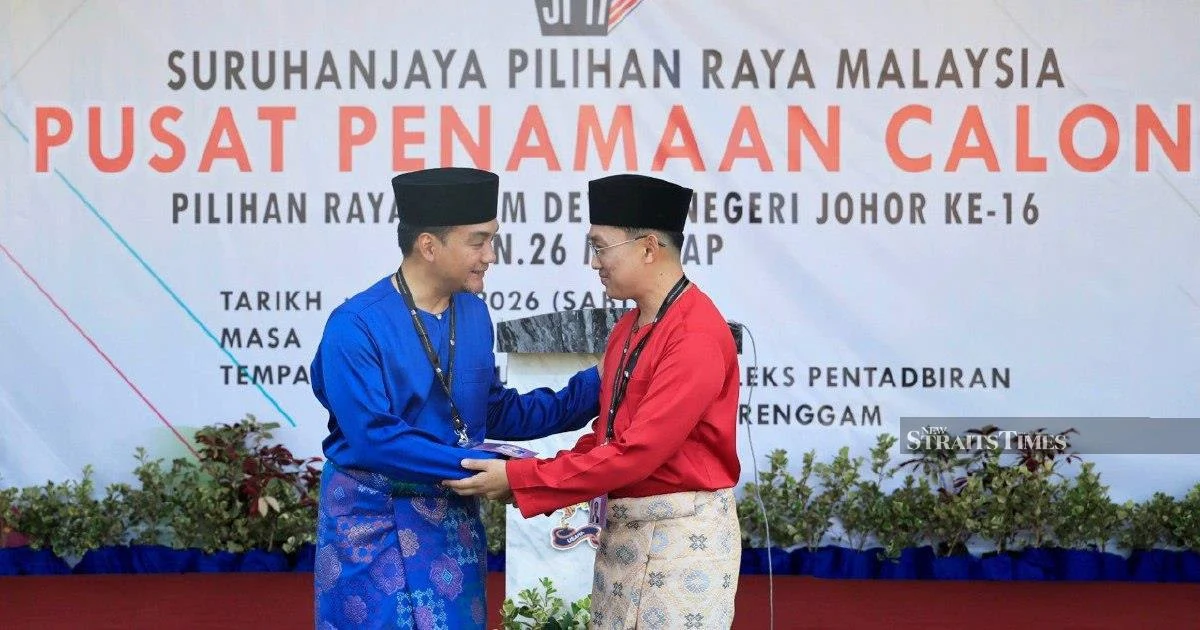
Caretaker Menteri Besar Datuk Onn Hafiz Ghazi has expressed wariness about the forthcoming Johor state election, acknowledging that outcomes remain fluid even as he campaigns for re-election. Speaking in Simpang Renggam, Onn Hafiz indicated that the Machap constituency race defies easy prediction, a candid assessment that underscores the genuine competitive challenges facing his bid for a second term in the July 11 poll.
The cautious tone reflects shifting electoral dynamics in Johor, Malaysia's strategically important southern state. While holding the Menteri Besar position provides institutional advantages, recent polling trends and voter sentiment suggest that complacency could prove costly. Onn Hafiz's acknowledgment that "anything can happen" signals his campaign team recognises the unpredictability of contemporary Malaysian politics, where traditional voting patterns have become less reliable.
Machap, located within Onn Hafiz's electoral sphere of influence, holds significance beyond its local constituency boundaries. The seat has become a bellwether for broader patterns in Johor state politics, and performance here will partly determine overall election momentum. Competition in the seat has intensified, with opposition parties mobilising resources and grassroots support to mount serious challenges against the incumbent administration.
Onn Hafiz's political trajectory has been marked by efforts to consolidate Johor under a stable administrative framework following years of turbulent factional conflict. His previous election victory demonstrated voter appetite for continuity, yet the passage of time since then has altered political calculations. Youth demographics have shifted, economic anxieties have mounted, and public service delivery expectations have evolved substantially.
The election framework itself presents complexity. Malaysia's multi-party system means that votes can fragment across numerous candidates, with no single party guaranteed dominance. Regional variations in ethnic composition, urban-rural divides, and community-specific concerns all contribute to unpredictable electoral outcomes. Machap, in particular, encompasses diverse demographic clusters with distinct priorities and grievances.
Onn Hafiz's caution also reflects prudent campaign strategy. Projecting overconfidence invites voter backlash and can suppress turnout among supporters who assume victory is assured. By emphasising electoral uncertainty, the caretaker Menteri Besar encourages his coalition's base to mobilise fully and discourages complacency. This rhetorical approach has proven effective in previous Malaysian electoral contests.
The July 11 election carries implications beyond Johor's borders. The state accounts for significant representation in Malaysia's political architecture, and results will be closely analysed nationally as indicators of broader governmental support. Strong performance could strengthen Onn Hafiz's position for future roles, whilst setbacks might reshape Johor's political trajectory and influence federal-level coalition dynamics.
Opposition mobilisation has been notably vigorous in recent months. Multiple parties have invested in campaign infrastructure, candidate selection, and voter engagement programmes specifically targeting constituencies like Machap. This elevated competitive intensity contrasts with periods when Johor politics were dominated by single-party dominance. Contemporary voters increasingly perceive themselves as having genuine choices, which fundamentally alters electoral mathematics.
Onn Hafiz's administration has pursued specific policy initiatives aimed at addressing voter concerns around economic opportunity, infrastructure development, and educational access. These efforts form the substantive foundation for his re-election campaign. However, implementation effectiveness and public perception of results remain separate matters, and voter satisfaction cannot be assumed even where government projects have been completed.
The caretaker period itself introduces distinctive pressures. During these inter-election phases, incumbent administrations face constraints on announcing new initiatives or making major announcements, a restriction designed to ensure electoral fairness. This limitation reduces opportunities for Onn Hafiz to shape campaign narratives through policy announcements, forcing reliance on past performance and personal political capital.
Malaysian electoral history demonstrates that voter behaviour increasingly reflects immediate concerns and evaluations of incumbent performance rather than historical party loyalty. Onn Hafiz's acknowledgment of electoral unpredictability aligns with contemporary political realities where established political advantages can evaporate when underlying voter sentiment shifts. His measured approach suggests realistic assessment rather than mere political caution.
The Machap constituency itself encompasses communities with varying demographic profiles and economic circumstances. Urban areas within the seat likely display different voting preferences compared to suburban or rural zones. Managing these heterogeneous constituencies simultaneously represents genuine organisational challenge, particularly when opposition parties effectively targeted specific demographic segments.
As the July 11 election approaches, Onn Hafiz's campaign will intensify efforts to convert cautious optimism into concrete electoral performance. His frank acknowledgment that outcomes remain uncertain may ultimately prove strategically advantageous by galvanising supporter participation and maintaining campaign momentum throughout the final weeks before polling day.

