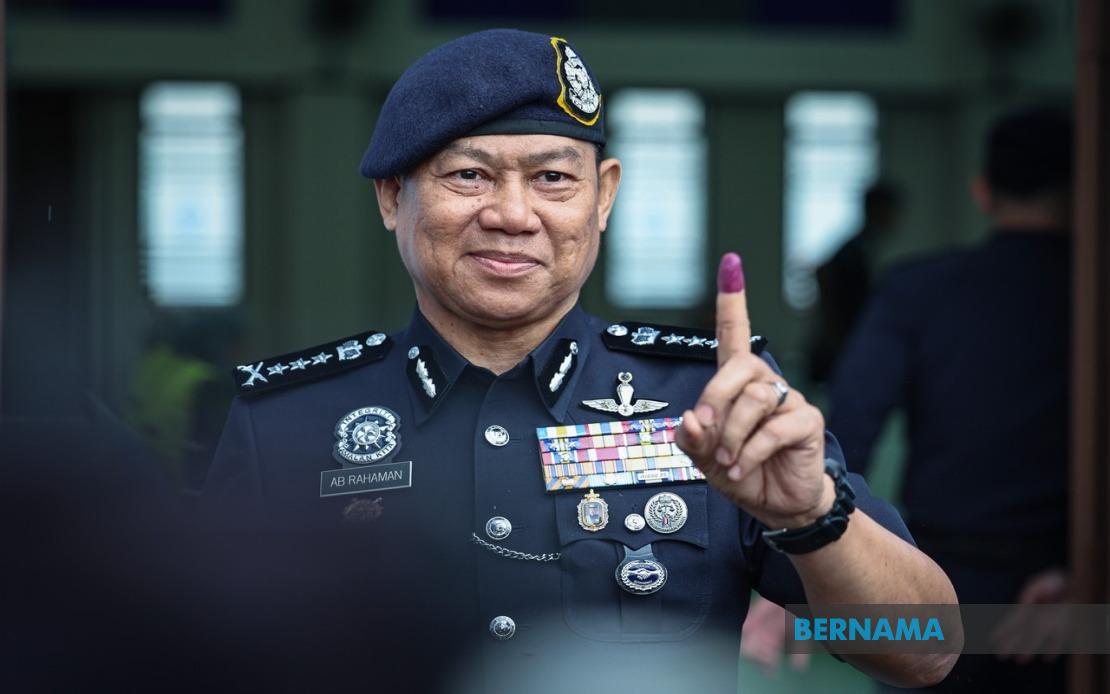
Early voting in Johor's 16th state election proceeded smoothly on July 7, with police personnel demonstrating brisk participation in the preliminary balloting phase. By 10.30 am, some 4,257 officers from the Johor police force had already voted, representing 36.3 per cent of eligible early voters within the force. This early surge suggests strong organisational momentum as law enforcement and military personnel completed their electoral duties ahead of the general public polling day.
Johor police chief Datuk Ab Rahaman Arsad reported that voting operations unfolded without incident across all 53 designated early voting centres throughout the state. The absence of disruptions or logistical complications underscored the careful planning undertaken by electoral authorities to accommodate uniformed personnel, who traditionally cast ballots before the official polling date due to operational commitments and deployment requirements. Ab Rahaman noted that final turnout figures would only become apparent once all voting centres closed in the late afternoon, with closures scheduled in stages between noon and 6 pm depending on voter registration numbers and geographical location.
The early voting window accommodated registered members of both the police force and the Malaysian Armed Forces, reflecting established electoral protocols that prioritise participation among security personnel who may face duty constraints during standard polling hours. Across the 64 early voting centres that opened simultaneously at 8 am, 20,607 registered early voters had the opportunity to cast ballots, representing a significant proportion of the total 2.7 million registered voters across Johor who would participate in Saturday's general election.
The 16th Johor state election represents a substantial electoral contest, with 172 candidates competing for 56 state assembly seats. The breadth of candidacy and constituency coverage reflects both the competitiveness of the race and the diversity of political representation across Malaysia's second-most populous state. Ab Rahaman's assurance regarding the integrity and smooth administration of early voting processes carries particular significance given heightened public scrutiny of electoral procedures and security measures during contemporary Malaysian political contests.
Campaign-related incidents remained limited during the pre-election phase, with police reports primarily documenting acts of vandalism targeting party campaign infrastructure rather than more serious electoral misconduct. Damaged flags and defaced billboards constituted the bulk of reported campaign irregularities, suggesting that political competition, while spirited, had remained largely within acceptable bounds. This relative restraint contrasts with concerns sometimes raised about heated campaign environments in competitive electoral contests.
However, one significant controversy emerged during the campaign period involving former Johor State Assembly Speaker Datuk Dr Mohd Puad Zarkashi, against whom 153 police reports were lodged nationwide regarding claims he made about the Johor Palace's alleged interference in the dissolution of the state legislative assembly. Ab Rahaman indicated that investigations into these matters remained ongoing, suggesting that authorities were conducting thorough examinations of the allegations. The police response to such claims reflects broader sensitivities surrounding the relationship between the monarchy, state government, and parliamentary dissolution procedures within Malaysian constitutional frameworks.
The timing of the 16th Johor state election carries particular significance for Malaysian politics, as Johor represents one of the most politically influential states within the federation. The state's electoral dynamics often reverberate through national political calculations, and outcomes here can shift broader parliamentary arithmetic at the federal level. For Malaysian voters and regional observers, the contest provided insights into evolving political preferences within one of the nation's traditional political strongholds.
The robust early voting participation demonstrated by police personnel sets a promising baseline for overall election-day engagement across the broader electorate. High turnout among mandatory early voters often correlates with general public enthusiasm and democratic participation, suggesting that Saturday's general polling day could witness substantial voter engagement across Johor's diverse constituencies. Election administrators had prepared extensively to accommodate what could develop into historically significant participation numbers.
For Southeast Asian observers monitoring Malaysian electoral processes, the Johor election represents a crucial test case of institutional capacity and electoral integrity. Malaysia's elections continue to attract international attention regarding procedural standards, transparency, and the maintenance of public confidence in democratic institutions. The smooth administration of early voting, coupled with transparent communication from police authorities regarding proceedings, contributed to the overall credibility narrative surrounding the electoral process.
Looking toward Saturday's general polling day, electoral authorities faced the logistical challenge of managing balloting across 56 constituencies while maintaining security, fairness, and accessibility for 2.7 million voters. The successful early voting phase provided encouraging evidence that administrative preparations could withstand the pressures of large-scale concurrent voting operations. The scale of the Johor election, combined with its political importance and the attention it commanded from domestic and international observers, underscored the critical nature of maintaining electoral standards and public confidence in democratic processes across Malaysia.

