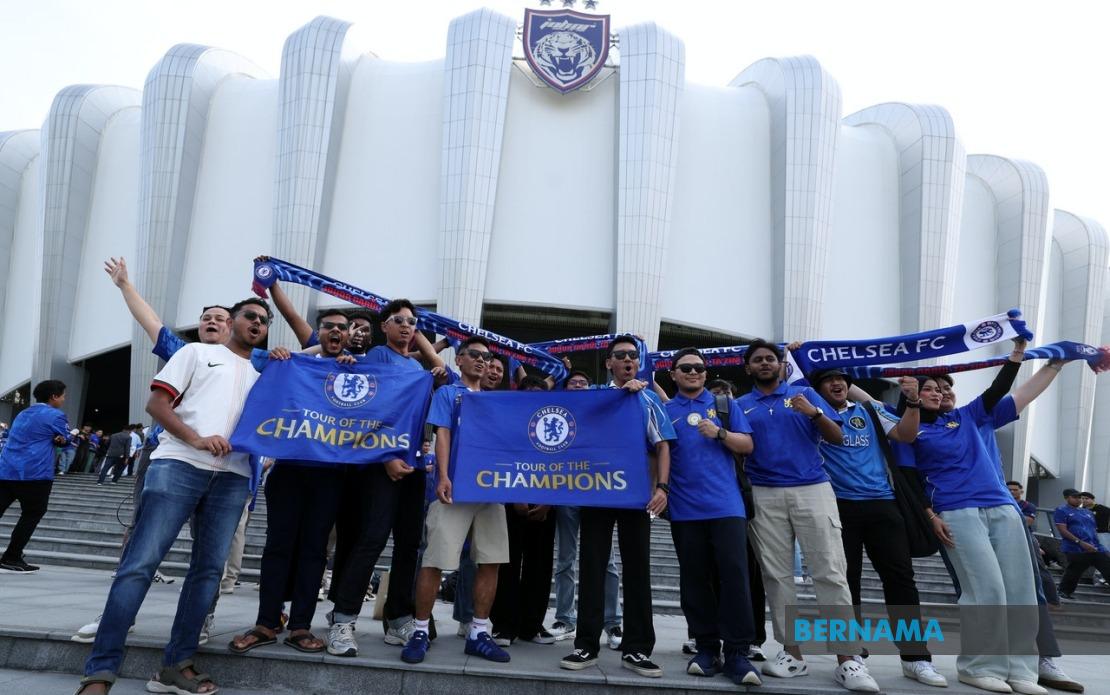
The Sultan Ibrahim Stadium in Iskandar Puteri transformed into a vibrant tapestry of crimson and cobalt on August 9 as supporters of Johor Darul Ta'zim and Chelsea FC converged on the venue for one of Malaysian football's most significant fixtures in recent memory. From mid-afternoon onwards, a steady tide of enthusiasts clad in their respective team colours filled the grounds, with the stadium's distinctive architecture providing a memorable backdrop for the occasion. The gathering represented more than a mere sporting event; it underscored the growing appetite for elite international football experiences within Malaysia and the wider Southeast Asian region.
The demographic composition of the crowd spoke volumes about football's broad appeal across age groups and social strata. Seasoned supporters brought their families to introduce younger generations to the beautiful game at its highest level, whilst clusters of youth supporters created an electric atmosphere throughout the afternoon. The collective energy generated by these diverse contingents reflected a shared enthusiasm that transcended club allegiances and national boundaries. Vendors had strategically positioned themselves throughout the stadium grounds to capitalise on the occasion, with merchandise stands experiencing sustained queuing as collectors sought exclusive limited-edition items commemorating the historic encounter.
The allure of witnessing Premier League talent without traversing intercontinental distances proved particularly compelling for Malaysian enthusiasts. For Ahmad Danial Muhammad, a 28-year-old Chelsea devotee from Bangsar in Kuala Lumpur, the prospect represented an exceptional opportunity that validated his long-standing commitment to the London club. His journey as a supporter had spanned the illustrious Didier Drogba era, and the chance to observe contemporary Premier League excellence at his doorstep held immeasurable significance. Such sentiments were emblematic of a broader phenomenon wherein Malaysian football followers increasingly view international fixtures hosted domestically as invaluable alternatives to expensive overseas travel.
Cross-border enthusiasm was equally pronounced, with supporters from neighbouring Singapore traversing the Johor Causeway to participate in the spectacle. Tan Wei Sheng, a 34-year-old supporter who journeyed northward alongside his family, had strategically departed Singapore at midday to circumvent congestion at the international crossing. His assessment of Sultan Ibrahim Stadium's facilities as world-class reflected the infrastructure investments that have positioned Johor as a major football destination within Southeast Asia. The willingness of regional supporters to undertake border crossings specifically for this fixture demonstrated the magnetic appeal of elite international football and the competitive advantage offered by hosting such events.
For JDT followers, the occasion carried profound significance extending beyond conventional sporting competition. Mohd Khairul Anuar Ismail, a 41-year-old from Bukit Piatu in Melaka, articulated a perspective prevalent amongst supporters of the Southern Tigers: the selection of their home stadium validated the club's ascendant standing within international football hierarchies. The invitation to a Premier League powerhouse to contest a friendly at their fortress represented tangible evidence of respect earned through sustained excellence and professionalism. This sentiment reflected a broader narrative within Malaysian football circles wherein domestic clubs increasingly aspire to parity with established global institutions.
The visibility of women supporters at the venue demonstrated the inclusive culture that contemporary football has fostered across Malaysia. Safiyah Rosli, a 32-year-old from Batu Pahat, viewed Chelsea's presence in Malaysia as an endorsement of the nation's footballing credentials and trajectory. Her comments attributed significance to the strategic vision of Tunku Mahkota Ismail, the Regent of Johor, whose investment in football infrastructure and club development has been instrumental in elevating JDT's profile. This perspective highlighted how international football events generate broader narratives concerning national sporting development and institutional leadership.
Traffic management along arterial routes to the stadium demonstrated the operational complexities inherent in hosting major sporting events. As evening descended, congestion accumulated along primary thoroughfares, necessitating coordinated intervention by the Royal Malaysia Police. The PDRM's deployment maintained traffic flow despite substantial attendance, ensuring that the accumulating crowd could access the venue without substantial delays. Such logistical considerations remain frequently overlooked dimensions of major sporting occasions, yet they fundamentally determine the success or failure of the attendee experience.
The 8 pm kick-off time represented a strategic scheduling decision, allowing working supporters throughout the Klang Valley and beyond to complete their professional obligations and transit to Iskandar Puteri. This temporal arrangement effectively maximised potential attendance by accommodating the constraints of Malaysia's working population. The decision exemplified how event scheduling reflects sophisticated understanding of demographic patterns and mobility requirements within the host nation.
The significance of this fixture extended beyond immediate sporting outcomes to encompass broader implications for Malaysian football's international positioning. Chelsea's willingness to undertake a regional tour, culminating in Malaysia, validated the commercial viability and infrastructural capacity of the nation's football ecosystem. For a Premier League institution, such tours represent calculated business decisions based upon market potential and facility adequacy. The fact that Malaysia warranted inclusion in Chelsea's pre-season itinerary signalled recognition of the country's sporting infrastructure and supporter demographics.
The convergence of JDT and Chelsea enthusiasts at Sultan Ibrahim Stadium encapsulated the democratisation of access to international football talent. Historically, Malaysian supporters seeking to observe elite European football were obliged to undertake expensive overseas expeditions or rely upon broadcast media. The hosting of such fixtures domestically fundamentally altered this calculus, enabling broader population segments to experience Premier League quality within their regional context. This accessibility potentially cultivates enhanced engagement with professional football and may stimulate grassroots participation across age cohorts.
Looking beyond the immediate fixture, the event contributed to establishing Malaysia—and specifically Johor—as a credible destination for international sporting events. Such recognition generates economic activity beyond direct match-day revenues, encompassing accommodation, hospitality, and ancillary services. Regional development aspirations increasingly recognise sporting infrastructure as catalytic in attracting investment and establishing international prestige. The Sultan Ibrahim Stadium, therefore, served not merely as a venue for competitive football but as a physical manifestation of Malaysia's aspirations to regional sporting prominence.

