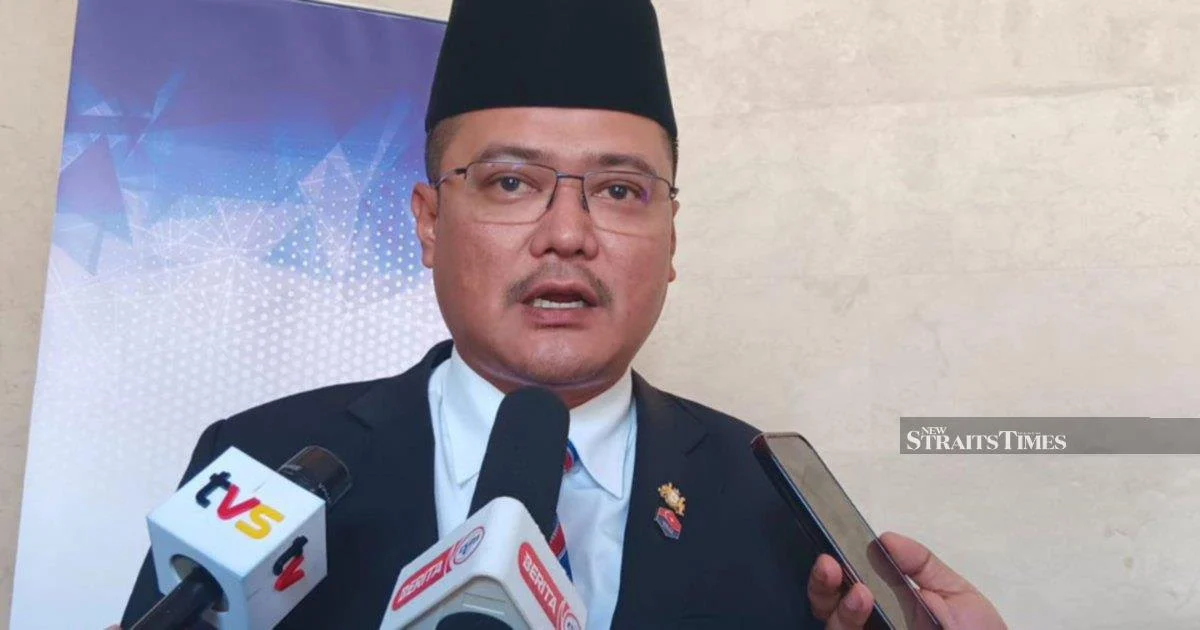
The political temperature in Johor has risen sharply as the state's Barisan Nasional leadership moved swiftly to rebut accusations made by Datuk Dr Mohd Puad Zarkashi, the former speaker of the state legislative assembly. In a forceful response, party officials characterised the former speaker's claims—which allegedly connect the royal institution to governmental decision-making processes—as fundamentally without merit and damaging to public discourse. The coalition's leadership has framed these assertions as not only factually inaccurate but also as crossing ethical and constitutional boundaries by drawing the palace into what should remain within the domain of elected officials and administrative structures.
The accusations at the centre of this dispute remain a flash point for competing narratives within Johor's political establishment. Puad's allegations appear to suggest improper influence or involvement of palace institutions in matters that conventionally fall under the purview of state government operations and legislative decision-making. Such claims, if sustained or widely believed, would carry substantial implications for constitutional governance in the state and the separation of powers that underpins Malaysia's federal system. The Barisan Nasional response suggests the coalition views these allegations as an attempt to undermine public confidence in legitimate governance structures and the independence of elected institutions.
Umno Youth, operating as the party's youth wing, has escalated the confrontation by claiming that hundreds of individuals have lodged formal police reports in connection with Puad's statements. This assertion, while quantitatively unverified in initial reporting, signals an attempt to demonstrate grassroots mobilisation against what the youth wing characterises as irresponsible and defamatory speech. The decision to encourage or highlight police filings represents a strategic move to convert political disagreement into potential legal jeopardy for the former speaker, creating multiple avenues of pressure beyond the realm of public debate and media discourse.
Datuk Dr Mohd Puad Zarkashi holds significant standing within Johor's political hierarchy by virtue of his previous role as state assembly speaker, a position that carries institutional weight and public visibility. His willingness to make such allegations, despite foreseeable backlash, suggests conviction in the substance of his claims or perhaps reflects internal factional tensions within the broader political establishment that extend beyond simple partisan competition. Understanding Puad's motivations requires consideration of internal Umno dynamics, broader intra-coalition tensions, and possibly recent developments in state governance that may have prompted his public intervention.
The allegation structure touching on palace involvement in political decisions strikes at a particularly sensitive intersection in Malaysian constitutional practice. The federated structure of Malaysia grants significant autonomy and ceremonial importance to state rulers, and each state's particular constitutional arrangements with its palace differ subtly. In Johor specifically, the Sultan holds considerable symbolic and, within defined constitutional parameters, formal authority. Suggestions that palace institutions have overstepped into political decision-making therefore carry institutional and constitutional weight that transcends ordinary political disagreement.
Barisan Nasional's response reflects broader coalition concerns about maintaining institutional credibility and public confidence in governance structures as it navigates a competitive political landscape. The coalition has faced periodic challenges to its legitimacy, particularly since the 2018 general election that saw its unprecedented federal defeat. Allegations connecting palace institutions to political decision-making, if circulated without effective rebuttal, could gradually erode public confidence in the independence and legitimacy of state institutions, creating longer-term political vulnerabilities even if individual allegations prove unfounded.
The police report strategy represents a tactical choice that warrants examination in the context of Malaysia's defamation and sedition frameworks. While police reports constitute a formal mechanism for initiating investigation and potentially legal proceeding, the threshold between legitimate political criticism and actionable defamation remains contested and context-dependent. The massing of reports, whether numbering in the hundreds or representing a smaller base, creates a perception of systematic grievance and broad support for legal action, regardless of whether prosecution ultimately proceeds or succeeds.
For Malaysian observers and particularly those tracking Johor's political developments, this confrontation illuminates ongoing tensions within the ruling coalition and uncertainty about institutional roles and relationships in state governance. The episode also demonstrates how allegations concerning traditional institutions can rapidly become weaponised within competitive party politics, with potential consequences for public understanding of constitutional arrangements and institutional independence. Whether Puad's claims contain substantive merit or represent political opportunism remains a matter of interpretation, but the intensity of the official response signals the seriousness with which the Barisan Nasional establishment treats threats to institutional credibility.
The broader implications extend to questions about political accountability, institutional independence, and the mechanisms through which grievances about governmental conduct should be addressed in Malaysia's system. If elected officials and party leaders resort primarily to police reports and legal mechanisms rather than substantive public rebuttal when facing allegations, this may reflect underlying weaknesses in political discourse and institutional transparency. Conversely, robust institutional defence through both public explanation and legal recourse may represent appropriate responses to potentially damaging allegations about governmental propriety and constitutional adherence.
Moving forward, the trajectory of police investigations, any potential legal proceedings, and broader political response from other stakeholders will shape not only Puad's personal and political fortunes but also public perception of institutional governance in Johor. The state's political leadership must navigate between defending institutional credibility and engaging substantively with legitimate questions about governance and constitutional practice. How this particular controversy resolves will offer insights into the health of institutional relationships and the state of political discourse in one of Malaysia's most politically significant states.

