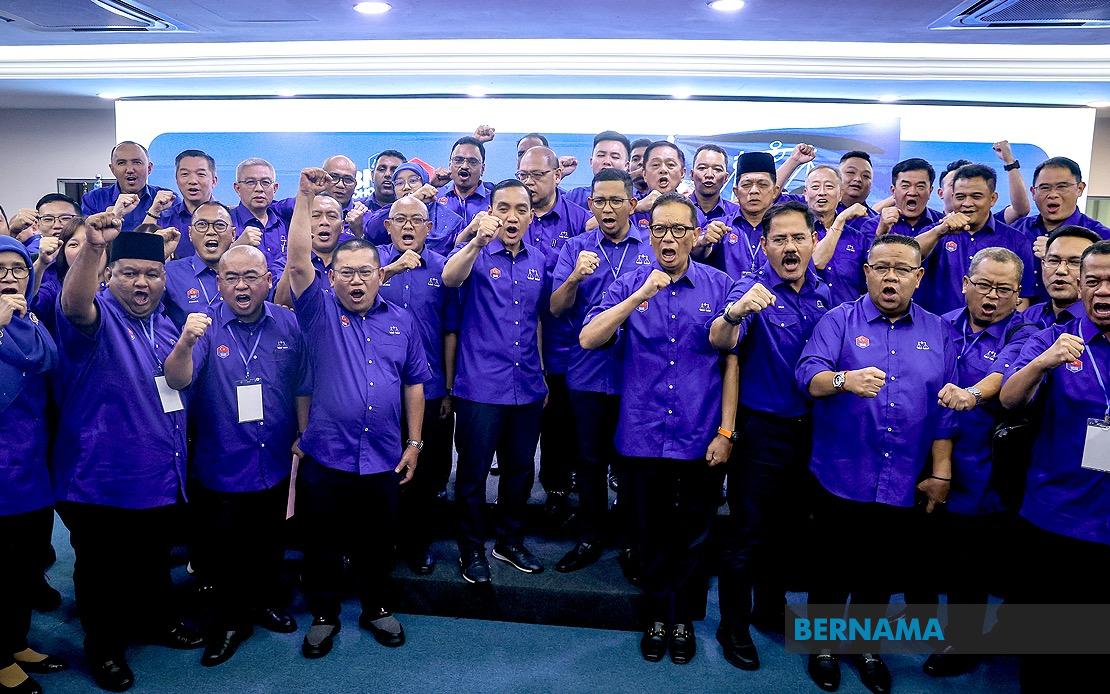
The Johor Barisan Nasional coalition has presented a carefully balanced candidate slate for the forthcoming state election, combining experienced performers with new parliamentary hopefuls across all 56 constituencies. The announcement, made by coalition chairman Datuk Onn Hafiz Ghazi at a ceremony in Johor Bahru, reflects strategic decisions that prioritize both continuity and renewal ahead of what is expected to be a closely contested regional poll.
The composition of the nominee list reveals the mathematical realities of BN's coalition structure in Johor. UMNO dominates with 37 candidates, while its component parties contribute 15 from the Malaysian Chinese Association and four from the Malaysian Indian Congress. This distribution underscores the continued primacy of the Malay-Muslim party within the broader coalition framework, a dynamic that has shaped Johor politics for decades. Onn Hafiz emphasized that the selection carried the formal endorsement of BN chairman Datuk Seri Dr Ahmad Zahid Hamidi, signaling that Kuala Lumpur's top leadership had validated Johor's organizational choices.
A centerpiece of the announcement involved the nomination of Datuk Seri Dr Adham Baba in Pasir Raja, marking his return to electoral competition in a seat he previously held across two consecutive terms between 2008 and 2018. His political journey reflects the ups and downs characteristic of Malaysian federal politics during that period. Before representing Pasir Raja at state level, Adham served as Member of Parliament for Tenggara across two separate stints, including the 2018-2022 cycle immediately preceding this election. His tenure as federal health minister, though not detailed in the announcement, represented a significant appointment within the Muhyiddin Yassin administration. His return to a state seat after his federal parliamentary period ended signals either strategic repositioning by UMNO's central leadership or recognition that Pasir Raja remains within his electoral comfort zone.
Meanwhile, Menteri Besar Onn Hafiz will seek reelection in Machap, the constituency he successfully defended in 2022. This decision to field the incumbent chief minister in his existing seat represents orthodox political management, avoiding the disruption that might arise from moving the state's chief executive to a new district. Onn Hafiz holds considerable influence over BN's internal dynamics in Johor, and his continued representation of Machap ensures that whichever party wins the election, the outcome will fundamentally hinge on his personal electoral fortunes in that particular state seat.
A notable change emerges in Benut, where former Menteri Besar Datuk Seri Hasni Mohammad was not renominated despite holding the seat as the incumbent assemblyman. This decision to sideline a previous chief minister represents a significant statement about intra-party prioritization. Rather than retaining Hasni, BN has nominated UMNO's working secretary Datuk Mohd Sumali Reduan for Benut. Such transitions, while framed in neutral organizational language, often reflect shifting power balances or decisions that a particular leader should cede their seat to allow other party figures progression within the hierarchy.
Continuity dominates the broader landscape of the nominated slate. Nine of the ten former Johor executive councillors who contested the 2022 state election have been retained as candidates for this election cycle. This retention rate of roughly ninety percent suggests organizational confidence in the existing cohort of state-level administrators, or conversely, that the party determined that wholesale replacement would generate unnecessary internal friction. The single exception involved Khairin-Nisa Ismail @ Md On, formerly the State Women, Family and Community Development Committee chairman, who was not renominated for the Serom seat. Her exclusion joins the Hasni Mohammad situation in indicating that despite generally conservative candidate selection, some established figures do face removal from the ballot.
Onn Hafiz's remarks during the announcement ceremony carried an implicit cautionary message for all nominees. He characterized the nomination itself not as a reward or mark of privilege, but rather as a trust and responsibility requiring unflinching personal integrity. This framing matters significantly in Malaysian political discourse, where accusations of corruption or ethical lapses can rapidly devastate electoral campaigns. By emphasizing integrity from the outset, the BN chairman sought to establish ethical expectations for his candidates' behavior throughout what would be an intensive campaign period. He further urged candidates to maintain courteous, respectful, and prudent campaign practices aligned with values recognized within Johor's distinctive political culture.
The candidate list spans constituencies across diverse geographic and demographic contexts within Johor. Seats like Bukit Pasir, Bukit Naning, Parit Yaani, and Bukit Permai represent various regional communities and socioeconomic profiles, from urban voters to rural agricultural constituencies. The distribution of both experienced incumbents and relative newcomers across these varied seats suggests BN's strategy involves neither blanket replacement of existing representatives nor wholesale retention regardless of performance. Instead, the coalition appears to have conducted seat-by-seat evaluations weighing factors such as incumbent performance, local political dynamics, and the viability of particular nominees.
For Malaysian observers monitoring broader peninsular political trends, the Johor election carries disproportionate significance. As the nation's second-largest state by population and a crucial economic hub, Johor's electoral outcome influences regional power dynamics and occasionally national political mathematics. An BN victory would reinforce the coalition's traditional dominance in the state's politics, while opposition performance would reflect whether the Pakatan Harapan alliance has gained traction in traditionally BN-leaning areas. The composition of this candidate slate, with its emphasis on experienced incumbents supplemented by selected new faces, suggests BN confidence in its electoral prospects, even as the coalition navigates post-pandemic political uncertainties affecting Malaysian voters more broadly.
The nomination process itself operated within parameters established by Johor's BN leadership and Kuala Lumpur's coalition headquarters, with ultimate approval resting with Ahmad Zahid Hamidi. This hierarchical approval structure ensures alignment between state-level organizational decisions and federal coalition imperatives. As campaigning intensifies ahead of polling day, the interaction between this candidate slate's performance and shifting voter sentiment will determine whether BN's mathematical and organizational preparations translate into the electoral outcomes the coalition anticipates.