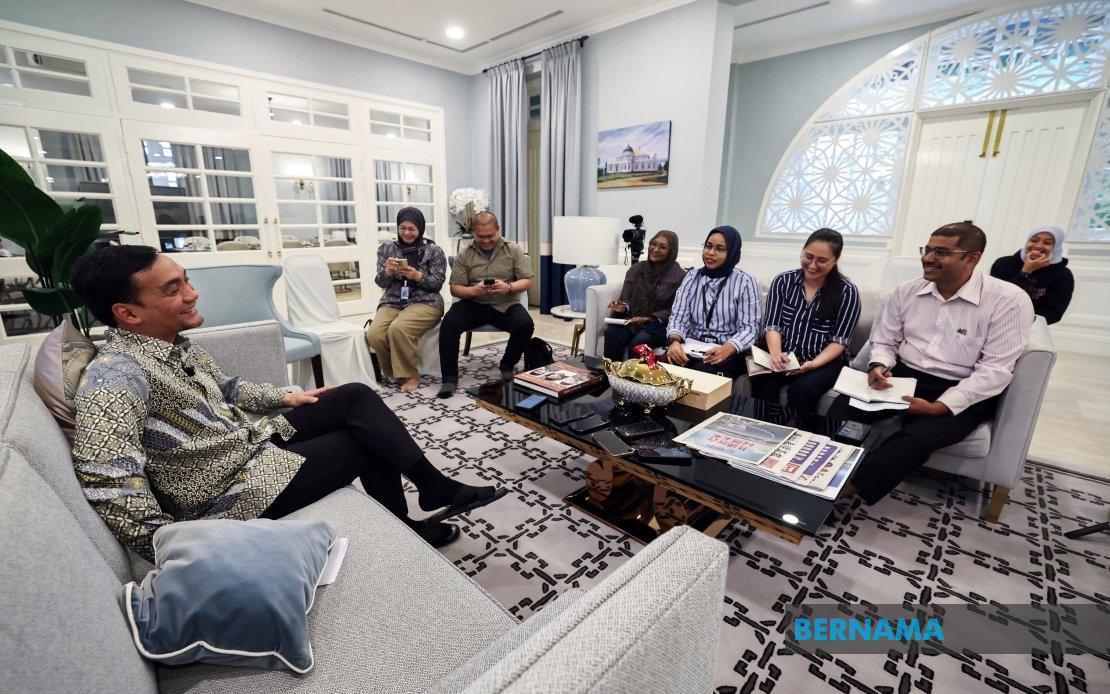
With the Johor state election drawing near, Barisan Nasional leadership is managing expectations among party members who failed to secure candidacy in the upcoming ballot. Johor Menteri Besar Datuk Onn Hafiz Ghazi delivered a message of perseverance to those left out of the candidate list, stressing that exclusion from this round of contests should not diminish their commitment to the coalition's broader mission of serving the rakyat.
The timing of Onn Hafiz's remarks reflects the delicate political dynamics within BN as it prepares for the July 11 election. Candidate selection processes invariably generate internal friction, as ambitious party members compete for limited spots on the ballot. By publicly addressing those who did not make the cut, the Johor leader sought to preempt potential disaffection that could undermine BN's campaign momentum during a critical electoral moment. His approach emphasizes unity over disappointment, framing candidate selection as a procedural necessity rather than a verdict on individual worth.
According to Onn Hafiz, the selection process was approximately 80 per cent complete at the time of his interview, with final confirmation pending the issuance of watikah letters of appointment. This distinction carries significance in Malaysian political practice, as it suggests room for late changes to the candidate roster. The Johor Menteri Besar noted that previously issued letters have been withdrawn in some instances, implying that aspiring candidates should refrain from viewing preliminary decisions as irrevocable. This procedural nuance underscores how fluid coalition politics can be even in the final stages before nomination day on June 27.
The criteria Onn Hafiz outlined for candidate selection reveal BN's attempt to balance various political considerations. Candidates must demonstrate deep roots in their constituencies, enjoying recognition and acceptance among local communities. Professional background diversity and freedom from age restrictions form part of the selection framework, though capability to serve the electorate ultimately trumps demographic factors. This approach aligns with the broader concept of WALI candidates—winnable, acceptable, and likeable—previously articulated by BN's national leadership under Datuk Seri Dr Ahmad Zahid Hamidi, who holds both the BN chairmanship and UMNO presidency.
The candidate selection process, Onn Hafiz emphasized, does not operate through unilateral decision-making by state-level figures. Instead, it requires endorsement from national BN and UMNO hierarchies, ensuring that selections reflect party-wide consensus among senior leadership. This hierarchical approach, while maintaining party discipline, can sometimes frustrate state-level actors who might prefer greater autonomy in determining their electoral lineup. The involvement of national party organs in state-level candidate decisions reflects the centralized power structures that remain characteristic of UMNO and its coalition partners.
Beyond candidate selection, Onn Hafiz highlighted the pivotal role younger voters will play in determining Johor's electoral outcome. Residents under 40 years of age constitute between 20 and 40 per cent of the state's population, yet historically have not formed the strongest constituency for Barisan Nasional. The Johor leader indicated that BN representatives have invested effort in engaging with this demographic, recognizing that winning back youth support remains essential to securing electoral victory. This acknowledgment reflects broader concerns across Malaysian politics about BN's generational appeal, particularly in urban and semi-urban constituencies where younger voters concentrate.
Voter turnout emerged as another theme in Onn Hafiz's messaging, with particular emphasis on mobilizing Johoreans working across the causeway in Singapore. As a state practicing democratic principles, higher participation in elections strengthens the legitimacy of the eventual government and ensures broader representation of public sentiment. The Johor leader framed voting as a civic responsibility, appealing to transnational workers whose employment circumstances might make voting logistically challenging. This outreach reflects recognition that diaspora communities, even those temporarily abroad for economic reasons, maintain stakes in their home state's governance.
Onn Hafiz's statement that the state government has delivered its best efforts for the people represents standard campaign rhetoric, yet carries weight in the context of Johor's economic prominence within Malaysia. As the nation's largest manufacturing hub and a crucial contributor to federal revenues, Johor's governance directly influences broader national prosperity. The Menteri Besar's appeal for another mandate suggests BN anticipates a competitive contest in which taking the electorate's support for granted would be unwise. This acknowledgment of electoral uncertainty contrasts with the confidence sometimes displayed by ruling coalitions before polls.
The significance of these remarks extends beyond state-level political considerations. Johor elections historically serve as barometers for national political health, with outcomes influencing perceptions of federal BN strength. Should BN perform strongly on July 11, it would reinforce the coalition's narrative of stability and competence following its return to federal power in 2023. Conversely, losses would energize opposition parties and complicate BN's positioning ahead of future federal elections. For opposition parties, Johor represents an opportunity to challenge BN dominance in a traditional stronghold, making the state election far more than a local affair.
For party members without candidacy, Onn Hafiz's call to remain engaged with BN's machinery suggests multiple pathways for political participation beyond contesting seats. Federal parliamentary candidacies, party organizational roles, and grassroots mobilization all offer platforms for those who miss out on state-level nominations. This framework acknowledges political realities in which limited candidacies mean some talented individuals inevitably remain on the sidelines during any given election cycle. By framing alternative roles as equally valuable, the Johor leader attempts to retain commitment among those disappointed by candidate selection outcomes.
The interplay between national and state political dynamics in Johor demonstrates how decentralized electoral processes operate within Malaysia's centralized party structures. While state-level leaders like Onn Hafiz articulate messaging and frame issues relevant to local contexts, ultimate authority over critical decisions rests with national party hierarchies. This arrangement can create tensions when state interests diverge from national priorities, though in BN's case, organizational discipline typically ensures alignment. The upcoming election will test whether this hierarchical structure continues delivering electoral victories or whether internal contradictions begin manifesting in diminished support.
As nomination day approaches, Onn Hafiz's emphasis on steadfast commitment from all party members regardless of candidacy status represents an effort to maintain internal cohesion during a period of potential fragmentation. Political parties thrive or founder partly based on their capacity to retain activist engagement across electoral cycles, with demoralized members becoming liabilities rather than assets. By publicly recognizing those excluded from candidacy while simultaneously emphasizing their continued importance to party struggle, the Johor Menteri Besar sought to navigate the delicate balance between acknowledging political realities and preserving organizational morale as Barisan Nasional enters the final stretch before Johor voters head to the polls.