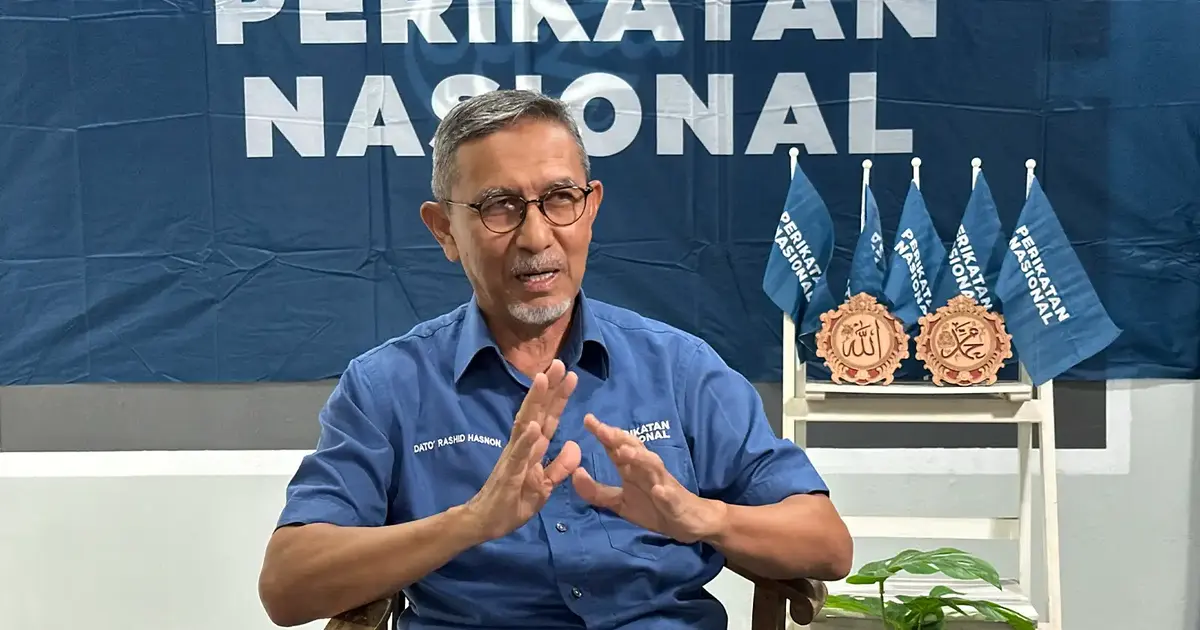
Rashid Hasnon, the deputy head of Bersatu in Johor and a candidate contesting the Senggarang seat, has downplayed concerns about the limited involvement of PAS in campaign activities, signalling confidence that the absence of the Islamic party will not hinder his electoral prospects. His measured response underscores the complex political calculations within the Barisan Nasional coalition as it prepares for electoral contests, and reflects shifting power dynamics between the major parties that make up Malaysia's ruling alliance.
The Senggarang candidate's comments come after PAS representatives made a brief appearance at a Barisan Nasional event, a showing that might have prompted questions about the extent of cooperation between coalition partners. Rather than treating the minimal attendance as a warning sign, Rashid Hasnon has characterised the situation as inconsequential to his campaign momentum, a stance that reveals confidence in Bersatu's organisational strength in Johor at a time when the party is consolidating its position within the federal government.
The relative positioning of Bersatu and PAS within the Barisan Nasional coalition reflects broader tensions that have simmered since the 2022 general election, when Bersatu emerged as a kingmaker following its defection from Pakatan Harapan. While both parties operate under the Barisan umbrella, they maintain distinct political identities and constituencies. Bersatu draws support from Bumiputera-centric voters and parts of the Malay middle class, whereas PAS has traditionally relied on its religious credentials and organised grassroots networks, particularly in rural Malay-Muslim communities.
Johor has long been a stronghold for both the Umno component of Barisan and, increasingly, for Bersatu, which has made significant inroads into the state's political structure. The party's leadership position in the state, evidenced by Rashid Hasnon's status as deputy chief, indicates that Bersatu has successfully embedded itself within Johor's political establishment. This institutional presence may explain the candidate's apparent equanimity regarding PAS's absence, as Bersatu can mobilise its own party machinery and volunteers without necessarily depending on coordinated efforts with other coalition members.
The dynamics between Bersatu and PAS also reflect ideological and organisational differences that complicate unified campaigning. PAS's focus on Islamic governance and religious issues contrasts with Bersatu's emphasis on Bumiputera economic interests and development, creating different messaging priorities during elections. For a candidate like Rashid Hasnon contesting a specific constituency, these differences may prove less consequential if Bersatu has cultivated sufficient ground support and local connections independent of broader coalition coordination.
Electoral mathematics in Malaysia, particularly in Johor constituencies, often hinges on locally specific factors rather than broad coalition narratives. A candidate's personal standing, family connections, track record in service delivery, and rapport with community leaders can outweigh the visibility of coalition partners. Rashid Hasnon's nonchalance about PAS involvement suggests either that he has secured sufficient backing within Senggarang through Bersatu channels or that the presence of other coalition partners carries limited significance in this particular contest.
The Barisan Nasional coalition, despite its dominance in Malaysian politics, has experienced periods where component parties have pursued semi-independent campaigns while nominally remaining within the alliance. This pragmatic flexibility allows parties to emphasise their distinct identities and appeal to specific voter segments without presenting a monolithic face that might alienate particular constituencies. In this context, PAS's limited presence at coalition events need not signal dysfunction but rather reflects a deliberate division of labour in campaigning.
For Malaysian voters observing political developments in Johor, the positioning of candidates like Rashid Hasnon offers insight into where real power lies within the coalition structure. When senior party figures express confidence despite the absence of traditionally important allies, it often indicates that their party has consolidated sufficient institutional weight to operate independently if necessary. Bersatu's trajectory in Johor appears to follow this pattern, having grown from a relative newcomer to an established force within state politics.
The broader implications for the Barisan Nasional coalition warrant attention from political analysts and observers. Coalition stability depends partly on the perception that all major components contribute meaningfully to electoral success. However, if individual candidates and party leaders consistently downplay the importance of other coalition members, it may gradually erode the sense of collective enterprise that holds such alliances together. The management of such centrifugal pressures requires careful communication and occasional public demonstrations of unity, even when the actual electoral leverage of particular allies may be limited.
Rashid Hasnon's stance also reflects confidence in Bersatu's electoral machinery heading into future contests. The party has invested significantly in building ground organisation and securing local endorsements, particularly in states like Johor where it has established a decisive presence. This investment suggests that Bersatu believes it can deliver results through its own efforts, reducing its dependence on coalition partners for campaign success. Such self-reliance, while potentially strengthening individual party positions, also hints at the compartmentalised nature of modern coalition politics in Malaysia, where nominal alliance partners increasingly pursue parallel strategies rather than genuinely integrated campaigns.

