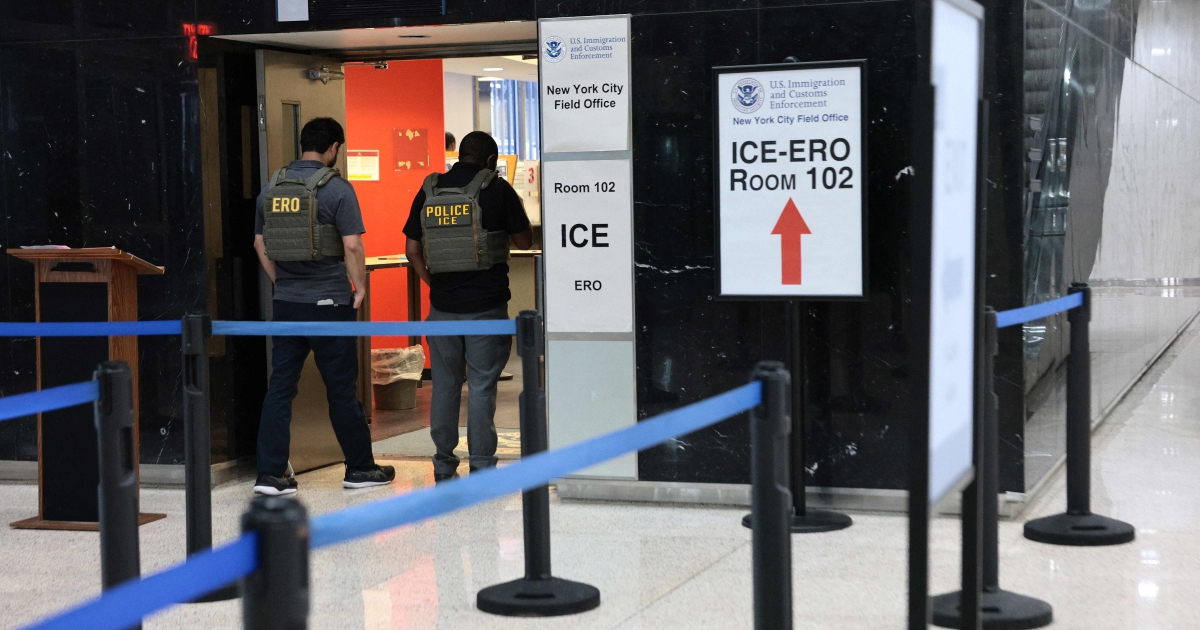
A Johns Hopkins University researcher became the latest detainee in a broadening wave of immigration enforcement actions when US Immigration and Customs Enforcement agents apprehended her at an airport checkpoint while she prepared to embark on a domestic flight. The incident marks another escalation in immigration enforcement activity under President Donald Trump's administration, with airports emerging as primary venues for heightened detention and arrest operations in recent weeks.
The detention underscores the expanding scope of immigration enforcement beyond traditional border controls and into the interior of the United States. Airports have become focal points for ICE operations, serving as strategic locations where agents can intercept travellers with minimal disruption to broader transport operations. This shift reflects a more aggressive interior enforcement posture that extends federal immigration authority into spaces where ordinary Americans of all backgrounds conduct routine business.
For international research institutions and universities across Southeast Asia and beyond, the incident carries significant implications regarding scholar mobility and academic collaboration pipelines. Johns Hopkins University, a prestigious research institution attracting talent from across the world, exemplifies the kind of American centre of learning that depends upon international academic personnel to conduct cutting-edge research. Uncertainty surrounding the legal status or immigration circumstances of foreign researchers now creates a chilling effect on knowledge exchange programmes that have historically flowed across borders.
The escalation in airport-based immigration enforcement represents a tactical pivot from conventional border enforcement strategies. Rather than concentrating resources at ports of entry, the Trump administration has distributed ICE operations throughout transportation hubs nationwide. This dispersal strategy creates unpredictability for travellers and complicates compliance for those navigating complex immigration regulations. Researchers, visiting scholars, and individuals on various visa categories now face potential disruption during routine domestic travel.
The broader context of heightened enforcement activity reflects the Trump administration's prioritisation of immigration control as a central policy objective. Since taking office, the administration has signalled its intention to pursue more aggressive deportation policies and expanded detention protocols. These directives have manifested in increased staffing, expanded detention facility capacity, and streamlined arrest procedures that accelerate the processing of detained individuals through removal proceedings.
For Malaysia and the broader Southeast Asian region, the implications extend beyond individual cases of detained researchers. The region has substantial populations residing in the United States, including students, professionals, and workers across multiple sectors. Any expansion of interior immigration enforcement creates uncertainty for regional nationals conducting legitimate activities within American territory. Educational institutions and research facilities increasingly must navigate complex advisory protocols to protect their international personnel.
The detention of university-affiliated personnel raises questions about institutional vulnerability and potential liability. Universities hosting international scholars now confront unprecedented operational challenges in ensuring safe conduct for their research populations. Administrative protocols, legal resources, and institutional guidance to international staff have become essential components of institutional risk management. The reputational and operational costs associated with enforcement actions targeting academic personnel may influence institutional recruitment strategies and international collaboration frameworks.
Airports themselves have become contested spaces within broader immigration enforcement debates. These facilities serve essential functions in connecting communities, facilitating commerce, and enabling travel for legitimate purposes. The concentration of enforcement operations in airports creates friction between efficient transportation operations and expanded security protocols. Domestic airlines and airport operators must accommodate ICE personnel and procedures while maintaining flight schedules and passenger services, creating operational tensions that ripple across transportation networks.
The surge in enforcement activity during recent weeks suggests sustained momentum toward comprehensive interior enforcement expansion. Agency resource allocation, personnel deployment, and tactical emphasis indicate long-term commitment to elevated enforcement levels. This trajectory creates persistent uncertainty for vulnerable populations and those whose immigration status remains ambiguous or contested. Researchers, students, and professionals operating under visa categories should anticipate continued enforcement pressure and plan accordingly.
Institutional responses from universities, professional organisations, and advocacy groups will likely intensify as enforcement activities expand. Legal resources, documentation protocols, and emergency response mechanisms represent institutional adaptations to enforcement environment volatility. Universities may enhance legal services for international personnel, establish clear reporting procedures for enforcement encounters, and provide transparent guidance regarding rights and obligations during potential interactions with federal agents.
The case illustrates broader tensions between national security imperatives and institutional missions oriented toward knowledge production and international collaboration. American universities have historically positioned themselves as globally oriented institutions welcoming international scholars and researchers. Sustained enforcement operations targeting these populations create cognitive dissonance between institutional identity and operational reality. Universities must now explicitly address security uncertainty as a component of the employment and academic environment.
For Southeast Asian researchers and academic institutions considering American partnerships or placements, the enforcement environment has become a material consideration in institutional decision-making. Recruitment prospects, collaborative research opportunities, and scholarly exchange programmes all face uncertain conditions. The detention of a Johns Hopkins researcher serves as a sobering reminder of institutional vulnerability in the current environment and the potential consequences of expanded enforcement operations on academic networks that transcend national borders.

