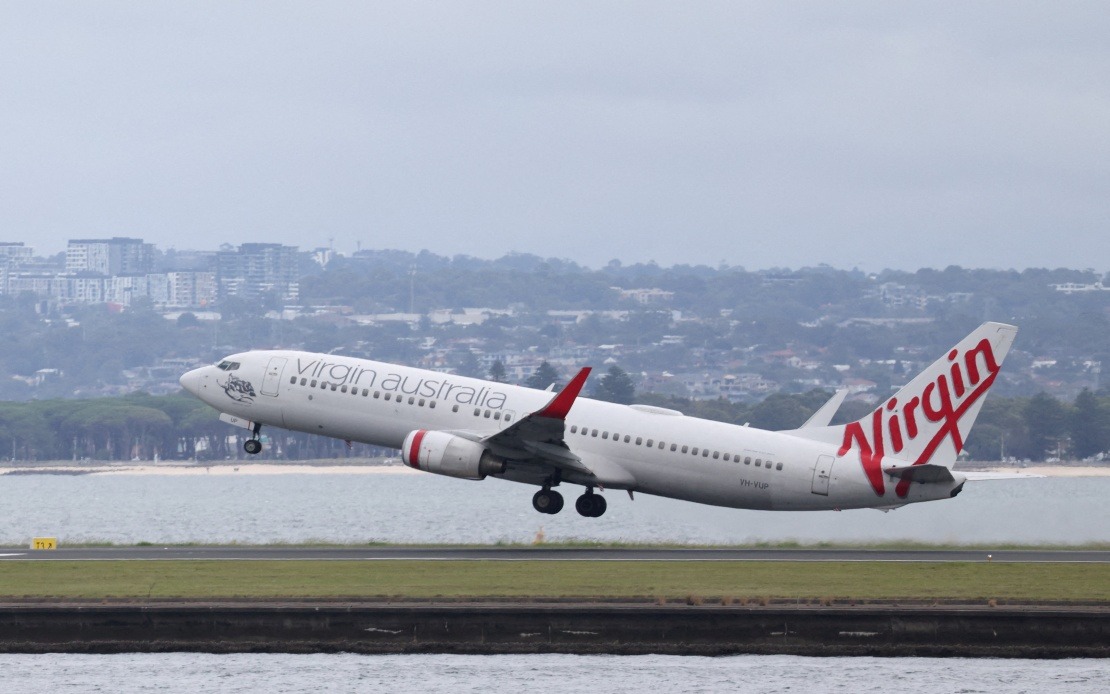
A hazardous moment unfolded at Sydney Airport on Sunday morning when a Jetstar Airways aircraft conducting routine ground operations came dangerously close to a Qatar Airways plane, resulting in injuries to at least one crew member and renewing concerns about operational safety at Australia's busiest international hub. The incident highlights persistent vulnerabilities in airport coordination even as the aviation sector attempts to recover from recent disruptions caused by staffing shortages in air traffic management.
Jetstar flight JQ402, bound for the Gold Coast, was in the early stages of taxiing along the runway at approximately 7 am Australian Eastern Standard Time when pilots executed an emergency braking manoeuvre to prevent impact with an unpowered Qatar Airways Boeing 777 that was being towed across the aircraft's path. The sudden deceleration, necessary to avert what could have been a catastrophic accident, resulted in physical injuries sustained by a member of the cabin crew. Paramedics provided immediate medical treatment at the scene, though the severity of the injuries was not disclosed in initial reports. Fortunately, no passengers aboard the Jetstar service experienced harm during the incident.
Jetstar, which operates as a wholly-owned budget subsidiary of the Qantas Group, promptly initiated a formal investigation into the circumstances surrounding the near-miss. A company statement indicated that the aircraft's flight crew had been adhering to directives issued by Air Traffic Control at the time of the incident, yet were compelled to execute the emergency braking procedure after detecting that another aircraft had entered dangerously close proximity to their flight path. This statement carries significant implications, as it suggests that whatever coordination systems were in place between ground operations and air traffic control failed to prevent the hazardous situation from developing.
The incident assumes greater importance when considered against the backdrop of widespread operational disruptions that have plagued Sydney Airport and other major Australian aviation hubs in recent days. More than 250 flights departing from Sydney experienced delays on both Friday and Saturday of the previous weekend, with staff shortages at Airservices Australia cited as the primary cause. Airservices Australia, the statutory authority responsible for providing air traffic control services, navigation services, and aeronautical information to Australia's major airports including Sydney, Melbourne, Brisbane, and Perth, has been struggling with resource constraints that directly impact its ability to safely manage aircraft movements.
The timing of the near-collision is particularly troubling because it occurred just days after these mass delays underscored the fragility of Australia's air traffic management infrastructure during periods of understaffing. When air traffic control operations are strained, the margin for error diminishes considerably, and the systems that normally prevent such incidents—including precise coordination between runway operations, taxiway management, and aircraft movement sequencing—can become compromised. The fact that a hazardous situation developed despite aircraft crews following Air Traffic Control instructions raises uncomfortable questions about whether those instructions were issued with complete situational awareness.
For Malaysian and Southeast Asian aviation observers, this incident carries relevant lessons about the critical importance of maintaining adequate staffing levels in air traffic management during recovery periods from major disruptions. The Asia-Pacific region has witnessed its own aviation recovery challenges following the pandemic, and several countries in the region have faced similar pressures on their air navigation service providers. The Sydney incident demonstrates how quickly safety margins can erode when essential personnel are insufficient to handle normal or near-normal traffic volumes.
The investigation initiated by Jetstar will likely examine multiple factors: the specific instructions provided by Air Traffic Control at the moment the incident occurred, the procedures followed by ground operations in towing the Qatar Airways aircraft, communication protocols between different operational units at the airport, and whether any procedural lapses contributed to the hazardous situation. Such investigations are essential not merely for assigning responsibility but for identifying systemic vulnerabilities that could be addressed across the aviation industry.
Airservices Australia's recent staffing challenges also warrant scrutiny, as they appear to reflect broader pressures affecting air navigation service providers across developed aviation markets. The organisation has indicated that staff shortages were responsible for the previous weekend's disruptions, but the underlying causes—whether related to recruitment difficulties, retention problems, training capacity constraints, or budget limitations—remain to be clearly articulated. Addressing these root causes is essential to prevent similar cascading disruptions and the safety risks that accompany them.
The incident at Sydney Airport serves as a reminder that aviation safety depends on multiple overlapping systems functioning effectively and in coordination with one another. When one critical system—in this case, air traffic control staffing—becomes compromised, the risk profile across the entire operation increases. Jetstar and its parent company Qantas will be particularly attentive to ensuring that their flight crews' adherence to Air Traffic Control instructions remains unquestioned, while simultaneously examining whether any operational gaps exist in how those instructions are formulated and communicated.
Looking forward, the resolution of Airservices Australia's staffing difficulties will be crucial not only for Sydney Airport but for the entire Australian aviation network. Both domestic and international carriers operating from Australian airports, including regional carriers serving Southeast Asian routes, depend on robust and adequately staffed air traffic management. The near-collision incident underscores that these are not abstract operational metrics but matters directly affecting the safety of passengers, crew members, and ground personnel working at one of the region's most important aviation hubs.

