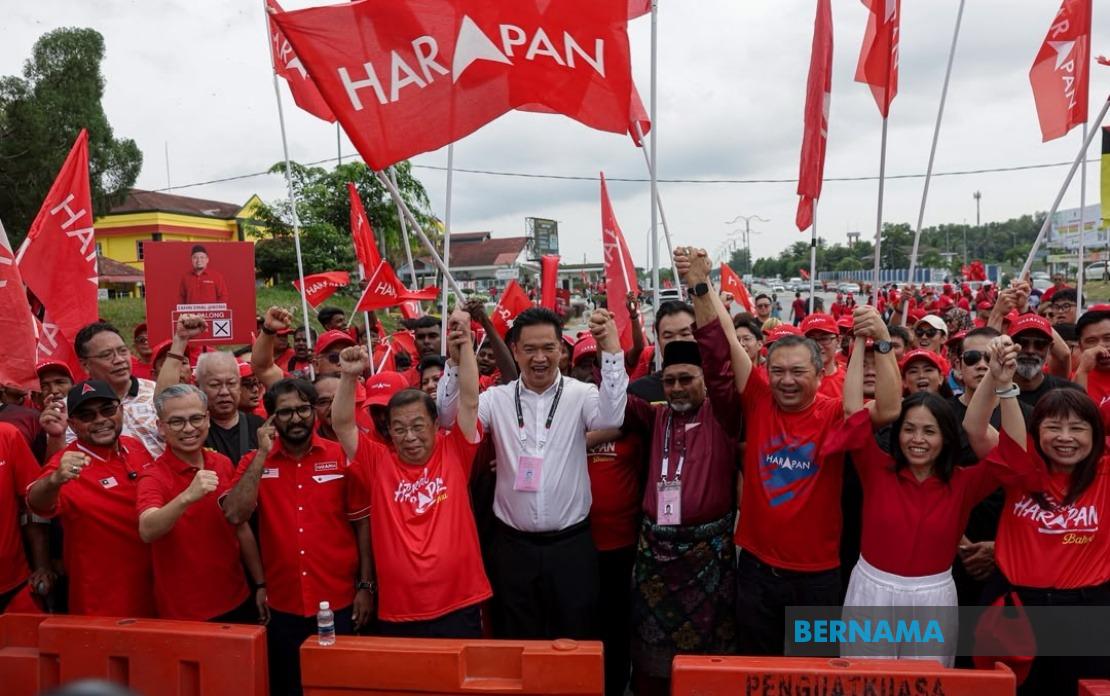
The Jeram Padang state seat has emerged as the sole constituency within the Jempol district to host a four-way electoral showdown in the upcoming 16th Negeri Sembilan State Election, establishing a notably competitive landscape that reflects the fragmented political terrain across Malaysia's central heartland. The nomination process concluded on July 18 at the Jempol District and Land Office Hall, with Returning Officer Amino Agos Suyub confirming the contest structure at 10 am following the candidate filing deadline.
Four candidates have secured their positions on the ballot for Jeram Padang, representing a diverse political spectrum that underscores the evolving dynamics within state-level politics in Negeri Sembilan. G. Manivannan carries the Pakatan Harapan banner into the contest, challenging incumbent Datuk Mohd Zaidy Abdul Kadir who represents Barisan Nasional and is seeking to retain his seat. The field also includes R. Sri Sanjeevan of Parti Pribumi Bersatu Malaysia, representing the federal coalition partner, and Dayana Dal of Parti Orang Asli Malaysia, who stands as the sole Indigenous candidate contesting the Jeram Padang seat.
The nomination filing sequence underscored the orderly progression of the electoral process, with Sri Sanjeevan arriving first to lodge his papers at 9.09 am, followed swiftly by Dayana Dal at 9.12 am. Manivannan submitted his nomination at 9.17 am, accompanied by Pakatan Harapan Communications Director Datuk Seri Fahmi Fadzil, signalling the coalition's organisational readiness for the contest. Incumbent Mohd Zaidy completed the filing process at 9.20 am, rounding out the quartet of contenders vying for representation in this constituency.
The four-way contest in Jeram Padang contrasts markedly with the electoral configurations across the remaining Jempol-based seats, revealing distinct regional political alignments. The Serting state seat is primed for a three-cornered encounter between Pakatan Harapan candidate Yaacob Mahmood, incumbent Mohd Fairuz Mohd Isa representing Perikatan Nasional, and Muhammad Noraffendy Mohd Salleh, known as Affendy Salleh, fielded by Bersatu. This triangular battle reflects the continued political competition between the federal ruling coalition and its opposition contenders at the state level.
The Palong constituency similarly projects a three-way contest, pitting incumbent Datuk Mustapha Nagoor of Barisan Nasional against Muhammad Zahin Zinal Abidin representing Pakatan Harapan and Rebin Birham fielded by Bersatu. The persistence of three-cornered contests across multiple constituencies indicates that smaller political parties and newer entrants maintain traction within Negeri Sembilan's electoral calculations, complicating the path to clear mandates for major coalitions and suggesting voters retain genuine choice across ideological and demographic lines.
In marked contrast, the Bahau state seat presents a straight fight between two established political forces. Incumbent Teo Kok Seong of the Democratic Action Party, contesting under the Pakatan Harapan banner, faces a direct challenge from Chong Fui Ming of the Malaysian Chinese Association, Barisan Nasional's candidate. This bifurcated contest represents a return to conventional two-party electoral dynamics in at least one Jempol constituency, potentially offering clearer choices for voters seeking to align with either the federal government or opposition camps.
The multiplicity of contest formats across Jempol's various seats reflects deeper currents within Negeri Sembilan's political evolution. The emergence of four-cornered contests, particularly in Jeram Padang, underscores the fragmentation of electoral support that has characterised recent cycles in Malaysian politics. Smaller parties and indigenous-focused platforms have successfully mobilised sufficient grassroots support to field candidates, though winning under such fractured circumstances demands either overwhelming plurality support or sophisticated voter consolidation strategies that major parties must now incorporate into their campaign calculations.
For Malaysian observers tracking state-level electoral trends, the Negeri Sembilan contest provides crucial indicators regarding voter sentiment toward incumbent coalitions and the viability of alternative political formations. The presence of candidates spanning Pakatan Harapan, Barisan Nasional, Perikatan Nasional, Bersatu, the Democratic Action Party, and indigenous-focused platforms demonstrates the breadth of political competition at the sub-federal level, even as national coalition frameworks theoretically constrain options available to state electorates. The contest in Jeram Padang particularly signals openness to candidates outside the major coalition structures, a pattern Malaysian voters have demonstrated repeatedly across recent electoral cycles.
The Electoral Commission has structured the voting schedule to accommodate early polling and standard ballot procedures, setting July 28 for early voting and August 1 as the formal polling day for the 16th Negeri Sembilan State Election. This timeline provides candidates across all four Jempol constituencies with approximately ten days for intensive campaigning following the nomination closing, a window that historically proves decisive in mobilising voters and shaping electoral outcomes through targeted messaging and ground-level political organisation.
The Jeram Padang four-cornered contest holds significance extending beyond the immediate constituency, potentially foreshadowing emerging patterns within Malaysian state elections more broadly. The successful registration of diverse candidates reflects an electoral system that, despite criticism, permits genuine political competition and enables candidates representing minority viewpoints or previously marginalised communities to access the ballot. As Negeri Sembilan voters prepare for August 1, the configuration of contests across Jempol's seats will test whether consolidation around major coalitions prevails or whether electoral fragmentation continues reshaping Malaysia's state-level political landscape.

