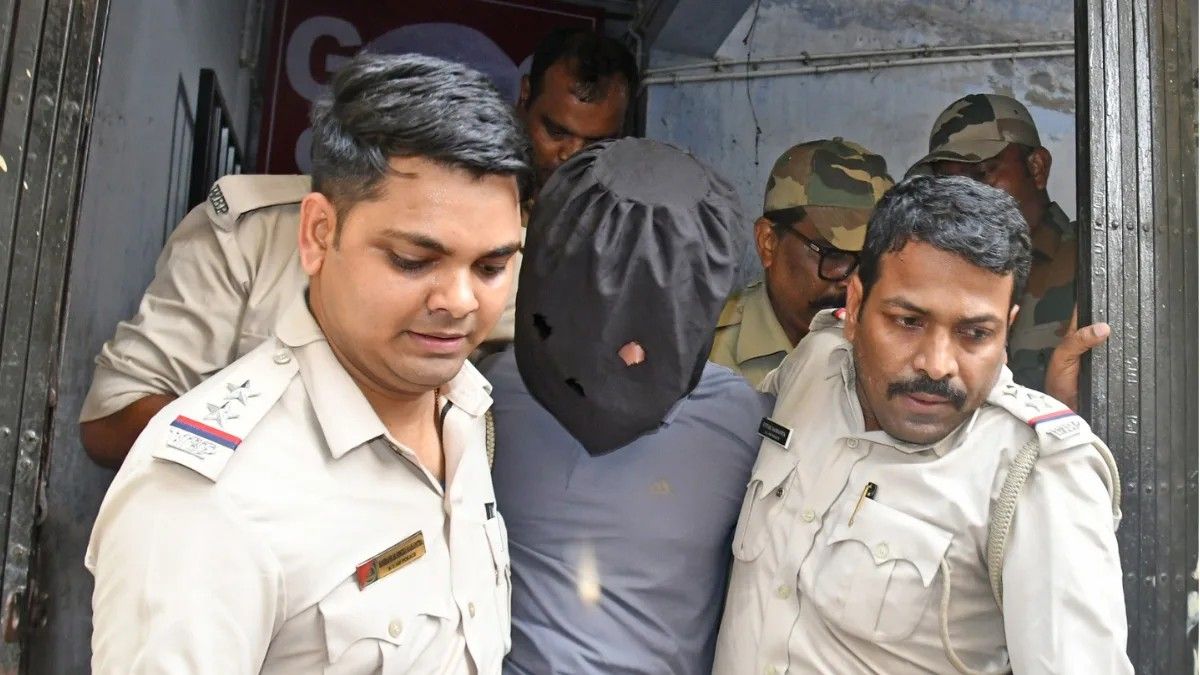
Police in West Bengal have arrested a suspected operative linked to Jaish-e-Mohammed, reigniting security concerns in the Bardhaman district, which had previously exposed a dormant extremist cell nearly a dozen years earlier. The arrest of the 24-year-old suspect marks a significant development in India's ongoing counterterrorism operations targeting cross-border militant networks, revealing the persistence of recruitment and coordination efforts emanating from Pakistani intelligence apparatus in the eastern Indian state.
Hamim Mondal, detained by the Special Task Force at a gymnasium in Renaissance Township on Bardhaman's outskirts, allegedly cultivated connections with designated terrorist organisations operating beyond Indian borders. According to law enforcement investigators, the young man had established contact with operatives affiliated with Jaish-e-Mohammed, maintaining what police describe as clandestine communications with individuals linked to Pakistan's Inter-Services Intelligence. Digital forensics of seized electronic devices reportedly uncovered encrypted messaging channels through which Mondal allegedly coordinated with external handlers stationed across the border.
The investigation took a more sinister turn when authorities discovered that Mondal had placed multiple orders for uniforms matching those worn by India's Central Reserve Police Force. This discovery prompted investigators to theorise that Mondal may have been preparing for an infiltration operation targeting the security movements of Chief Minister Suvendu Adhikari. The potential targeting of a senior state official represents a significant escalation in the alleged plot's scope and demonstrates the operational ambitions of the suspected militant cell. Such infiltration tactics have been utilised by transnational terror groups seeking to conduct high-profile attacks against government figures and security establishments.
The arrest followed an unusual investigative trail initiated by threatening telephone calls directed at Minister of State Umesh Rai several days prior. When police traced the communication to a young woman in Birbhum district, the investigation unexpectedly unveiled Mondal's alleged underground activities. Authorities characterise these activities as having been conducted under the camouflage of legitimate student and business pursuits, a common operational methodology employed by sleeper cells to avoid detection whilst establishing operational networks. This discovery highlights the challenge faced by security agencies in distinguishing between ordinary residents and carefully concealed militant operatives.
Mondal's biographical profile reveals a seemingly ordinary trajectory that authorities now view through a security lens. Hailing from Dignagar village in East Burdwan's Manteswar block, approximately 25 kilometres north of Bardhaman town, he had recently relocated to a rented apartment in Renaissance Township three months prior to his arrest. Before that movement, he had been managing a label-printing enterprise in Howrah's Pilkhana area, whilst his father maintained employment with a private commercial concern in Kolkata. This ostensibly normal civilian existence provided cover for activities that police allege represented serious national security threats.
The residential arrangement itself bore hallmarks of deliberate obfuscation. Mondal had secured the three-room flat through intermediaries, with local shopkeeper Mohammad Ali facilitating the rental agreement whilst using false identification documents belonging to Ali's father. When questioned, Mondal provided a plausible but ultimately false explanation, claiming the accommodation was intended for younger siblings. Such compartmentalisation and use of proxy arrangements exemplifies sophisticated operational security tradecraft employed by terrorist networks to shield their members from identification and surveillance by counterintelligence authorities.
Neighbours and acquaintances described a personality that appeared entirely incongruous with the allegations now levied against him. Ashis Mondal, a schoolteacher residing in the same township, characterised the suspect as remarkably composed, reticent, and courteous in demeanour. The disconnect between his external presentation and alleged covert activities underscores a recurring pattern in contemporary terrorism wherein operatives deliberately cultivate benign public personas whilst maintaining parallel involvement in extremist networks. This duality presents significant investigative challenges for security agencies attempting to identify potential threats within increasingly diverse urban populations.
Family members have categorically rejected the authorities' allegations, suggesting police may have acted upon faulty intelligence. Nasiruddin Mondal, the suspect's grandfather and a farmer by profession, emphasised the youth's age and questioned whether someone so young could realistically participate in sophisticated terrorist conspiracies. The grandfather's scepticism reflects broader public uncertainty regarding investigative conclusions and the evidentiary foundation supporting such serious allegations. These familial denials, whilst natural, do not necessarily undermine the law enforcement assessment based upon digital evidence and communications analysis.
Police characterisations present a far more elaborate and menacing operational structure than what external appearances might suggest. According to the formal complaint lodged by Special Task Force sub-inspector Banasovan Ghosh, Mondal allegedly participated in a comprehensive criminal enterprise coordinating with Pakistan-based handlers. The alleged activities encompassed recruitment of additional local operatives, procurement of weapons, intelligence collection regarding prominent individuals, exploitation tactics targeting dignitaries through romance-based deception schemes, abduction operations, and assassination planning. Such a comprehensive operational mandate would position Mondal within a substantial cross-border espionage and militant network extending across both nations.
The coordinated enforcement action unfolded in the early morning hours when Special Task Force personnel and local police simultaneously descended upon the gymnasium where Mondal exercised and the residential flat he occupied in Rohini Tower. The synchronized raid methodology reflects standard counterterrorism protocols designed to prevent suspect flight or destruction of evidence. Officers recovered a laptop computer and multiple documents from the apartment during their search, materials that would constitute crucial evidence in subsequent prosecutions. The seizure of digital devices provided investigators with potential access to communications records, contact information, and operational planning materials.
Judicial proceedings have commenced following the arrest, with Mondal produced before the Chief Judicial Magistrate's Court in Bardhaman where magistrates remanded him into police custody for a 14-day interrogation period. Charges have been registered under multiple legal provisions, including sections of India's newly adopted Bharatiya Nyaya Sanhita criminal code, alongside relevant statutes concerning information technology crimes and immigration violations. The subsequent transfer to Kolkata by the Special Task Force suggests involvement of higher-echelon interrogation teams and probable coordination with central security agencies responsible for counterterrorism operations.
This arrest represents another chapter in Bardhaman's troubled history with militancy. Twelve years prior, a blast in the Khagragarh locality had exposed an active Jamaat-ul-Mujahidin sleeper cell operating within the district, demonstrating that West Bengal remains a territory of concern for Indian security establishments and transnational terrorist networks. The apparent recurrence of militant recruitment and operational planning in the same geographic region raises questions regarding intelligence coordination, prevention strategies, and community engagement mechanisms designed to counter such activities before operatives can advance beyond preliminary planning phases. The interval between terrorist incidents in the region suggests continuous rather than sporadic militant interest in establishing operational infrastructure within eastern India.

