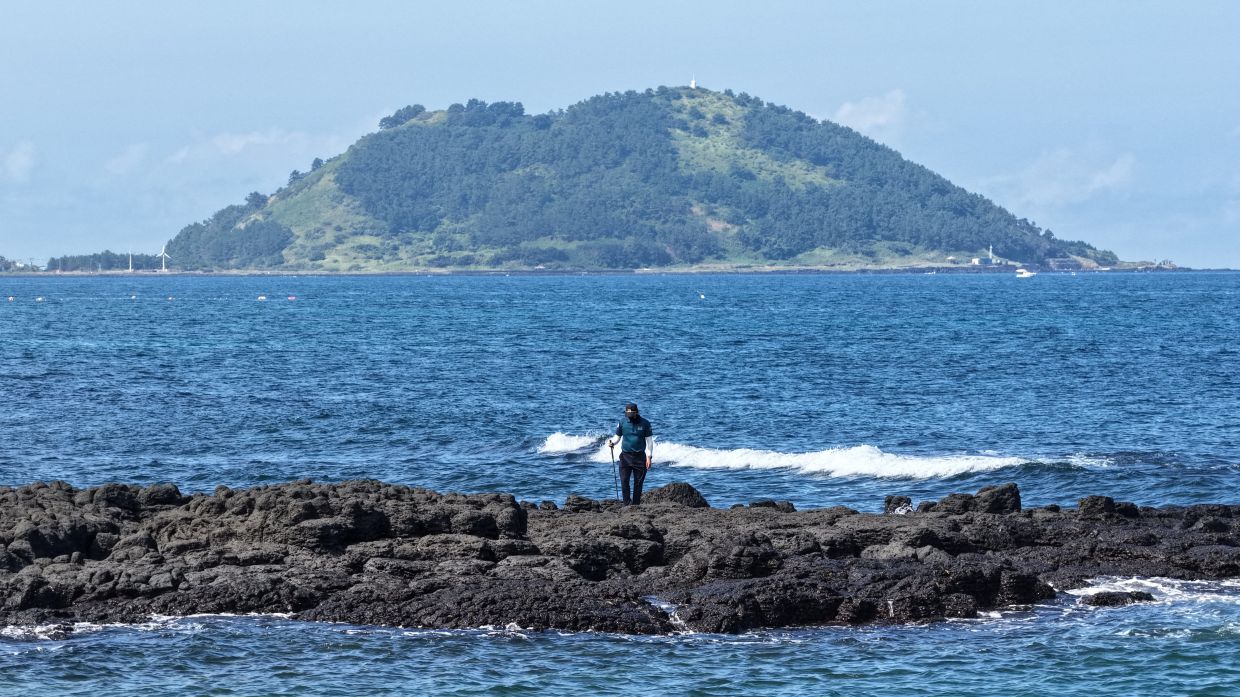
Jeju Island, long celebrated as South Korea's premier romantic escape and honeymoon haven, is confronting an unprecedented crisis of confidence as a troubling sequence of discoveries and police failures has cast an ominous shadow over the island's carefully cultivated reputation for tranquillity. The convergence of four bodies recovered in just three days—all of individuals previously reported missing—combined with revelations that a police officer had systematically falsified case records, has fractured public trust in local law enforcement and sparked a cascade of cancellations across the island's tourism sector.
At the epicentre of the scandal lies the case of Jang Mi-ran, a 37-year-old woman whose disappearance between late May 12 and early May 13 from Hallim-eup in Jeju City went unresolved for nearly three months. The officer assigned to her case made the extraordinary decision to close the investigation in May, falsely documenting that he had made contact with her. The deception was exposed when a body believed to be Jang's was discovered on Monday among palm trees situated less than a ten-minute walk from her residence—a proximity that raises disturbing questions about how the case could have been so thoroughly mishandled. Her death had gone undetected despite her proximity to inhabited areas, suggesting the officer's negligence may have cost her any chance at rescue.
The Jang case emerged as merely the most prominent example of systematic police misconduct on the island. Investigators subsequently identified at least one additional missing-person investigation handled by the same officer that had been improperly closed using identical false documentation methods. A man in his sixties, reported missing and then officially recorded as located, was discovered dead in Gujwa-eup on Saturday only after authorities launched a comprehensive search operation prompted by the exposure of police negligence. The pattern suggests a disturbing willingness within local law enforcement to prioritize administrative convenience over the safety of vulnerable residents.
The cascade of grim discoveries continued with relentless frequency. On the same day Jang's remains surfaced, another previously reported missing person was found dead near a valley in Aewol-eup. The following day, a fisherman discovered the body of a man in his seventies in the waters off Sinheung-ri in Jocheon-eup. While authorities have not established definitive links between the cases or uncovered evidence suggesting coordinated criminal activity, the temporal clustering of deaths and the exposure of police incompetence have created a perfect storm of public anxiety and suspicion that extends far beyond the verifiable facts.
The psychological impact on the island's population and tourism industry has been immediate and measurable. Short-term rental operators report a shift in tenant sentiment, with residents cancelling extended leases in response to the news. Hong Hye-geol, a medical doctor and television personality who has resided on Jeju for seven years, posted a stark warning on social media describing the island's extensive network of isolated rural roads and secluded trails, suggesting that even daytime activities in seemingly safe locations carry hidden risks. Such testimony from respected local figures carries particular weight in shaping public perception, lending credibility to safety concerns that might otherwise be dismissed as speculative.
Wedding photography, an economic staple for Jeju's tourism industry, has already begun to suffer as couples reconsider their plans. One prospective client cancelled a shoot in Gujwa-eup despite having specifically selected the location for its scenic fields and quieter character compared to central island destinations. The rationale, though pragmatic, reflects how the crisis has begun to reframe the island's rural charm—previously marketed as peaceful and picturesque—as potentially isolating and vulnerable. Online communities have escalated beyond individual cancellations to organizing boycott movements, with some participants calling for a comprehensive pause on travel to Jeju until authorities resolve the police misconduct case and establish accountability for the mishandled investigations.
Tourists and residents alike are recalibrating their sense of personal safety based on fragmentary information and social media narratives rather than actual crime data. Guesthouse operators, particularly those marketing women-only accommodations, have discovered that their former competitive advantage now functions as a source of guest anxiety. Bang, who has operated a women-only establishment in Jocheon-eup for eight years, acknowledges the paradox: her specialization once attracted safety-conscious travellers seeking secure, monitored environments; today it serves as a reminder of vulnerability. She reports receiving frequent safety inquiries from prospective guests and recent cancellations, though precise causation remains difficult to establish in individual cases.
The island's tourism sector was already navigating headwinds prior to the recent crisis. The Jeju Tourism Organization recorded 963,401 domestic visitors during July, representing a 12.4 percent decline from 1,100,021 the previous year—marking the first time since 2020 that monthly domestic arrivals fell below the one-million threshold. The downward trajectory persisted into August, when daily domestic visitor averages declined by approximately 300 travellers compared to the same period in 2023. This pre-existing weakness suggests the island's tourism economy lacked resilience to absorb the reputational damage now unfolding.
Data from the Korean National Police Agency compounds public concerns by confirming that Jeju recorded South Korea's highest crime rate in 2024, at 4,539.6 crimes per 100,000 people. Importantly, this rate is calculated against Jeju's resident population of approximately 663,000, while annual visitor numbers reach several million—creating a significant methodological gap that likely inflates the per-capita crime measurement. Nonetheless, the statistic provides factual grounding for concerns that might otherwise be dismissed as panic. The island's dual identity as both residential community and major tourist destination complicates any straightforward crime narrative, as transient populations, seasonal fluctuations, and seasonal economic pressures create dynamics distinct from the Korean mainland.
The convergence of documented police failures, the accumulation of tragic deaths within a compressed timeframe, declining tourism metrics, and amplification through social media has created a perception crisis that extends beyond the verifiable facts of individual cases. Tourism operators now face the challenge of rebuilding confidence not merely in the island's objective safety, but in the competence and accountability of local authorities responsible for public protection. Until law enforcement authorities comprehensively address the systematic failures that allowed Jang Mi-ran's case to languish unfounded for three months and demonstrate genuine institutional reform, the narrative of Jeju as a destination requiring caution will likely continue to circulate through travel planning communities and social networks throughout South Korea and potentially across East Asia.

