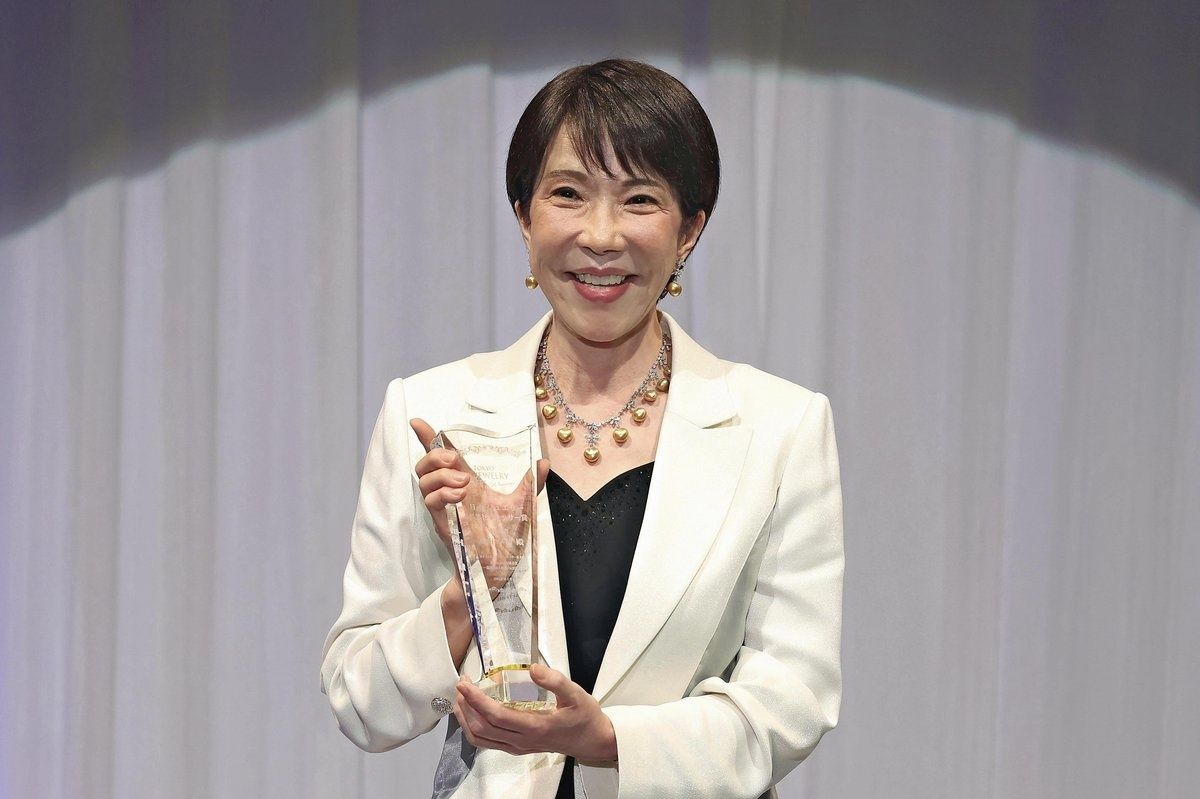
Prime Minister Sanae Takaichi received a special honour at the Japan Jewellery Best Dresser Awards held in Tokyo on Saturday, 4 July, in recognition of her distinctive style and sartorial choices. The accolade reflects growing attention to how Japan's political leaders present themselves internationally, and Takaichi used the occasion to underscore the nation's competitive advantages in luxury goods manufacturing.
Appearing at the award ceremony adorned in gold earrings and a pearl necklace, Takaichi seized the platform to champion Japan's heritage industries. Her remarks at the event centred on the technological sophistication embedded in the country's pearl farming and processing sectors, which she characterised as representing "Japan's underlying strength." This framing elevates what might otherwise be dismissed as purely aesthetic choices into a statement about national industrial capability and competitive positioning in global markets.
The pearl accessories themselves carry personal significance for Takaichi. They are family heirlooms passed down from her mother, lending emotional weight to her advocacy for the pearls as symbols of Japanese craftsmanship. By integrating personal narrative with public messaging, the Prime Minister demonstrates how individual style choices can reinforce broader national branding strategies. This approach has become increasingly common among contemporary political leaders seeking to project both authenticity and deliberate image management.
Takaichi emphasised that she deliberately wears these pearl accessories during official overseas visits, transforming them into diplomatic tools. By doing so, she positions herself as an ambassador for Japanese luxury products on international platforms. This strategy reflects a calculated approach to soft power, where the choices made by high-ranking officials communicate subtle messages about national values and capabilities to foreign audiences and media.
Her statement that she wants to "promote the excellence of Japanese products, including jewelry, to the world" articulates a clear objective: leveraging Japan's global diplomatic influence to support domestic industries. The jewellery sector, particularly the pearl industry which is concentrated in regions like Mie Prefecture, represents a significant export market and a symbol of Japanese precision manufacturing. For Malaysia and other Southeast Asian nations with competing pearl industries, Japan's strategic promotion of its pearl brands underscores the intensifying competition for market share in luxury goods globally.
The timing of Takaichi's remarks is noteworthy as Japan seeks to strengthen its economic recovery and expand its global commercial presence. Pearls remain one of Japan's signature luxury exports, with the country maintaining a reputation for producing some of the world's most coveted varieties, including Akoya and South Sea pearls. By leveraging her position as Prime Minister to highlight this sector, Takaichi demonstrates how political leadership can be mobilised to support economic objectives and protect domestic industries.
For Malaysia's jewellery and pearl industries, which have their own heritage and market presence, the Japanese example illustrates the importance of high-level political endorsement in international trade. South East Asian producers face increasing pressure to differentiate their products in crowded global markets where established brands enjoy significant advantages. Japan's systematic approach to promoting its luxury goods through official channels and high-profile endorsements provides both a competitive challenge and a potential model for how governments can support their own industries.
Takaichi's concluding statement that she "will work to ensure that people see a bright future for Japan" connects her fashion choices and product promotion efforts to a broader vision of national renewal and economic confidence. This messaging strategy suggests that personal style, industrial promotion, and national optimism are being intentionally woven together into a coherent narrative. Such integrated communications approaches have become standard practice among leaders seeking to project both dynamism and continuity.
The Japan Jewellery Best Dresser Awards itself reflects the country's sophisticated approach to branding and cultural diplomacy. By creating institutions that celebrate style while simultaneously highlighting domestic industries, Japan creates natural platforms for political leaders to engage in economic advocacy without appearing overtly commercial. This institutional framework allows for the seamless integration of fashion, culture, and economic interests in ways that benefit multiple stakeholders.
For observers across Southeast Asia, this event underscores how developed economies leverage every opportunity to strengthen their competitive positions in global markets. Japan's pearl industry benefits not only from historical reputation and technological sophistication but also from consistent, high-level political support and cultural valorisation. As regional economies continue to develop and compete in luxury goods sectors, understanding and potentially adapting these integrated strategies becomes increasingly important for achieving sustainable competitive advantage.

