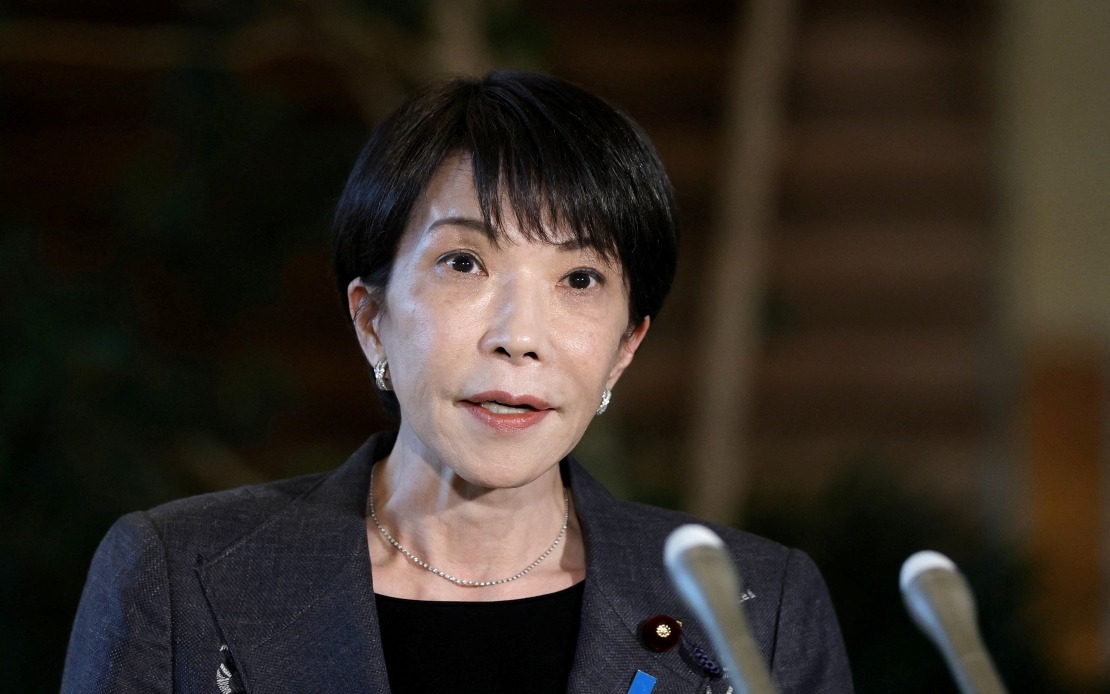
Prime Minister Sanae Takaichi has committed to reversing a planned temporary reduction in Japan's consumption tax on food and beverages once a two-year trial period concludes, attempting to navigate the tension between delivering promised relief to households battling persistent inflation and addressing the nation's deteriorating fiscal position. Speaking before parliament's lower house committee this week, Takaichi underscored her administration's intention to restore the levy to 8 per cent in 2029, clarifying a position that had remained ambiguous since her ruling Liberal Democratic Party modified its approach to a campaign pledge made during February's general election.
The shift in policy reflects the practical complexities of implementing a tax change across Japan's retail infrastructure. Rather than eliminating the consumption tax entirely as the LDP promised during its election campaign, the party's recent proposal reduces the rate on food and beverages to just 1 per cent commencing April 2027. This compromise emerged after months of deliberation within the cross-party national council on taxation and social security, with officials acknowledging that removing the tax entirely would impose substantial burdens on retailers required to reprogram point-of-sale systems and adjust inventory management procedures. The 1 per cent framework sidesteps these implementation hurdles while still delivering meaningful price relief at supermarket checkouts and restaurants.
Opposition lawmakers have raised legitimate concerns about the government's capacity to honour the restoration commitment. Ken Tanaka, representing the opposition Democratic Party for the People, argued during questioning that reverting to an 8 per cent rate would be politically fraught, as the public would inevitably characterise it as a tax increase despite the technically accurate description of a restoration. His scepticism reflects the historical difficulty faced by governments worldwide in withdrawing popular subsidies or tax breaks, even when explicitly temporary in nature. The appetite for tax cuts typically exceeds the stomach for restoration, creating a governance challenge that extends far beyond Japan's borders and resonates with policymakers across Southeast Asia facing similar fiscal pressures.
To partially offset the revenue impact of the reduced tax rate, the LDP has proposed annual cash handouts totalling 600 billion yen, equivalent to the expected government revenue loss from maintaining the 1 per cent consumption tax on food products. This dual-track approach—combining a lower tax rate with direct cash support—aims to provide relief to lower-income households while maintaining some revenue stream. However, the mechanism raises questions about long-term sustainability and whether direct payments might become entrenched in electoral expectations, further complicating future budget negotiations.
Japan's fiscal position lends urgency to resolving this policy tension. The nation carries the worst debt-to-GDP ratio among Group of Seven economies, a burden compounded by demographic headwinds and sluggish growth. Japanese government bond yields have recently surged to levels not seen in decades, signalling investor concerns about sustainability. The weak yen further constrains policy flexibility, as currency depreciation raises import costs and risks reigniting the inflation pressures the tax cut aims to relieve. These interconnected economic challenges create a precarious environment where even temporary tax reductions could amplify market anxiety about Japan's long-term solvency.
Takaichi's emphasis on implementing the tax reduction "as soon as possible" once the national council's interim report is finalised underscores the political importance of delivering on electoral commitments. The LDP's junior coalition partner, the Japan Innovation Party, and numerous opposition parties similarly pledged consumption tax relief, making this issue a point of convergence across the political spectrum. However, the rush to implement policy must be weighed against the need for careful economic calibration, particularly given the sensitivity of international markets to Japanese fiscal signals.
The broader context for Malaysian and Southeast Asian observers involves recognising how developed economies grapple with inflation management and fiscal sustainability—challenges increasingly relevant to the region. Japan's experience demonstrates the inherent tension between providing household relief during inflationary episodes and maintaining sound public finances. Unlike Southeast Asian nations that have benefited from more resilient growth and relatively stronger fiscal positions, Japan confronts a structural burden of accumulated debt while navigating population decline, a scenario that should inform policy discussions across the region as countries age and growth moderates.
The temporary nature of the proposed tax cut also reflects international trends toward time-bound fiscal support measures. Rather than permanent changes to tax architecture, governments increasingly deploy temporary interventions calibrated to specific crises or economic phases. This approach preserves fiscal optionality but requires clear exit strategies and political will to implement them—precisely what Takaichi is now attempting to establish through her parliamentary commitment to restoration.
Looking ahead, the success or failure of Japan's two-year experiment will carry implications for other developed economies considering similar measures. If the LDP successfully restores the tax rate in 2029 without triggering significant public backlash or economic disruption, it would provide a template for managing temporary fiscal support. Conversely, if political pressure forces postponement or abandonment of restoration, it would reinforce scepticism about governments' ability to credibly commit to time-bound interventions, potentially making future crisis-response policies less effective as households and businesses discount their temporary nature.
For Southeast Asian policymakers monitoring Japan's fiscal trajectory, the current debate underscores the importance of building adequate fiscal buffers during favourable economic periods and avoiding structural changes to tax systems in response to cyclical pressures. The consumption tax cut debate also highlights how electoral politics can drive policy choices that may conflict with medium-term fiscal prudence, a dynamic relevant across the region as more countries face the dual pressures of managing inflation and serving ageing populations requiring expanded social spending.