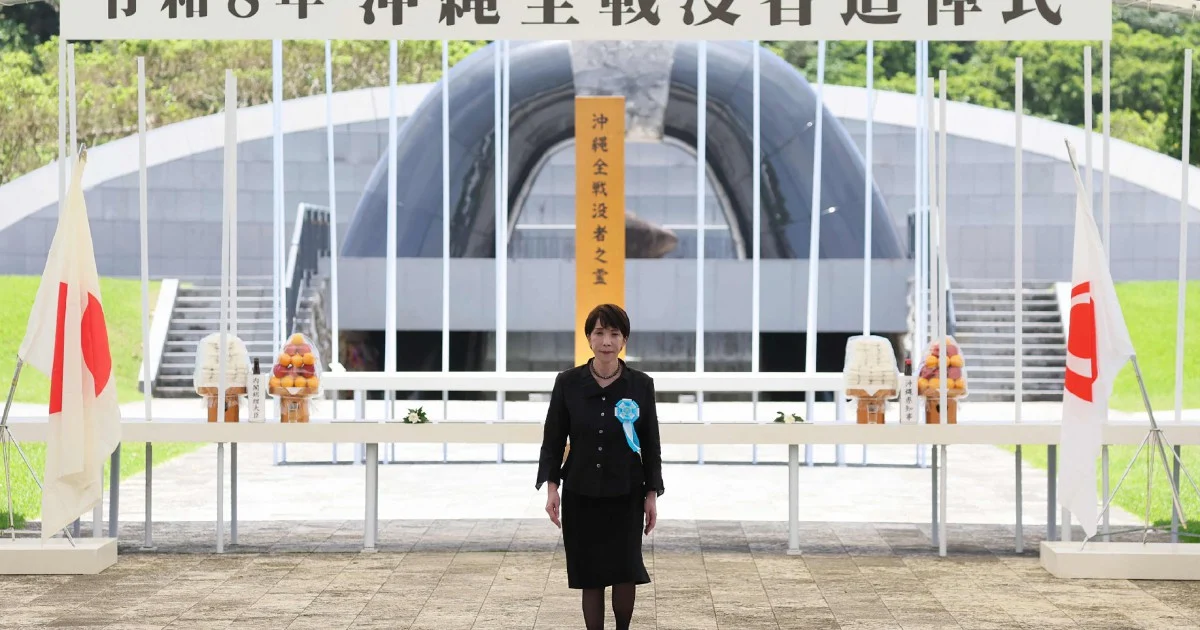
Prime Minister Sanae Takaichi encountered heated protests during a ceremony at a World War II memorial in Tokyo, with demonstrators voicing strong disapproval of Japan's shifting military posture. Television coverage captured the confrontation as critics heckled the nation's newly appointed leader over policies they view as a break from the pacifist principles that have guided Japan for nearly eight decades since the war's end.
The incident reflects deepening divisions within Japanese society regarding the country's defence trajectory. Takaichi, who assumed office recently, has become a focal point in this debate given her public support for increased military spending and a more assertive regional security stance. The memorial gathering, intended as a solemn occasion for remembrance, became instead a platform for expressing anxiety about the direction of Japan's military policy.
Japan's post-war constitution, drafted under American occupation, explicitly renounced war as a means of resolving disputes and severely restricted military capabilities. For generations, this pacifist framework became central to Japan's national identity and has been broadly accepted across the political spectrum. However, in recent years, a combination of factors has prompted policymakers to reconsider this approach, including China's military modernization, North Korea's weapons development, and shifting regional security dynamics across the Indo-Pacific.
Takaichi's government has proposed substantial increases to defence budgets and has signalled openness to more expansive military roles, including controversial measures that some argue stretch constitutional limits. These initiatives align with longer-term conservative ambitions within the Liberal Democratic Party to revise or reinterpret constitutional constraints on military activity. For opponents of these changes, such developments represent a troubling departure from principles that have underpinned regional stability and Japan's international reputation.
The demographics of protest reveal significant generational and ideological fractures in Japanese society. Older citizens who experienced or remember wartime devastation remain particularly wary of military expansion, while younger voters show more varied perspectives shaped by different geopolitical concerns. This generational divide complicates Japan's political calculations, as leaders balance security imperatives against deep-rooted pacifist sentiment among substantial portions of the electorate.
Regional implications of Japan's military shift extend beyond Tokyo's borders. Neighbouring South Korea and other Southeast Asian nations maintain careful watch over Japanese defence capabilities and strategic intentions, mindful of historical grievances and contemporary power balances. For Malaysia and other ASEAN members, Japan's military trajectory carries significance given their shared interests in maintaining freedom of navigation, stable maritime arrangements, and predictable great-power behaviour in shared waters.
The timing of Takaichi's appointment as Prime Minister underscores the prominence of security questions in current Japanese politics. Her elevation signals that defence matters will remain central to the government agenda, likely accelerating initiatives her predecessors initiated. This continuity frustrates peace advocates who see an opportunity for broader public dialogue about the appropriateness of moving beyond constitutional pacifism.
International observers note that Japan's military reorientation, while contentious domestically, receives qualified support from Western allies including the United States, who view a more capable Japanese military as balancing Chinese power in the region. However, this alignment creates complications for Japan's diplomacy, particularly with nations harbouring historical sensitivities about Japanese militarism. The government must navigate these contradictions carefully, demonstrating enhanced military capability while simultaneously reassuring neighbours about responsible stewardship.
The memorial ceremony incident suggests that public mobilization around military issues remains active in Japan, despite establishment confidence in pursuing security policy shifts. Organized opposition continues challenging government narratives through multiple channels, from street protests to litigation and electoral advocacy. These efforts, though currently unsuccessful in reversing policy direction, reflect sustained concern among Japanese citizens about constitutional values and historical lessons.
For Malaysian observers, Japan's domestic debate carries cautionary elements. While Japan remains a vital regional partner and investor, its military expansion intersects with broader questions about regional arms dynamics and the preservation of peaceful dispute resolution mechanisms. The ASEAN approach of dialogue and multilateralism contrasts with Japan's increasingly bilateral security arrangements, highlighting different strategic philosophies in the region.
Takaichi's government will likely face continued pressure regarding military policy from civil society actors and opposition parties. The memorial ceremony confrontation, rather than representing an isolated incident, exemplifies ongoing tensions between constitutional pacifism and geopolitical realities as Japan's leaders perceive them. How the government responds to such expressions of public concern may shape both domestic consensus-building and international confidence in Japan's military role in Asia.