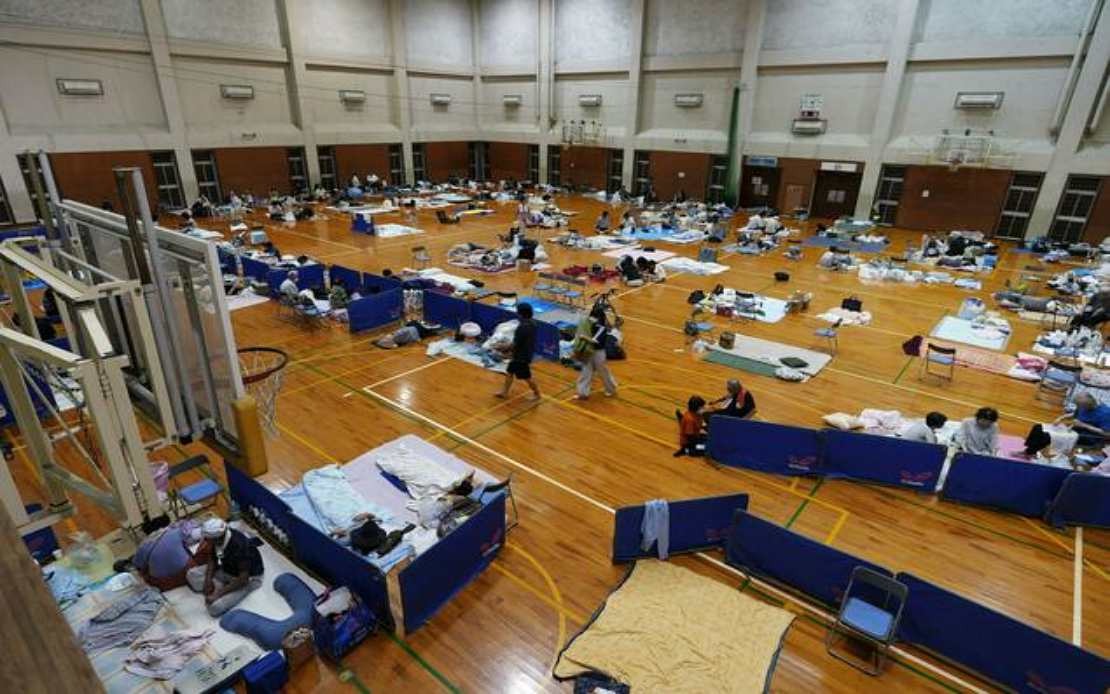
One week after a magnitude 7.1 earthquake ravaged Kumamoto Prefecture in southwestern Japan on July 28, the humanitarian crisis has not abated. More than 8,000 evacuees continue to shelter in roughly 150 facilities across the region, creating a long-term displacement challenge that extends far beyond the initial tremor. The combination of persistent infrastructure failures and punishing weather conditions has transformed what began as an acute emergency into a protracted humanitarian struggle, with authorities now racing to prevent secondary disasters from claiming additional lives.
The initial quake struck at approximately 4:27 p.m. and has claimed 38 lives, with particularly devastating consequences at two industrial and commercial sites. An explosion at an Aeon shopping mall in Kashima killed seven people, while a chimney collapse at Nippon Paper Industries Co.'s facility in Yatsushiro claimed nine lives. These figures underscore how the earthquake's impact extended beyond residential areas into the region's economic infrastructure, adding complexity to both rescue operations and the rebuilding process that lies ahead.
Water supply disruptions remain one of the most pressing immediate concerns facing both evacuees and permanent residents. Approximately 45,000 households across five municipalities remain without reliable water access, forcing authorities to deploy water distribution trucks throughout the affected zones. This infrastructure failure takes on heightened urgency given Kumamoto's current environmental conditions. On Monday alone, large portions of the prefecture experienced temperatures exceeding 35 degrees Celsius, with some areas recording unprecedented highs of 40 degrees. Such extremes transform a water shortage from an inconvenience into a genuine health emergency, particularly for elderly residents and those with pre-existing health conditions.
The death toll has already expanded beyond earthquake-related injuries. Authorities have recorded one suspected heat stroke fatality among people sleeping in vehicles—a sobering reminder that the disaster's consequences continue to evolve in unpredictable ways. Recognising the escalating complexity of the crisis, Prime Minister Sanae Takaichi visited an evacuation shelter on Monday and subsequently announced that the government would formally designate the earthquake as a "disaster of extreme severity." This administrative classification carries significant practical weight, enabling affected local governments to access higher levels of national financial support for reconstruction initiatives and unlocking special assistance programmes for victims.
The uncertainty surrounding the full extent of vehicle habitation underscores a critical gap in disaster response data. While officials acknowledge that many people are sleeping in parked cars rather than in official shelters, the exact numbers remain unquantified and likely significantly higher than current estimates. This population remains particularly vulnerable to heat-related illness, as vehicles provide minimal insulation against extreme temperatures. Addressing this invisible displacement has become an urgent priority, prompting authorities to initiate applications for secondary evacuation placements in hotels and to accelerate temporary housing construction in the hardest-hit municipalities of Uki and Hikawa.
Responding to the cascade of challenges, national and prefectural governments have mobilised multiple intervention strategies. Beyond water truck deployments, authorities are expanding portable toilet facilities in evacuation centres and installing spot cooling systems to mitigate heat exposure among shelter residents. These measures reflect recognition that earthquake response extends well beyond immediate rescue operations into the realm of sustained humanitarian care. The coordination required to manage 150 simultaneous shelter operations across a prefecturally distributed region demands sophisticated logistics and resource allocation.
Regional and international solidarity has begun to manifest in concrete ways. The southern Taiwanese city of Kaohsiung has dispatched essential hygiene supplies to Miyabien, a nursing home in Yatsushiro, after learning of the facility's critical needs. Midori Tagata, the facility's director, expressed gratitude for the donation, noting that persistent water shortages have severely compromised the ability to maintain adequate sanitation standards for vulnerable residents. This cross-border humanitarian gesture carries particular resonance in East Asia, where earthquake experience is common and mutual aid reflects shared vulnerability to tectonic forces.
The damaged physical infrastructure extends beyond shelter requirements into transportation networks. The Kyushu Shinkansen bullet train line remains suspended between Kumamoto and Kagoshima-chuo stations, disrupting regional mobility and commerce. Simultaneously, the Kyushu Expressway has been closed to general vehicles between the Matsubase and Ebino exits, limiting ground transportation alternatives. These infrastructure interruptions compound the difficulties facing residents, restricting access to emergency services, markets, and family members across administrative boundaries.
Prefectural authorities have assessed approximately 12,000 buildings as sustaining damage from the earthquake, a figure that suggests the reconstruction timeline will extend over months or years rather than weeks. This scale of structural compromise means that evacuees cannot expect rapid return to their homes, necessitating sustained shelter and temporary housing provision. For Malaysian observers and Southeast Asian readers, this Japanese experience offers instructive lessons about disaster management at scale. While Indonesia, the Philippines, and other regional neighbours face similar earthquake risks, the systematic and well-resourced Japanese response illustrates both best practices and the immense logistical burdens that seismic events impose, even on developed nations with advanced emergency management systems.
The convergence of natural hazard impacts—earthquake damage compounded by extreme heat and water scarcity—demonstrates how climate and geological risks intersect to amplify humanitarian consequences. As Southeast Asia experiences increasing heat stress and continues to lie in active seismic zones, the Kumamoto experience underscores the importance of integrated disaster preparedness that accounts for cascading environmental stresses rather than treating hazards in isolation. The Japanese government's rapid deployment of assistance and transparent communication regarding the severity classification provides a regional model for how institutional responses can be rapidly calibrated to evolving crisis circumstances.

