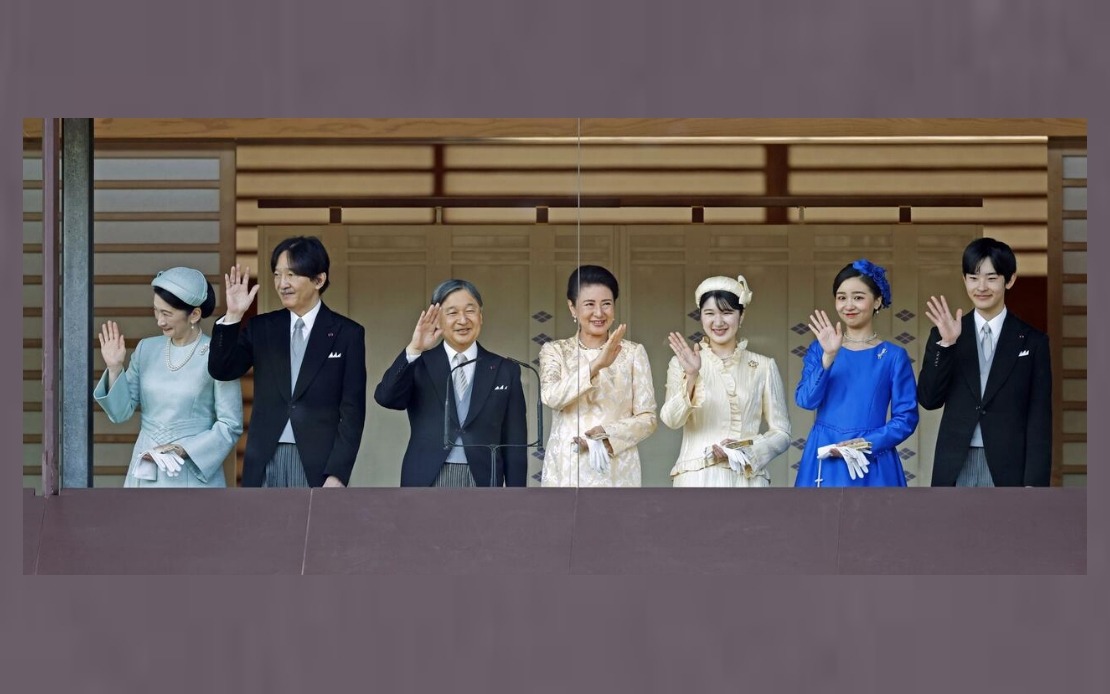
Japan has fundamentally altered how its imperial system will function, enacting sweeping changes to the Imperial House Law for the first time in 76 years. The reform, passed by parliament on Friday, represents a significant policy shift intended to address a demographic crisis within the world's oldest continuous monarchy, yet it has left the administrative machinery supporting the royal institution in a state of flux and prompted widespread public disquiet about whether the government has adequately considered the implications of entering untested constitutional waters.
The core challenge driving this legislative overhaul is stark: the imperial family has contracted to just 16 members, a historically low figure that threatens the institution's long-term viability. Prime Minister Sanae Takaichi, leading a conservative administration with deep respect for imperial tradition, has made reversing this numerical decline a top policy objective. The reformed law introduces mechanisms designed to replenish the pool of eligible successors, most notably by permitting males aged 15 and older from 11 former imperial branch families to be adopted directly into the imperial household. These families surrendered their royal status in 1947 as part of the post-war constitutional settlement, but descendants from these lineages now represent a potential human resource for the monarchy's future.
Yet those charged with implementing these changes are experiencing profound professional anxiety. Officials within the Imperial Household Agency acknowledge the law's strategic merit—one remarked that securing a stable imperial membership is undeniably significant—but simultaneously express deep reservations about execution. The prospect of integrating adopted members raises questions about cultural integration and psychological preparation that institution staff find genuinely troubling. One senior official articulated a particular concern: whether adoptees, should they actually volunteer, would truly internalize the symbolic nature of Japan's imperial system and possess the wisdom to uphold the constitutional role that recent emperors have embodied. These are not merely bureaucratic worries but reflect substantive doubts about whether the legal framework addresses the philosophical dimensions of imperial service.
Remarking on this uncertainty, Asahiro Kuni, an 81-year-old member of one of the former imperial branch families eligible for adoption, captured the practical skepticism pervading even those who might benefit from the reform. When asked whether individuals would realistically come forward to join the imperial family, he expressed profound doubt about its realistic feasibility. His hesitation reveals a deeper tension: the law creates theoretical pathways that may remain unused precisely because the human cost of imperial service—the surrender of ordinary life—remains daunting regardless of legal permissions.
The reform's treatment of female imperial family members has crystallized another layer of internal institutional concern. Under the revised framework, princesses who marry commoners may now elect to retain their royal status, a departure from previous practice. However, this provision has introduced what agency staff characterize as an agonizing personal choice. Five currently unmarried female members, including Princess Aiko (the only daughter of Emperor Naruhito) and Princess Kako (daughter of Crown Prince Fumihito), will eventually confront this decision. Palace aides recognize that social and institutional pressures will render the choice to relinquish royal status extremely difficult, effectively constraining what is nominally freedom. More troublingly, spouses and children of women who retain their status will remain commoners, creating an asymmetry of legal standing within families that one aide described as fundamentally strange and problematic.
Underlying this reform lies a structural reality that continues to divide public and elite opinion: Emperor Naruhito has only a daughter. Despite the strength of public polling suggesting that many Japanese citizens support female succession, the conservative political establishment has constructed this legislative package explicitly to sidestep that possibility. The revised law maintains the male-only succession principle while offering alternative mechanisms—adoption, status retention—that keep female accession at bay. A palace aide captured this strategic orientation directly, observing that governmental positioning suggests an intent to rule out female emperors and anyone ascending through the matrilineal line. To younger Japanese and progressive observers, this represents a policy outcome reached without genuine public consultation, a decision imposed from above.
Public sentiment on the imperial system remains fragmented and ambivalent. Some citizens voice conditional support, arguing that if adopted members demonstrate genuine commitment to serving the people as Emperor Naruhito and Empress Masako do—including visits to disaster-affected regions like Fukushima—then questions about legitimacy may prove surmountable. These supporters note that the emperor functions as a constitutional symbol rather than wielding executive power, suggesting that character and dedication matter more than lineage. Shinichi Kokubun, a 76-year-old who met the imperial family during their April visit to tsunami-devastated Futaba in Fukushima Prefecture, represents this pragmatic perspective.
Conversely, younger citizens express frustration that fundamental decisions about Japan's imperial institution have proceeded with inadequate public engagement. In Hiroshima, 22-year-old Miyu Nakao highlighted polling data consistently showing strong public preference for female succession, then criticized the government for essentially excluding ordinary citizens from this constitutional conversation. A 20-year-old college student in Osaka articulated related frustration about the absence of public education regarding what the Imperial House Law actually entails, suggesting that most young Japanese possess insufficient familiarity with these institutions to even evaluate the reforms meaningfully. This generational gap suggests potential future tension if the imperial system continues to evolve without broader societal dialogue.
The legal reform also reflects Japan's broader conservative cultural politics. Maintaining the male-only succession appears misaligned with contemporary public values—successive opinion surveys indicate that Japanese citizens, particularly younger cohorts, increasingly regard female imperial succession as legitimate and desirable. Yet the political decision-making structure allowed conservative elites to implement a solution emphasizing male adoption and status retention while effectively foreclosing female accession. For many observers, this exemplifies how institutional authority can override apparent public sentiment when constitutional questions concentrate power within narrow governmental circles.
Looking forward, the Imperial Household Agency faces genuine operational uncertainty. The legal framework now exists, but whether eligible males will voluntarily surrender ordinary lives to undergo imperial training and assume ceremonial duties remains profoundly uncertain. Agency officials must prepare contingency scenarios, develop protocols for integrating adoptees, and manage the complex emotional terrain surrounding female members' future status decisions—all while the constitutional and symbolic foundations of their institution shift beneath them. The Palace staff's anxieties about understanding the nature of symbolic monarchy and whether adoptees can genuinely embody imperial values reflect substantive institutional concerns that legal reform alone cannot resolve.
For Southeast Asian observers and Malaysian readers particularly, Japan's imperial succession debate offers instructive comparison. Malaysia's own constitutional monarchies, with their complex federal structures and rotating sultanic positions, navigate succession questions within frameworks balancing tradition and institutional stability. Japan's struggle to address demographic decline while preserving symbolic continuity illustrates how even well-established monarchies face genuine pressure to adapt, yet face equally genuine tensions when adaptation proceeds without consensus. The Japanese case demonstrates that legal innovation cannot substitute for the cultural and psychological preparation required when institutional practices fundamentally transform, a lesson relevant to any nation contending with generational change and constitutional tradition.

