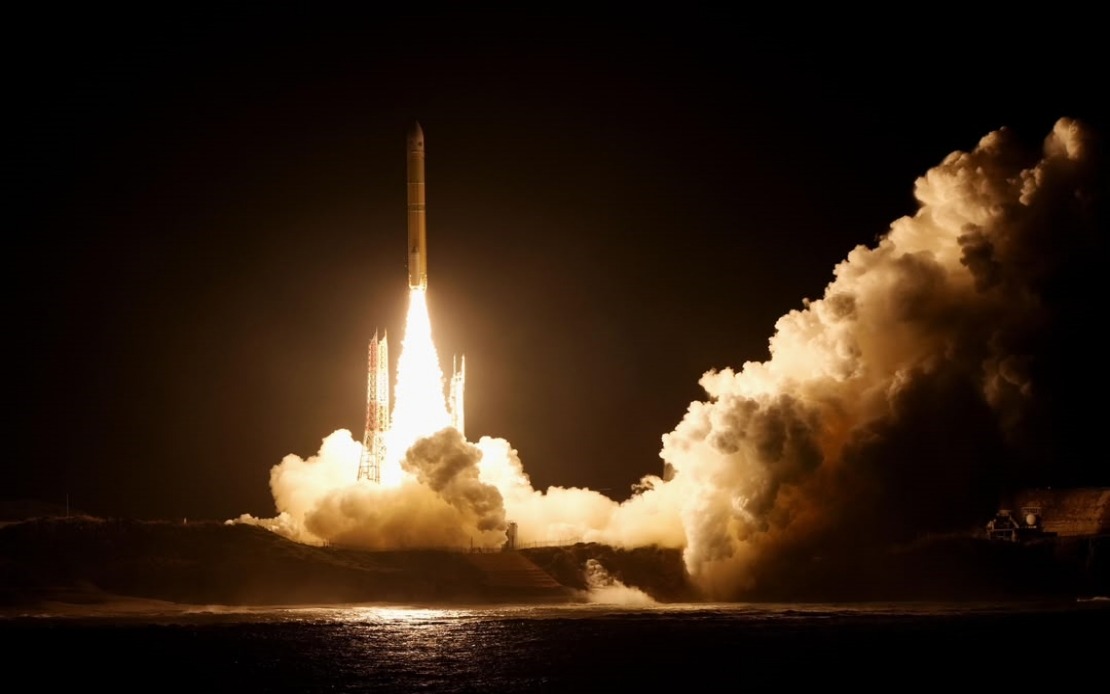
Japan's space programme achieved a significant milestone on Tuesday when the Japan Aerospace Exploration Agency successfully deployed the Michibiki No. 7 positioning satellite into orbit aboard an H3 rocket launched from the Tanegashima Space Centre on a small island in southwestern Japan. The achievement represents a crucial recovery for JAXA following the setback that occurred last December, when a similar mission failed to reach its objective, and underscores the nation's determination to establish full operational capability for its domestically developed satellite navigation system.
The H3 rocket No. 9 lifted off early Tuesday morning carrying the latest addition to Japan's Quasi-Zenith Satellite System, a constellation designed to provide precise location services for civilian applications ranging from smartphone positioning to vehicle navigation systems across the country. The mission had originally been scheduled for Friday but encountered multiple delays due to inclement weather conditions, including a passing typhoon that forced postponement to Monday and then another day before atmospheric conditions finally proved suitable for launch.
This successful deployment comes as welcome news for Japan's ambitions in the competitive field of space technology. The previous H3 launch last December, which involved the Michibiki No. 5 satellite, ended in failure when the rocket could not successfully place its payload into the intended orbit. That setback had cascading consequences for the entire satellite constellation timeline, as the subsequent launch of the Michibiki No. 7 had been originally planned for February but was forced to slip further as JAXA engineers worked to identify and correct the underlying issues that had undermined the earlier attempt.
Understanding the broader context of Japan's satellite positioning infrastructure helps illuminate the significance of this achievement. Currently, five Michibiki satellites are operational and providing navigation services across Japan and the Asia-Pacific region. However, the Japanese government has established an ambitious target of deploying a total of seven satellites within the constellation to achieve comprehensive coverage and ensure the system can function independently without reliance on other nations' positioning infrastructure, whether that be the American GPS system or other alternatives.
The H3 rocket itself represents a substantial technological evolution for Japan's space capabilities. The vehicle was developed as the successor to the highly dependable H2A rocket series, which had faithfully served as Japan's primary launch vehicle for more than two decades and earned a reputation for consistency and reliability. Transitioning to a new rocket family inevitably involves a learning curve, as demonstrated by the mission failures and technical challenges that JAXA has encountered during the H3's operational debut phase.
The track record of the H3 programme has indeed been mixed to date. Beyond the December failure with the H3 No. 8 rocket, JAXA had successfully conducted another H3 launch in June, which deployed multiple small satellites into orbit and demonstrated that the rocket could function effectively when properly configured. This pattern of alternating success and failure is not uncommon during the early operational phase of new launch systems, as engineers gather real-world performance data and systematically address technical vulnerabilities that emerge during actual flight operations.
For regional observers including those in Southeast Asia and Malaysia, the success of Japan's positioning satellite system carries particular relevance. The Quasi-Zenith Satellite System, also known as QZSS, provides supplementary positioning capabilities that can enhance the accuracy and reliability of location-based services across East and Southeast Asia. This is especially valuable in regions where terrain, atmospheric conditions, or other geographical factors might degrade the performance of traditional GPS signals, making regional alternatives and complementary systems strategically important.
The achievement also reflects Japan's broader strategic commitment to maintaining technological independence and self-reliance in critical space infrastructure. In an era when space capabilities increasingly underpin economic competitiveness and national security, Japan's determination to develop and sustain its own satellite systems and launch capabilities demonstrates forward-thinking long-term planning. The investment in the H3 rocket and the Quasi-Zenith system represents confidence in Japan's engineering expertise and commitment to space exploration as a national priority.
Looking ahead, JAXA will need to maintain this momentum while continuing to refine the H3 rocket's operational profile to achieve the reliability standards required for a commercial and strategic launch platform. The successful deployment of the Michibiki No. 7 satellite represents a firm step in the right direction, but the path toward deploying the full seven-satellite constellation and establishing the H3 as a mature, dependable launch system will require sustained effort and additional successful missions. Nevertheless, Tuesday's successful launch provides encouraging evidence that Japan's space programme is successfully surmounting its early technical challenges and moving toward its established goals.

