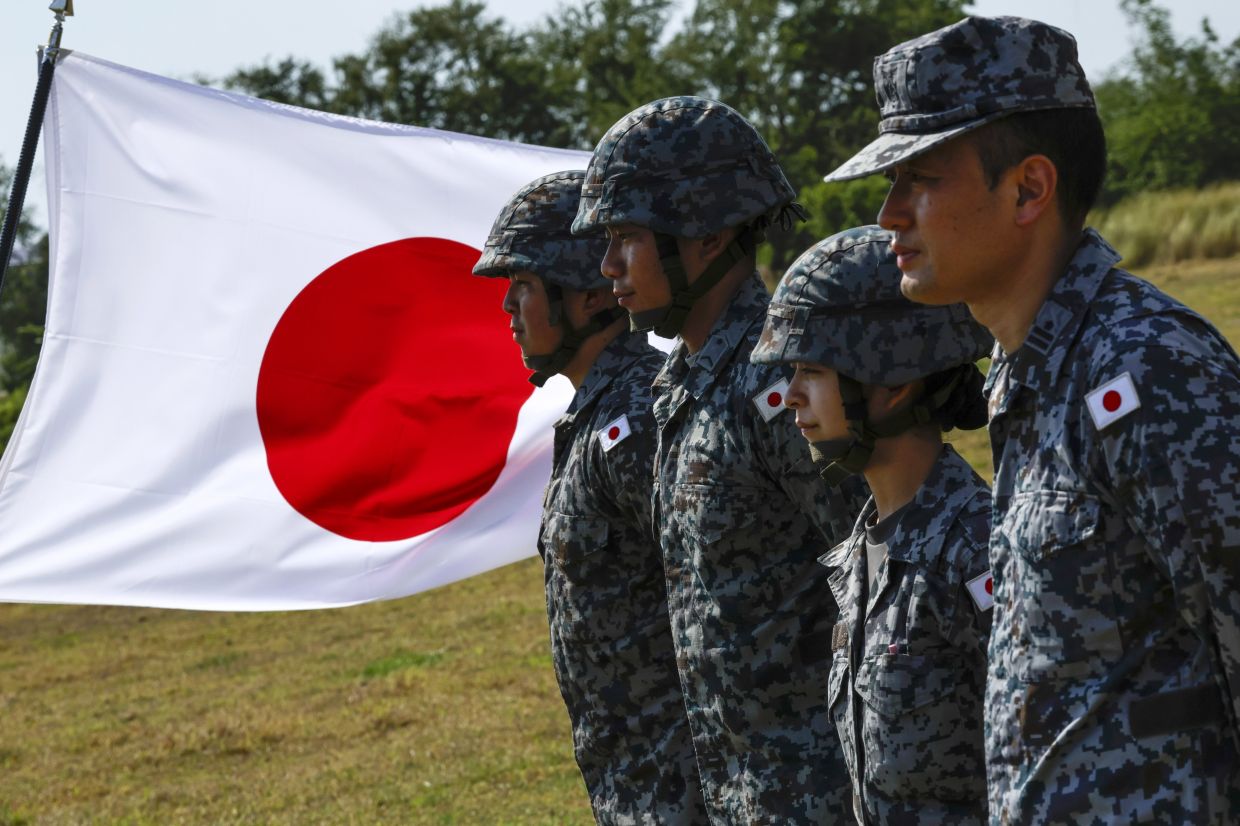
Japan has emerged as an increasingly assertive player in reshaping Asia's security architecture, yet this ambitious regional defence strategy confronts substantial obstacles that threaten to undermine its effectiveness. Speaking at Singapore's major security forum on May 31, Defence Minister Koizumi underscored Japan's determination to lead a new framework for Indo-Pacific stability. The strategy encompasses nuclear-powered submarines, expanded military partnerships, and a revamped development toolkit designed to offer regional nations an alternative to choosing between Washington and Beijing. However, beneath the confident rhetoric lies a more complex reality: Tokyo lacks the financial firepower to compete directly with China, must navigate the sensitivities of partners wary of antagonising Beijing, and confronts uncertainty about American commitment to Asia under shifting political winds.
The symbolic cancellation of a scheduled China-focused session during the Singapore forum highlighted Japan's success in steering regional discourse away from Beijing's preferred narrative, yet it simultaneously exposed the fragility of the consensus Japan seeks to build. Koizumi's high-profile meeting with US Defence Secretary Pete Hegseth was intended to project allied unity, but analysts noted it betrayed Tokyo's underlying anxiety about Washington's staying power in the region. This concern is not unfounded. The Trump administration's demands that allies dramatically increase defence spending, combined with the imposition of steep tariffs on strategic partners including India, have created palpable uncertainty about the predictability of American security guarantees.
Recognising these constraints, Japan has pursued a sophisticated multi-layered approach that goes well beyond traditional military balancing. Rather than adopting explicit anti-China rhetoric that would alienate Southeast Asian and Pacific Island nations dependent on Beijing for trade and investment, Tokyo has woven together security assistance, infrastructure financing, and energy transition support into an integrated toolkit. This holistic strategy acknowledges that many regional partners prioritise economic development and resilience over confrontational geopolitical positioning. Prime Minister Sanae Takaichi's May announcement of an updated Free and Open Indo-Pacific framework marked a significant recalibration from Shinzo Abe's 2016 formulation, shifting focus from abstract principles like rule of law toward concrete mechanisms for securing undersea cables, energy supply chains, and maritime domain awareness.
At the heart of this emerging architecture lies an innovative defence assistance programme that has grown with remarkable speed. Launched just three years ago covering four countries with 2 billion yen in commitments, the scheme now extends to twelve nations and has expanded to 18.1 billion yen, encompassing advanced radar systems and drone technology. The programme exploits a deliberate policy distinction: while Japan's official development aid traditionally embraces non-military constraints, the newly created Overseas Security Assistance framework enables direct support to military entities without violating the foundational principle. This legal architecture allows Tokyo to provide capabilities that nations unable to afford standard weapons systems urgently need, particularly in maritime security where smaller states face escalating pressure from Beijing's increasingly assertive coast guard operations.
The strategic brilliance of this approach lies in how it simultaneously addresses multiple challenges. Infrastructure investments in ports and airports prove more politically acceptable to recipient governments than overtly military aid, yet the facilities constructed serve dual purposes—supporting civilian commerce while enabling coastguard operations and defence logistics. Japan views these connectivity projects not merely as development assistance but as foundational tools for building a resilient Indo-Pacific order less vulnerable to coercion. Crucially, this strategy positions Tokyo to forestall a regional power vacuum that would inevitably be filled by Chinese interests rather than American presence, given Washington's diminished bandwidth in the region.
Beyond its strategic purpose, Japan's defence aid initiative generates tangible commercial benefits that reinforce the entire endeavour. Military hardware supplied to regional partners provides a vital proving ground for Japanese equipment, allowing manufacturers to demonstrate capabilities to international buyers and establish market presence in the defence sector. This industrial dimension matters considerably given Japan's April decision to lift its decades-old ban on lethal weapons exports, enabling sales to seventeen countries including six Southeast Asian nations: the Philippines, Malaysia, Indonesia, Vietnam, Thailand, and Singapore. The framework facilitates Japan's transition from a historically pacifist nation into a genuine player in international defence markets, opening revenue streams while deepening relationships with partner militaries.
This weapons export trajectory achieved concrete momentum in June when Tokyo and Jakarta initiated talks regarding potential sales of Japanese Asagiri-class destroyers to Indonesia. Such high-profile transactions symbolise Japan's growing confidence as a defence technology provider, yet they also illustrate the delicate balance Tokyo must maintain. Each sale or partnership announcement risks provoking Chinese objections or domestic political complications in recipient countries where pro-China constituencies wield influence. The strategy's success ultimately depends on Tokyo's ability to avoid the appearance of orchestrating an anti-China coalition while clearly establishing alternatives to Beijing's security model.
Japan's diversified approach extends beyond military hardware into critical infrastructure protection and energy security. The April launch of the US$10 billion Power Asia initiative demonstrates Tokyo's understanding that regional stability requires addressing the immediate energy vulnerabilities exposed by the Strait of Hormuz crisis. By helping Southeast Asian and Pacific nations secure emergency energy supplies and build long-term resilience, Japan positions itself as a problem-solving partner concerned with prosperity rather than mere military containment. This framing proves essential for maintaining partnerships with nations like Indonesia and Vietnam, which maintain complex relationships with both Washington and Beijing and resist binary geopolitical alignments.
Yet experts caution that Japan's strategy, however sophisticated, confronts inherent limitations stemming from Tokyo's financial constraints relative to China's resources. While the scaled-up defence assistance programme and security infrastructure investments represent unprecedented Japanese commitment, they pale against Beijing's multi-trillion-dollar Belt and Road Initiative and military expenditures. Japan cannot match China quantitatively, meaning success requires working through minilateral arrangements and flexible diplomatic coalitions that multiply Tokyo's influence beyond its individual contributions. This necessity explains Japan's emphasis on coordination with New Zealand, Australia, and India through the Quad framework, as well as deeper engagement with ASEAN nations on a bilateral basis.
Another fundamental challenge involves reconciling Japan's own military expansion with its historic pacifist image and domestic political constraints. The floating of nuclear-powered attack submarine construction represents a potential breaking of Japan's nuclear taboo and reflects how seriously Tokyo takes the Chinese challenge. Yet pursuing such capabilities while attempting to reassure regional partners that Japan seeks balance rather than arms race escalation requires extraordinarily delicate messaging. The contradiction between Japan's quiet military buildup and its public presentation as a non-threatening development partner could eventually undermine credibility if mishandled.
The uncertainty surrounding American reliability adds another complicating layer to Tokyo's calculations. Japan has structured its entire regional strategy partly around compensating for perceived American withdrawal, yet this approach carries inherent risks if US commitment actually strengthens or if Washington pursues policies contradictory to Japanese interests. The Trump administration's transactional approach to alliances and protectionist trade policies have already created friction with Tokyo, raising questions about whether Japan's reliance on continued American engagement reflects outdated assumptions. Alternatively, Japan's expanding capabilities and partnerships could eventually enable more independent action, though such a transition would fundamentally reshape the regional security architecture.
Looking forward, analysts suggest Japan must sustain its emphasis on inclusive economic development alongside security partnerships while resisting pressures to adopt explicitly anti-China positioning that would fracture the consensus Tokyo has painstakingly constructed. The strategy's durability depends on demonstrating that Japan's vision of a free and open Indo-Pacific delivers tangible benefits to regional partners—whether through infrastructure quality, energy security, or genuine military capability—that prove superior to alternatives. Success requires patience and sustained commitment across multiple administrations in Tokyo and Washington, precisely the continuity that current geopolitical volatility makes increasingly uncertain.

