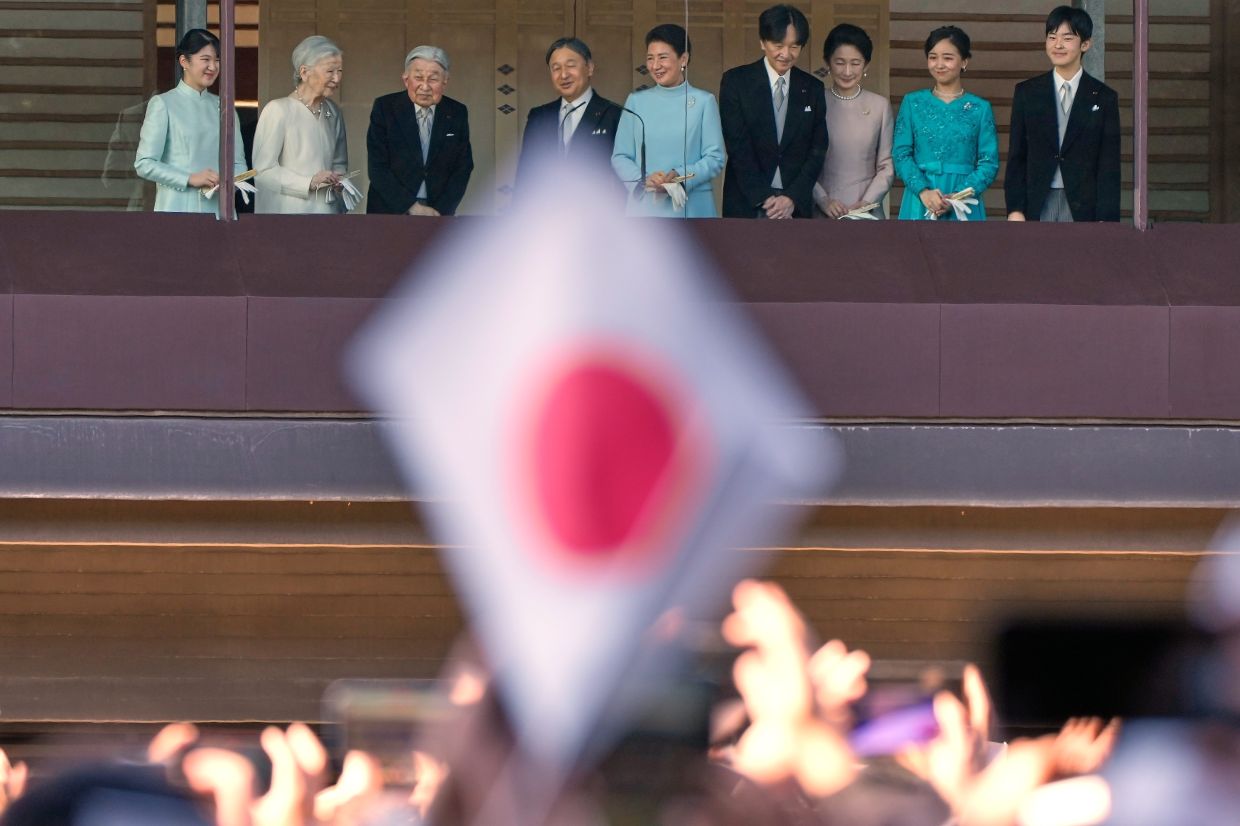
Japan's parliament has enacted modifications to its imperial succession law following a legislative process marked by considerable internal disagreement, yet the changes leave intact one of the world's most restrictive monarchy frameworks by maintaining an absolute prohibition on female emperors. The upper house approved the revised Imperial Household Law on Friday, July 17, with overwhelming parliamentary backing, but the outcome represents a compromise that disappointed advocates for broader modernisation of Japan's ancient institution of monarchy.
The predicament confronting Japan's imperial system centres on Prince Hisahito, a 19-year-old biology enthusiast currently unmarried and without children, who represents the sole male heir in the direct line of succession. Should Hisahito fail to produce a son, the unbroken male lineage stretching back millennia through Emperor Naruhito will terminate entirely, a scenario that has prompted policymakers to consider emergency measures. The succession crisis reflects a fundamental structural weakness in the imperial system: the exclusion of women from succession has created a bottleneck where the future of the institution depends entirely upon the personal reproductive decisions of a single young man still in university.
Under the newly enacted legislation, the imperial household may now formally readmit male descendants of former imperial families who departed the official register following World War II, provided they remain single and have reached at least 15 years of age. The reforms also extend a privilege previously available only to men by permitting women who marry outside the imperial family to retain their royal status, a limited concession that falls far short of granting women succession rights. These adjustments represent the first significant modifications to the 1947 Imperial Household Law, yet they fundamentally avoid the central debate surrounding gender equality and imperial continuity.
Public sentiment stands sharply at variance with the legislative outcome. An Asahi Shimbun survey conducted in May revealed that 72 percent of Japanese respondents support altering the succession rules to permit women to become empress, reflecting substantial generational and demographic shifts in attitudes toward gender roles within Japan's historically patriarchal institutions. This disconnect between popular opinion and legislative action underscores the influence of conservative ideological factions within Japan's ruling establishment who regard female succession as incompatible with traditional concepts of imperial authority and continuity.
The legislative process exposed internal fractures within the ruling Liberal Democratic Party, particularly surrounding Prime Minister Sanae Takaichi, who despite being Japan's first female chief executive, has publicly opposed allowing women to ascend the throne. Seiichiro Murakami, a veteran LDP politician, characterised the exclusion of Princess Aiko, the popular 24-year-old daughter of Emperor Naruhito, as "utterly outrageous," signalling that dissent within conservative circles reflects genuine principled disagreement rather than merely procedural matters. Such public criticism from within the ruling coalition reveals the fractures threatening consensus on this sensitive constitutional issue.
Among the most poignant critiques came from Asahiro Kuni, an 81-year-old former imperial family member whose branch departed the official register in the post-World War II period. Kuni articulated serious practical reservations about the government's strategy of readmitting distant male relatives, noting that individuals who have spent their formative years in civilian society would find the rigorous constraints and expectations of imperial life fundamentally incompatible with modern expectations of personal freedom. His statement to the Asahi Shimbun daily that "by the age of 15, a person has grown up breathing the air of freedom" captures the tension between historical institutional demands and contemporary social norms that policymakers have failed to adequately address.
The imperial household currently comprises 16 members total, with only five males including the 92-year-old retired Emperor Akihito, his 90-year-old brother, the serving Emperor Naruhito, the emperor's brother, and Prince Hisahito. This demographic reality highlights the precariousness of relying exclusively upon male-line succession in an era when family formation patterns have fundamentally transformed across Japanese society. The visible fragility of the succession system has prompted even mainstream conservative publications to question official policy: the Yomiuri Shimbun, typically a vocal supporter of the Liberal Democratic Party, recently published an editorial criticising the government's approach, suggesting that concern transcends partisan divisions.
The implications for Southeast Asia and the broader region merit consideration, as Japan's handling of institutional modernisation while respecting tradition offers a cautionary example of how entrenched historical structures can resist democratic evolution. The Japanese case demonstrates how even prosperous, technologically advanced democracies can struggle to reconcile contemporary values with institutional frameworks designed centuries ago, a challenge increasingly relevant as other Asian societies grapple with balancing tradition and modernity across their own governance structures. The compromises embodied in Japan's imperial succession reforms suggest that purely technical adjustments may prove insufficient without addressing fundamental questions about institutional legitimacy and public consent.
The exclusion of female succession appears increasingly untenable given sustained public support, the demonstrated capacity of women to exercise executive authority as demonstrated by Prime Minister Takaichi's own position, and the practical inadequacy of relying upon distant male relatives whose integration into imperial life specialists describe as unrealistic. The government has essentially deferred the central challenge rather than resolved it, purchasing short-term institutional stability through measures that most observers acknowledge cannot indefinitely sustain the imperial system without confronting the gender exclusion question directly. Whether Japan will ultimately embrace female succession before succession actually passes beyond the imperial male line remains perhaps the defining constitutional question confronting the nation's political establishment.

