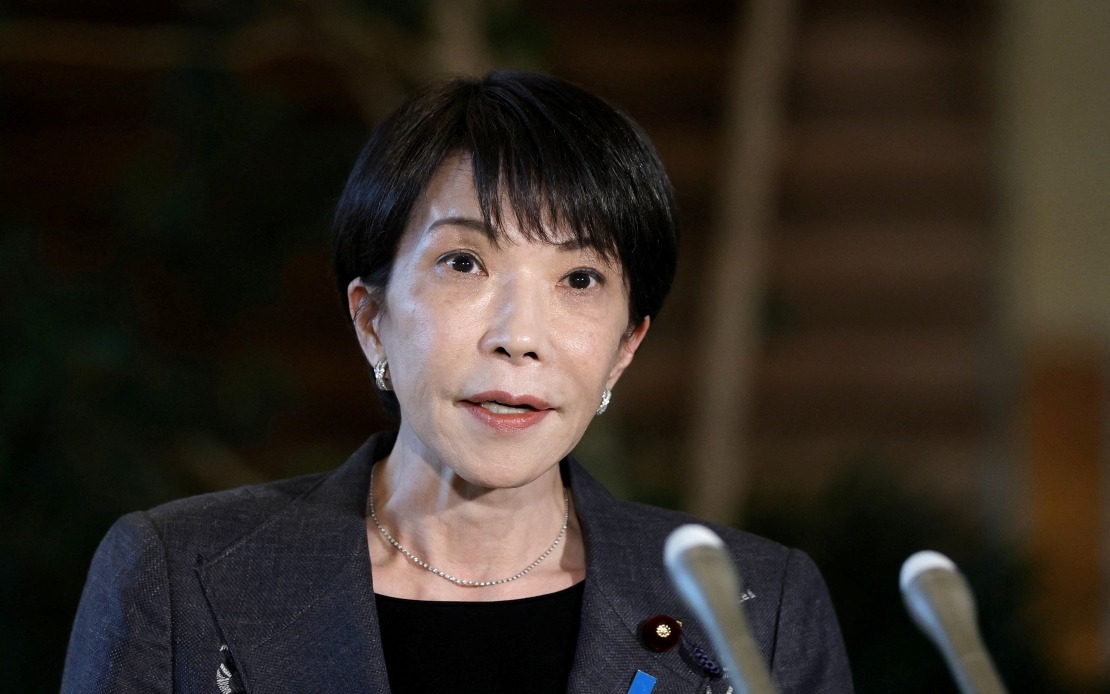
Japanese Prime Minister Sanae Takaichi marked the nation's 81st commemoration of the Second World War's conclusion on Saturday by dispatching a formal ritual offering to Tokyo's Yasukuni shrine, a move that underscores the enduring symbolism of the site in Japan's relationship with its neighbours. Rather than attend personally, Takaichi directed the offering through her capacity as president of the ruling Liberal Democratic Party, funding it from personal resources according to senior party officials. The decision to abstain from a direct visit represents a calculated diplomatic manoeuvre, distinguishing her approach from predecessors who have appeared at the shrine on anniversary dates.
Defence Minister Shinjiro Koizumi made a physical visit to the shrine on Saturday, becoming the first sitting defence chief to do so on the war anniversary since Minoru Kihara's attendance last year on August 15, 2024. Kihara now serves as chief Cabinet secretary within Takaichi's administration, highlighting how individuals within the government navigate the complex political and international dimensions of Yasukuni observance. Hitoshi Kikawada, who holds the position of state minister overseeing matters concerning Japan's Northern Territories, likewise visited the shrine on the same day. These simultaneous visits by senior officials reflect the conservative faction's continued attachment to the location as a site of national remembrance.
The Yasukuni shrine occupies a uniquely contested position in East Asian geopolitics, having been expanded in 1978 to enshrine 14 wartime military leaders as deities according to Shinto tradition. Among those honoured are individuals convicted and executed as Class-A war criminals following Tokyo's surrender, including General Hideki Tojo, who served as prime minister during the final years of Japan's military aggression and was executed in 1948 for crimes against peace. This sacralisation of figures widely regarded as bearing responsibility for regional devastation creates persistent friction with neighbouring nations that experienced Japanese occupation and colonial rule.
China and South Korea have consistently expressed strong disapproval whenever Japanese political leaders visit or make offerings to the shrine, viewing such actions as insufficiently acknowledging wartime atrocities and as potentially glorifying Japan's imperial militarism. Beijing endured extensive occupation throughout the 1930s and 1940s, whilst Seoul remains acutely sensitive to the legacy of Japanese colonial administration that lasted from 1910 until 1945, during which period Korea was subjected to systematic efforts at cultural and political integration into the Japanese empire. These grievances remain embedded in contemporary diplomatic relations, and any formal or semi-formal Japanese engagement with Yasukuni regularly triggers official statements expressing concern about historical revisionism.
Takaichi's approach of sending an offering rather than attending in person appears designed to navigate the competing pressures of satisfying her party's conservative base whilst minimising international criticism. During her tenure before assuming the prime ministerial office last October, she had visited the shrine during seasonal festivals and specifically on the August 15 war anniversary, demonstrating her personal commitment to the site's significance within Japan's conservative political tradition. However, her subsequent decision to refrain from direct visits since taking the highest office suggests awareness of the diplomatic costs associated with prime ministerial attendance, which carries greater symbolic weight and diplomatic implications than ministerial visits.
Other senior Liberal Democratic Party figures participated in the anniversary observances, including Secretary General Shunichi Suzuki, General Council head Haruko Arimura, and Election Strategy Committee chair Yasutoshi Nishimura. Their collective participation underscores how Yasukuni remains deeply woven into the fabric of conservative Japanese politics, serving as a focal point for those who emphasise Japan's national pride and military heritage. The shrine functions simultaneously as a commemorative site and as a political touchstone, with attendance patterns frequently analysed as indicators of political positioning within Japan's rightward-leaning establishment.
Japan's constitutional framework, adopted in the post-war period, formally commits the nation to pacifism and renounces military aggression as an instrument of state policy. This foundational contradiction—between the pacifist Constitution and the veneration of wartime military figures—remains largely unresolved within Japanese society and continues to generate domestic debate about national identity and historical memory. The shrine thus embodies tensions between those who view it as honourable remembrance of fallen service members and those who see it as representing dangerous nationalism.
In recent years, Japan has substantially accelerated its defence spending and military capability development, framing these investments as necessary responses to an increasingly challenging regional security environment. This expansion of military capacity, coupled with conservative political figures' continued engagement with symbols like Yasukuni, creates a complex message to regional audiences. For Malaysian observers and other Southeast Asian nations, these dynamics carry relevance insofar as they influence Japan's trajectory as a security partner and reflect deeper questions about how historical narratives shape contemporary strategic alignments in the region.
The Northern Territories remain at the centre of Japan's unresolved territorial disputes, with Tokyo maintaining that the former Soviet Union illegally seized these islands off Hokkaido following Japan's surrender. This ongoing disagreement with Russia, which has intensified significantly following Moscow's invasion of Ukraine, contextualises the defence ministry's active participation in Yasukuni observances as part of broader nationalist sentiment concerning territorial integrity and security concerns.
Takaichi's calculated restraint regarding personal shrine attendance, combined with her authorisation of an official offering, represents an attempt to accommodate multiple constituencies simultaneously—acknowledging her party's conservative heritage and supporters' expectations whilst attempting to preserve Japan's international relationships with neighbouring countries. Whether this middle path proves sustainable remains uncertain, particularly as geopolitical tensions in Northeast Asia continue to evolve and as Japan's security positioning becomes increasingly central to regional strategic calculations.

