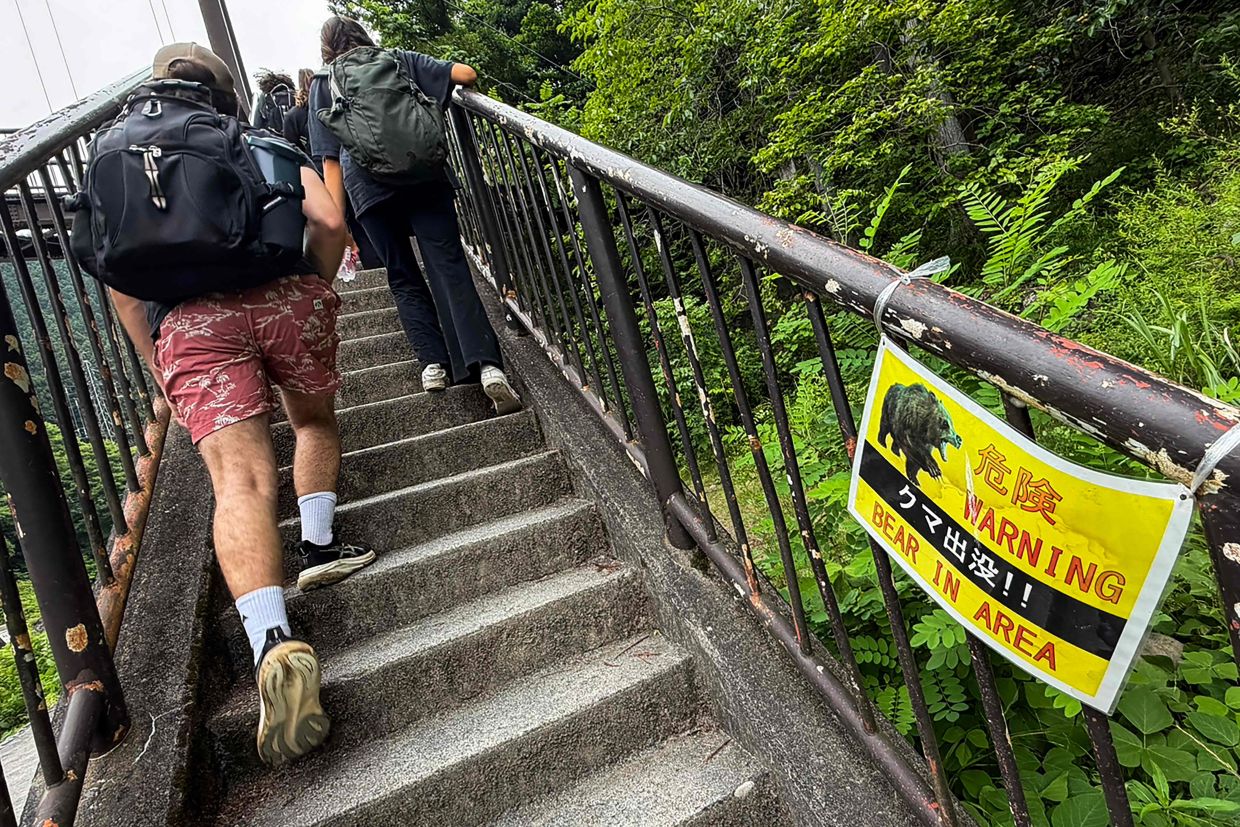
Japan's wildlife authorities have embarked on an unprecedented effort to understand and manage its growing bear crisis, announcing the installation of more than 800 surveillance cameras across the country's mountainous regions. The initiative comes in response to an alarming escalation in fatal bear encounters that has left communities in the Tohoku region gripped by fear and reshaped daily life in rural areas. Environment ministry official Yu Takahashi confirmed on Thursday that the camera deployment represents a significant shift in how Japan approaches wildlife management, moving from fragmented local surveys to a coordinated national strategy aimed at tracking bear movements and population dynamics.
The urgency of the situation cannot be overstated. Since April 1, bears have claimed at least five lives, with all documented fatalities occurring in Tohoku, Japan's northernmost region. This tragic toll is part of a broader pattern of escalating conflict: the previous fiscal year saw a record 13 bear-related deaths across the entire country, signalling a fundamental change in human-wildlife interactions. What makes the current crisis particularly acute is the frequency and unpredictability of attacks, combined with the geographic concentration of incidents in a densely populated corridor where millions of people live and work. The psychological impact on residents extends far beyond statistics; national media outlets now provide daily updates on bear sightings at shopping centres, public parks and schools, creating a climate of ambient anxiety that reflects the genuine dangers residents face.
The underlying cause of this surge lies in long-term demographic and ecological shifts across Japan. Scientists attribute the rising bear population to a steady decline in rural habitation over recent decades. As agricultural communities shrink and young people migrate to cities, vast tracts of previously managed countryside have reverted to wild forest. This transformation has removed natural human deterrents and created ideal habitat for expanding bear populations, fundamentally altering the balance between wilderness and civilization. The phenomenon reflects Japan's broader demographic challenges, where aging rural areas are being reclaimed by nature even as urban centres grow denser and wealthier. Bears, thriving in this new landscape, increasingly encounter humans at the boundaries of habitation.
The camera survey itself employs an ingenious methodology designed to identify individual bears by their distinctive markings. Authorities will place jars containing honey mixed with wine at chest height throughout surveyed areas. As bears stand on their hind legs to investigate these attractants, the cameras capture detailed images of each animal's unique white chest markings, creating a database for population monitoring. This technique allows researchers to distinguish individual animals and track their movements over time, providing far more granular data than previous methods. The initial phase targets six major bear populations in Tohoku, with plans to expand the surveillance across all of Japan's regions over the next four years. Takahashi emphasized that the shift from ad-hoc local surveys to this standardized approach represents a fundamental improvement in scientific rigour, enabling authorities to move from rough estimates to accurate, comparable population data.
The deadly attacks and near-misses continue to mount even as preparations for the survey proceed. This week, investigators opened an inquiry into what may be Japan's sixth fatality, after discovering a man's body bearing bite marks in a mountainous area of Tohoku. The case underscores how quickly situations can turn fatal in Japan's heavily forested terrain, which comprises approximately 80 percent of the nation's land area. In June, Utsunomiya, a city north of Tokyo, was effectively placed under siege when a single bear evaded capture for days, prompting mass school closures and requiring police, professional hunters and city officials working in concert to finally trap the animal after four days of intensive effort. That same month, another bear displaying unusual problem-solving abilities—it managed to open a window and activate a water tap—attacked four individuals at two separate factory locations in Fukushima before disappearing into the forest for days, creating headlines and stoking public alarm.
The invasion of urban spaces by bears marks a troubling escalation in the crisis. These incidents are no longer confined to hikers in remote areas or farmers in frontier villages. Bears are now appearing in commercial districts, approaching residential neighbourhoods, and occasionally infiltrating buildings. This urban encroachment reflects both the growing bear population and the ease with which animals now move between forest and city margins. It also reveals a critical challenge for authorities: while cameras in mountains will help track wild populations, they do nothing to prevent determined bears from entering towns and creating dangerous situations in densely populated environments where traditional wildlife management techniques become nearly impossible to apply safely.
Public safety recommendations have become an essential part of daily life for anyone venturing into Japan's mountains. Authorities now routinely advise people to avoid solo hiking, to carry bear bells attached to their bags to alert animals to human presence, and to carry anti-bear spray. These aerosols, readily available at outdoor shops, contain capsaicin—the active compound that makes chilli peppers hot—which creates an intense burning sensation on mucous membranes and eyes. The effectiveness of these precautions depends entirely on user awareness and quick reaction times, a burden that places responsibility for safety squarely on individuals rather than the state. Yet the measures highlight how normalized bear encounters have become: what was once an unlikely hazard is now treated as a routine occupational risk for anyone working or exercising outdoors.
The danger posed by bear spray became uncomfortably apparent when an accidental discharge occurred in a post office in Nagoya city on Wednesday. The incident resulted in five people requiring hospital treatment and led to the arrest of a 22-year-old Vietnamese national, Huynh Nhat Duy, on charges of business obstruction. Police spokesman Kenji Goto confirmed that the individual discharged the repellent unintentionally, a scenario that illustrates how these safety tools, while necessary, introduce their own risks in crowded public spaces. The case adds another layer of complexity to Japan's bear crisis: not only must authorities manage genuine wildlife threats, but they must also contend with the consequences of widespread public adoption of chemical countermeasures.
For Malaysian and Southeast Asian observers, Japan's bear crisis offers several instructive lessons about environmental change and human-wildlife conflict. Japan's experience demonstrates how rapid rural depopulation can fundamentally alter ecosystems, creating space for wildlife populations to expand beyond sustainable levels. As Malaysia and other regional nations continue to grapple with deforestation, habitat fragmentation, and human expansion into wilderness areas, Japan's struggle suggests that long-term coexistence requires not just reactive management but proactive landscape planning. The camera survey represents an important shift toward evidence-based wildlife policy, a model that resource-constrained Southeast Asian nations might adapt for managing their own problematic wildlife populations. Yet Japan's inability to prevent escalating attacks despite advanced technology suggests that technological solutions alone prove insufficient without complementary efforts to reshape human settlement patterns and restore buffer zones between wilderness and civilization.

