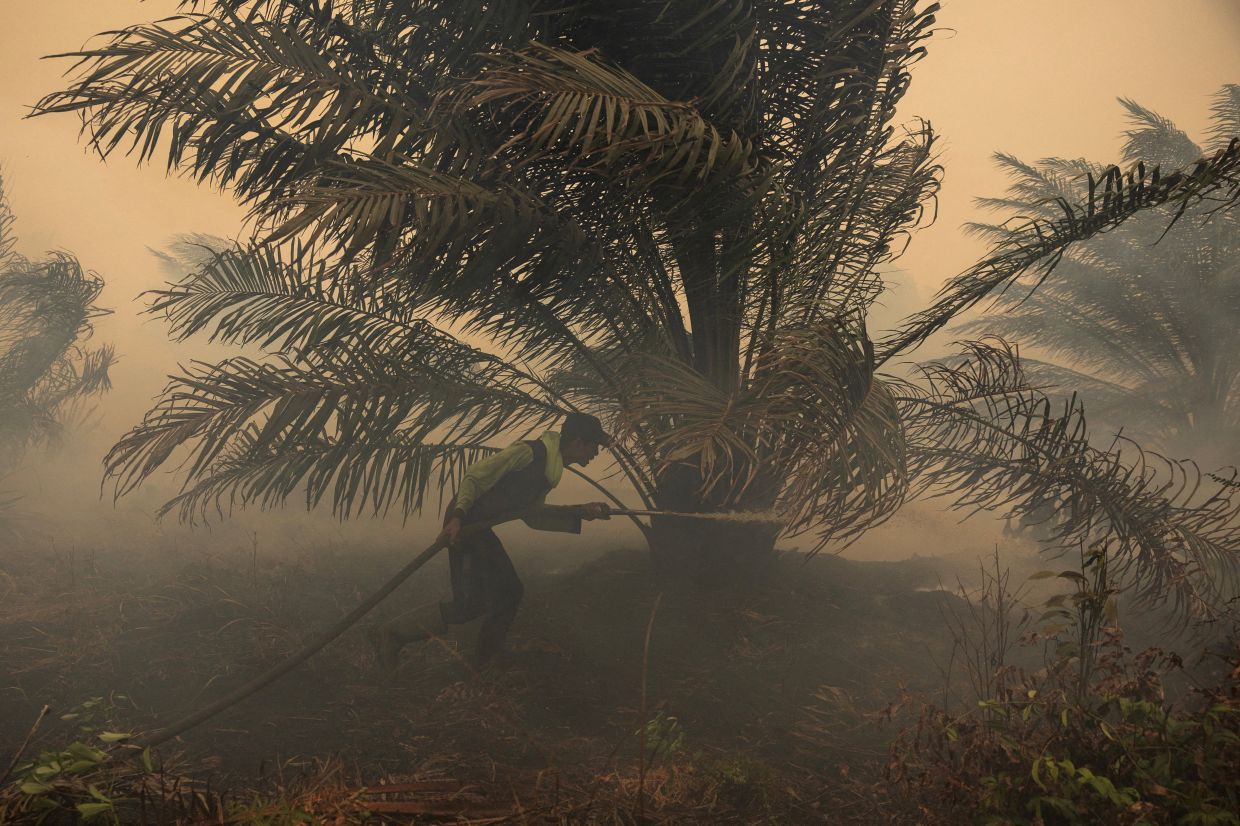
Japan has stepped in with concrete support for Indonesia's escalating forest fire crisis, offering to deploy water-bombing helicopters to tackle the worsening haze engulfing Kalimantan. The assistance marks a significant international contribution as regional air quality deteriorates to dangerous levels, with pollution indices surging past the 1,000 mark in several districts. The Japanese government will supply three aircraft for the operations, with deployment anticipated to commence on September 10, according to the National Disaster Mitigation Agency (BNPB).
Berton Panjaitan, Acting Head of the Data, Information and Disaster Communication Centre at BNPB, unveiled the partnership during a media briefing on Saturday. He explained that preparations are advancing rapidly, with teams conducting site surveys and finalising operational protocols specific to Kalimantan's terrain and weather conditions. The inclusion of a Chinook helicopter—a heavy-lift transport aircraft capable of carrying substantial water loads—signals confidence in tackling the large-scale fire zones across the island.
The pollution crisis has reached alarming proportions. Environmental Ministry data revealed that Jekan Raya district in Palangka Raya, Central Kalimantan, recorded an Air Pollutant Standard Index (ISPU) of 1,108 by late Saturday afternoon, while South-East Pontianak in West Kalimantan hit 1,075. Both readings fall into the hazardous category, posing serious health risks including respiratory distress, cardiovascular strain, and increased vulnerability for children, elderly residents, and those with pre-existing conditions. Such indices are rare globally and typically trigger strict public health warnings and movement restrictions.
The underlying cause remains extensively documented: uncontrolled ground fires burning across peatland and forest areas. BNPB data identified 9,242 hotspots concentrated across West, Central and South Kalimantan provinces, with all three regions experiencing a troubling upward trend. West Kalimantan experienced the steepest increase, adding 1,629 new hotspots to reach a cumulative 3,371. Across the three provinces, fire crews have identified 171 active ground fire locations requiring immediate intervention and resource deployment.
The scale of the current outbreak presents operational challenges even with expanded international assistance. Indonesia's domestic firefighting fleet currently comprises 52 aircraft dedicated to suppression operations, split between 38 water-bombing assets and 14 platforms dedicated to aerial reconnaissance and weather modification missions. These resources have successfully discharged approximately 3.5 million litres of water across six priority provinces, yet the accelerating fire front suggests additional capacity remains essential to prevent further deterioration.
Weather modification operations, which seed clouds to induce precipitation, have demonstrated limited success in some regions. Officials reported that rain generation activities succeeded in delivering moisture to several districts across Sumatra, including areas within Riau, South Sumatra, Jambi and Lampung provinces. However, Central and South Kalimantan proved problematic for such operations due to insufficient cloud cover and atmospheric conditions unsuitable for seeding interventions. This limitation underscores the critical importance of Japanese helicopter support, as conventional water-bombing represents the most reliable intervention method when meteorological conditions preclude cloud seeding.
The transnational dimensions of Indonesia's fire crisis extend beyond bilateral cooperation with Japan. Regional air quality degradation affects neighbouring Malaysia, Singapore, and Brunei, creating diplomatic pressure for robust mitigation efforts. During previous fire seasons, transboundary haze has triggered diplomatic tensions and economic losses across Southeast Asia through reduced tourism, disrupted logistics, and widespread health impacts. Malaysia and Singapore have experienced similar pollution crises in prior years, making them acutely aware of the regional implications of unchecked Indonesian fire activity.
The Japanese government's proactive response reflects broader ASEAN connectivity concerns and Japan's strategic interest in regional stability. Japanese companies operate extensive manufacturing and resource extraction operations throughout Indonesia, and environmental degradation threatens supply chains and workforce productivity. Furthermore, Japan has positioned itself as a development partner committed to environmental stewardship, making visible assistance with transboundary environmental crises consistent with its diplomatic positioning in Southeast Asia.
Indonesian authorities face mounting pressure to prevent a repeat of catastrophic fire seasons observed in 1997-1998 and 2015, both of which generated massive economic losses and health emergencies across the region. The current outbreak, emerging during late August and early September, coincides with the final months of the dry season when fire risk typically peaks. Successful containment requires coordinated efforts combining international support, domestic resource mobilisation, and stringent enforcement of land-use regulations to prevent agricultural conversion in fire-prone areas.
Looking forward, the effectiveness of Japanese water-bombing operations will partly determine whether this fire season remains contained or escalates into a regional emergency. BNPB's coordination with Japanese partners suggests institutional learning from previous crises, yet the underlying structural challenge remains: vast areas of commercially valuable peatland remain inadequately protected, while agricultural expansion continues encroaching on fire-prone zones. International assistance provides crucial tactical support, but sustainable solutions demand long-term policy commitments addressing land management, water conservation in peatlands, and farmer-centred incentives for fire prevention.

