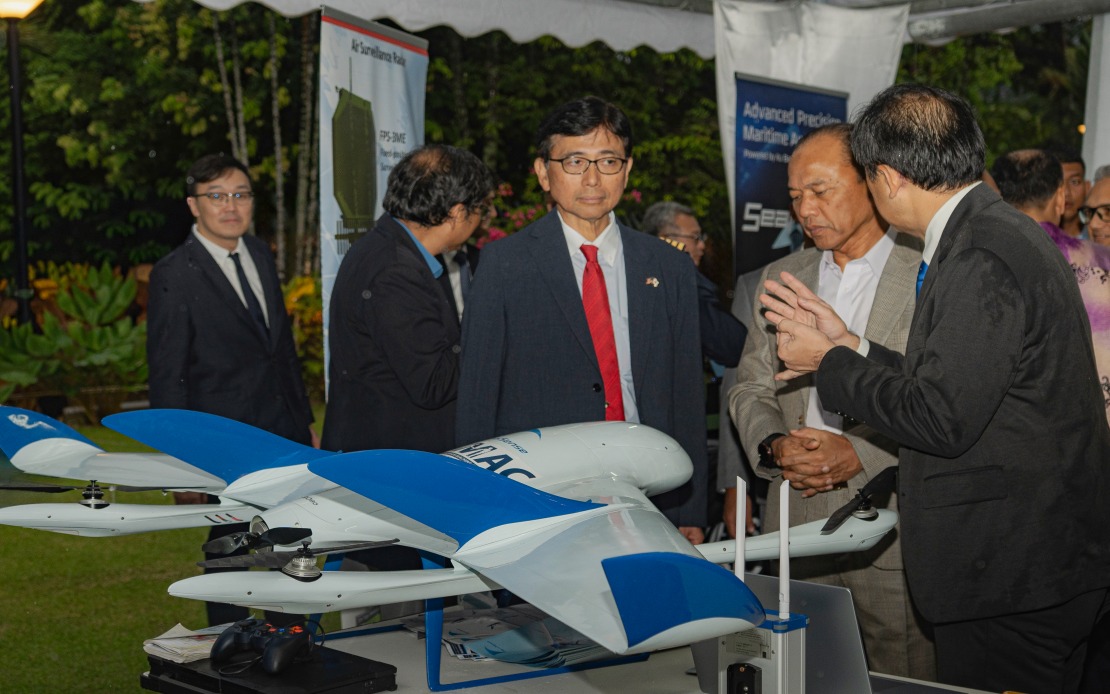
Japan is moving to substantially broaden its defence partnership with Malaysia, positioning the Southeast Asian nation as a linchpin in Tokyo's strategic architecture for the Indo-Pacific region. The commitment was underscored by Japan's Ambassador to Malaysia, Noriyuki Shikata, who spoke at the 72nd Japan Self-Defence Forces Day Reception in Kuala Lumpur on Wednesday, highlighting the momentum generated from Prime Minister Anwar Ibrahim's recent visit to Japan earlier this month.
During their bilateral talks, Prime Minister Sanae Takaichi and Anwar reaffirmed their shared commitment to deepen strategic cooperation centred on defence and security matters. The discussions reflected a broader strategic realignment in which Japan is actively building security partnerships across Southeast Asia to counterbalance regional tensions and maintain stable sea lanes. This engagement with Malaysia gains particular significance given the country's geographic positioning along critical maritime chokepoints and its influence within ASEAN, the 10-nation regional bloc that has increasingly become a focal point for major powers seeking influence.
The diplomatic momentum has been formalised through institutional structures. Japan and Malaysia elevated their bilateral relationship to the status of Comprehensive Strategic Partnership in 2023, a designation that signals the depth and scope of cooperation envisioned by both governments. Shikata emphasised that as the two nations approach the 70th anniversary of their diplomatic ties next year, Japan is committed to advancing collaboration across all domains, with particular emphasis on defence and security dimensions. This long-standing relationship provides a stable foundation upon which newer security initiatives can be built, distinguishing Malaysia's partnership with Japan from more transactional arrangements.
The practical dimension of this cooperation manifests through regular military-to-military exercises that build operational capability and mutual trust. The bilateral exercise MALPAN, conducted regularly in the South China Sea and the Strait of Malacca, has become a hallmark of the security partnership. In April, the exercise was expanded to include the Royal Malaysian Air Force alongside the Japan Maritime Self-Defence Force and Royal Malaysian Navy, signifying an evolution toward more comprehensive joint operations across multiple domains. These exercises serve multiple strategic purposes: they sharpen interoperability between forces, demonstrate commitment to international law and freedom of navigation, and signal to other regional actors that Japan and Malaysia are actively invested in maintaining stable maritime conditions.
An emerging mechanism for defence cooperation is Japan's Official Security Assistance framework, launched in 2023 with Malaysia among the initial beneficiary nations. This programme represents a shift in how Japan approaches security partnerships, moving beyond traditional diplomatic channels toward direct provision of military equipment and technological support. The range of assistance has expanded significantly. In 2024, Japan delivered unmanned aerial vehicles and rescue boats to Malaysia. Under the 2025 iteration of the programme, Japan will supply ceasefire monitoring equipment for the ASEAN Observer Team and, notably, provide a diving support vessel to the Royal Malaysian Navy. These contributions reflect both Japan's technological capabilities and its understanding of Malaysia's specific operational requirements in regional security missions.
Aligned with the broader Free and Open Indo-Pacific vision that Japan has championed, Tokyo is working to synchronise its strategic objectives with ASEAN's own Outlook on the Indo-Pacific. This convergence is significant because it suggests Japan is not attempting to impose its security architecture on Southeast Asia but rather finding common ground with regional priorities. The FOIP concept, emphasising rule-based order and freedom of navigation, resonates with Malaysia's own interests in preserving stable maritime conditions upon which its trade-dependent economy depends. By framing cooperation within this shared vision, Japan legitimises its regional engagement and reduces perceptions of hegemonic ambition.
The defence industry dimension of the partnership has gained new impetus with concrete institutional mechanisms. During Defence Services Asia 2026, held in Kuala Lumpur, ten Japanese companies exhibited advanced defence technologies and equipment, demonstrating the commercial dimension of the security relationship. More significantly, Japan and Malaysia signed a Terms of Reference to establish a bilateral defence industry dialogue, creating a formal channel for exploring potential joint development projects and procurement arrangements. Such frameworks typically lead to knowledge transfer, training opportunities, and the possibility of licensed manufacturing arrangements that benefit the recipient nation's industrial base.
The broader geopolitical context animating these initiatives cannot be overlooked. The Indo-Pacific region faces mounting strategic uncertainties stemming from great power competition, maritime disputes, and challenges to the international rules-based order. Japan, as a technologically advanced democracy deeply invested in regional stability, sees Malaysia as a partner of considerable strategic value. Malaysia's position as a non-aligned nation with influence within ASEAN adds weight to the partnership from Japan's perspective, as it demonstrates that Japanese security cooperation appeals to regional actors beyond traditional treaty allies.
For Malaysia, the deepening security partnership with Japan presents tangible benefits alongside strategic considerations. Japanese military technology and equipment, developed to world-class standards, address genuine capability gaps in Malaysia's defence establishment. The provision of diving support vessels, ceasefire monitoring systems, and UAVs responds to practical operational needs while reducing Malaysia's burden in acquiring such capabilities independently. Simultaneously, the partnership reinforces Malaysia's strategic autonomy by providing alternative sources of military equipment and technical expertise, reducing potential over-reliance on any single supplier or partner.
The timing of this enhanced cooperation also reflects regional dynamics within ASEAN. While the bloc maintains its cherished principle of non-alignment, individual members are pursuing differentiated security partnerships based on their strategic positions and threat assessments. Malaysia, sharing maritime borders with several nations and positioned along critical sea lanes, has legitimate security interests that align with Japan's vision of a stable, open Indo-Pacific. The partnership does not preclude Malaysia from maintaining its broader non-aligned stance or its extensive security relationships with other partners.
Looking forward, the trajectory of Japan-Malaysia security cooperation appears poised for continued expansion. The institutional frameworks now in place—from regular military exercises to the defence industry dialogue and official security assistance programme—provide multiple avenues for deepening engagement. The upcoming 70th anniversary of diplomatic relations presents a natural opportunity for both governments to articulate ambitious goals for the next phase of cooperation. For regional observers, the Japan-Malaysia partnership exemplifies how countries can pursue strategic cooperation within a rules-based framework while respecting one another's broader foreign policy commitments and regional roles.

