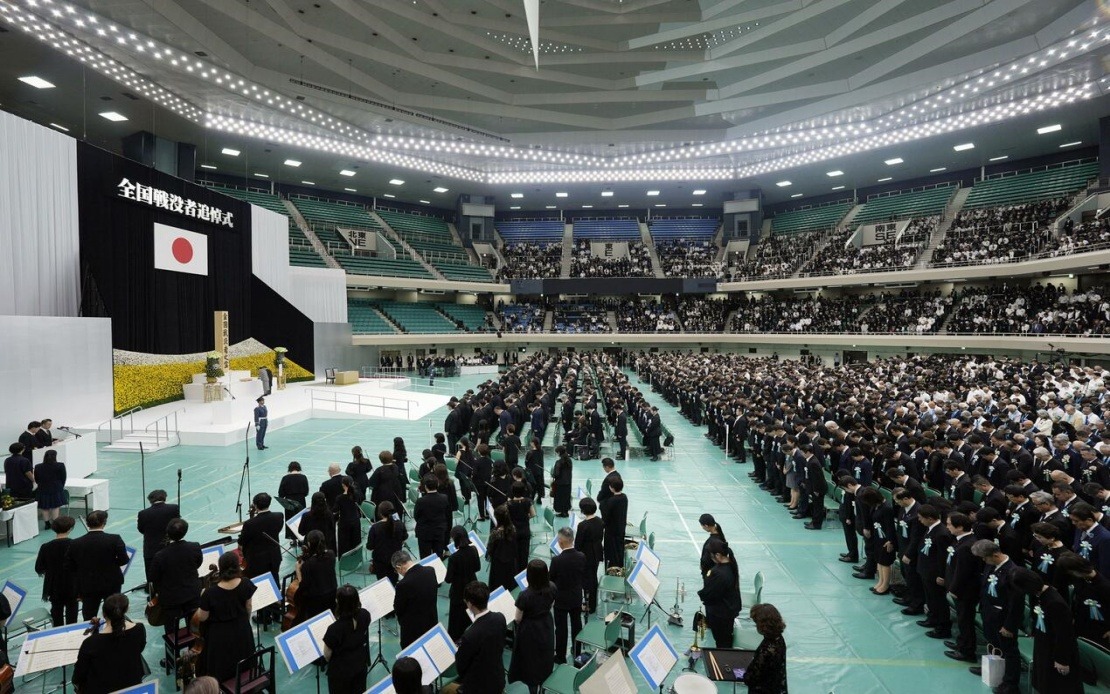
Japan on Saturday observed the 81st anniversary of its surrender in World War II with a solemn state ceremony in Tokyo, though the occasion was marked by a conspicuous rhetorical shift that underscores evolving attitudes toward the nation's wartime past. Prime Minister Sanae Takaichi, attending the annual memorial event for the first time since her appointment last October, delivered remarks that emphasised Japan's commitment to peace while notably avoiding language expressing regret or remorse over the country's military aggression during the conflict that claimed an estimated 2.3 million military lives and approximately 800,000 civilian deaths before its conclusion in 1945.
The absence of such language represents a meaningful departure from statements made by Takaichi's predecessor, Shigeru Ishiba, who at last year's ceremony explicitly referenced Japan's "remorse" and pledged the nation would "renounce war." Ishiba's willingness to use the word "remorse" marked the first time a sitting Japanese prime minister had done so at the August 15 memorial in thirteen years, reflecting a momentary return to the practice established by his predecessors before the tenure of former Prime Minister Shinzo Abe. That earlier consensus—maintained consistently before Abe assumed office for his second term in December 2012—had seen Japanese leaders regularly acknowledge the nation's wartime aggression across Asia, particularly toward China and the Korean Peninsula, and express contrition for those actions.
Takaichi, widely regarded as holding more hawkish perspectives on national security matters, framed Japan's postwar trajectory in terms of consistently choosing "the path of a nation that values peace" and making "all possible efforts for world peace and prosperity." While such language reaffirms pacifist commitments enshrined in Japan's postwar constitution, it sidesteps the more difficult historical reckoning that previous formulations had attempted to address. This rhetorical choice carries particular significance given Takaichi's well-documented alignment with Abe's political legacy and worldview, as Abe served as her political mentor before his assassination in 2022. The contrast between her remarks and Ishiba's suggests consolidation of a more nationalist interpretive framework regarding Japan's war history within the ruling Liberal Democratic Party's current leadership.
Emperor Naruhito maintained the imperial tradition of offering deeper historical reflection than his prime minister, expressing "deep remorse" during his own remarks at the ceremony—language he repeats annually without fail. The Emperor also reiterated his hope that citizens will actively preserve and transmit "the memories of the suffering endured during and after the war" to future generations as the nation collectively pursues lasting peace. This divergence between the Emperor's consistent acknowledgment of historical responsibility and the prime minister's more circumscribed language highlights internal tensions within Japan's official commemoration of its wartime record.
Empress Masako joined the Emperor in attending the government-sponsored ceremony, which included a moment of silence observed at noon—precisely the hour when Emperor Hirohito broadcast Japan's surrender announcement via radio in August 1945. This symbolic gesture connects present-day commemoration directly to that pivotal historical moment, grounding the occasion in the concrete historical record. The gathering brought together hundreds of attendees, including bereaved family members and government officials, creating space for collective mourning and reflection even as political questions about how that history should be interpreted and articulated remain contested.
Takaichi's decision to avoid directly naming Japan's aggressive wartime conduct in Asia reflects broader patterns visible in recent decades of Japanese political leadership, with only Ishiba's previous year representing a notable exception to this circumspection. By neither referencing specific historical actions nor employing the language of remorse, contemporary Japanese political leaders can technically position their statements within frameworks of peace commitment while evading the more confrontational acknowledgment that explicit references to aggression would entail. This linguistic choice matters substantially for regional relations, particularly with China and Korea, where such language carries deep significance in historical memory and ongoing diplomatic discourse.
The timing of this year's commemoration proves particularly consequential given Japan's recent pivot toward substantially increased defence spending and relaxed restrictions governing the export of defence equipment—policies Takaichi's government has actively championed. Within this context of enhanced military capability and more assertive security posture, the government's retreat from historical remorse language takes on added weight for observers in the broader Asian region. The contradiction between articulating commitment to peace while simultaneously expanding military capacity and capability requires careful navigation, particularly in a geopolitical environment already characterised by significant tension in regions like the Taiwan Strait and Northeast Asia.
For Malaysia and other Southeast Asian nations, Japan's relationship with its wartime history carries implications extending beyond ceremonial observance. The region experienced significant Japanese military occupation and conflict during the Pacific War, and contemporary attitudes toward that history inform how regional powers calibrate their engagement with Tokyo. A Japan that more explicitly reckons with its aggressive past presents a different diplomatic posture than one that emphasises peace rhetoric while minimising references to actual historical transgressions. Southeast Asian governments navigate delicate balances between security partnerships with Japan, economic interdependence, and residual historical sensitivities among their populations regarding Japanese occupation and warfare.
The divergence between Takaichi's inaugural remarks at the ceremony and Ishiba's previous year underscores that Japan's relationship with its wartime past remains an actively contested political question rather than a settled historical matter. The Liberal Democratic Party encompasses multiple factions with differing perspectives on how to frame the nation's prewar and wartime conduct, and shifts in party leadership consequently produce variations in official commemorative language. As Japan confronts evolving regional security challenges and recalibrates its defence posture, the question of how leaders articulate national identity and historical responsibility will likely continue generating political attention and regional scrutiny.
The broader question raised by this rhetorical evolution concerns not merely the precise language employed at memorial ceremonies but the underlying historical consciousness that shapes Japanese foreign policy and regional relationships. Whether Japan's political leadership emphasises remorse, regret, and explicit acknowledgment of past aggression versus focusing primarily on contemporary peace commitments and future aspirations carries implications for how neighbours interpret Japanese intentions and whether historical trust can be adequately established. These considerations extend well beyond Japan itself, affecting the broader architecture of regional security, cooperation frameworks, and bilateral relationships across East and Southeast Asia.

