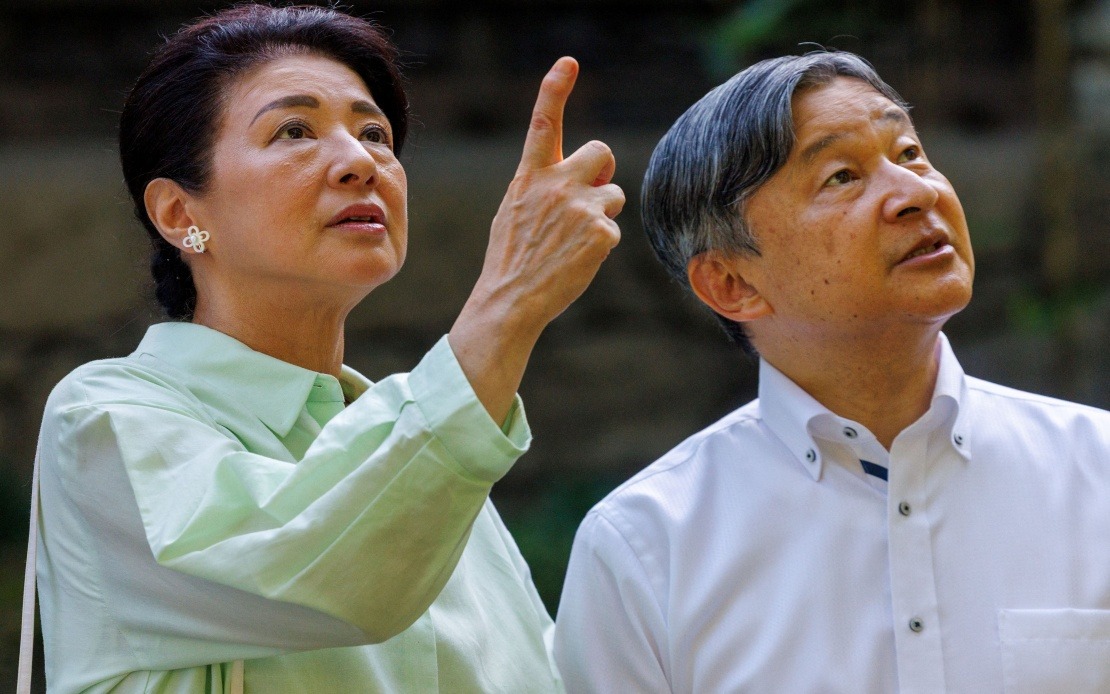
Japan's government has taken a significant step toward addressing a long-standing constitutional challenge by approving legislation aimed at securing the future of the imperial institution. The Cabinet's decision on Tuesday marks the culmination of years of deliberation over how to ensure the sustainability of the world's oldest monarchy while navigating the competing pressures of tradition and demographic reality. The ruling coalition, comprising Prime Minister Sanae Takaichi's Liberal Democratic Party and the Japan Innovation Party, intends to shepherd the revised Imperial House Law through parliament before the current session concludes on July 17, signalling the urgency with which policymakers view this matter.
The crisis prompting this legislative action is straightforward yet profound: the imperial family is shrinking. Emperor Naruhito, now 66 years old, has only three confirmed heirs—his younger brother Crown Prince Fumihito at 60, his teenage nephew Prince Hisahito at 19, and his uncle Prince Hitachi, who at 90 represents a generation bridge rather than a practical successor. This alarming scarcity of eligible candidates has forced Japan's political establishment to confront uncomfortable questions about how to maintain an institution that has symbolised Japanese continuity and sovereignty for centuries. The mathematics of succession are brutal: under current rules, only those descended patrilineally from emperors can occupy the throne, a restriction that eliminates half the potential pool of candidates and has rendered the dynasty increasingly vulnerable.
The proposed reforms pivot on two main mechanisms designed to broaden the succession base without fundamentally dismantling the patrilineal system that conservative forces within Japan's political establishment hold dear. The legislation would permit the adoption of males aged 15 and above who descend through the male line from emperors within 11 former branch families that were stripped of imperial status in 1947 following Japan's defeat in World War II. These branch families, which trace their lineage to a common ancestor some 600 years in the past, represent a significant reservoir of potential candidates and offer a constitutionally palatable solution to those opposed to more radical reform. Critically, the bill would allow adopted males themselves to be excluded from direct succession while permitting their male descendants to inherit eligibility, thereby maintaining the appearance of patrilineal purity whilst actually creating new pathways to the throne.
The second pillar of reform addresses the growing international awkwardness surrounding female members of the imperial family. Under existing law, women who marry outside the imperial institution automatically surrender their royal status, a provision that has forced numerous princesses into commoner life and contributed to the demographic contraction afflicting the dynasty. The new bill would permit female imperial members to retain their status even after marrying common citizens, a measure that represents a meaningful, if incomplete, modernisation of the institution. This provision acknowledges changing social norms around gender and marriage whilst stopping short of the more controversial step of permitting women to ascend the throne itself—a distinction that reveals the deep ideological divisions within Japan's political establishment.
The government's cautious approach reflects the dominant conservative ideology of the Liberal Democratic Party, which has controlled Japanese politics for most of the post-war period. By framing its reforms as exceptions to existing law rather than fundamental constitutional revision, the party seeks to maintain continuity with past practice whilst adapting to present necessities. This legalistic sleight of hand allows proponents to claim they have preserved the male-line system even as they substantially alter its practical operation. However, this compromise has already generated friction within the political system and is likely to provoke significant opposition during Diet deliberations. The cross-party consultation that preceded the bill's drafting barely touched upon the question of female succession, an omission that opposition parties are likely to exploit as evidence of inadequate democratic deliberation on a matter of profound national importance.
The exclusion of female succession from serious consideration represents a striking disconnect between elite opinion and public sentiment. A Kyodo News survey conducted in May revealed that 83 percent of Japanese respondents support the idea of a female emperor, a figure that towers above the acceptance level for any other proposed reform. This substantial gap between public preference and political outcome underscores the resilience of traditional attitudes within Japan's institutional leadership, particularly in conservative circles that view the imperial succession as inherently inseparable from patriarchal principles. For observers in Southeast Asia watching Japan navigate these constitutional questions, the tension between modernisation pressures and institutional conservatism offers instructive parallels to debates about monarchical reform occurring throughout the region.
The historical context deepens the complexity of contemporary reform efforts. In 1947, during the American occupation following World War II, Japan's 11 branch families—comprising 51 individuals—lost their imperial status through what was then framed as democratic reform. Three families descended from Emperor Hirohito's brothers, however, retained their privileged position, creating the asymmetry that the current bill attempts to address. This unequal treatment has long struck observers as historically contingent rather than logically necessary, and the proposed restoration of branch family eligibility represents an attempt to rectify what many view as an arbitrary post-war decision. The irony is palpable: the Allied powers that imposed democratic reforms 77 years ago would likely be surprised to learn that those reforms are now being substantially reversed in the name of monarchical stability.
The broader geopolitical significance of Japan's imperial succession debates should not be underestimated. As Japan confronts an ageing society and declining birth rates that affect the entire nation, the imperial family's demographic crisis becomes a metaphor for wider challenges to Japanese continuity and national vitality. The way Japan resolves these constitutional questions will influence how regional monarchies—including those in Southeast Asia—approach similar pressures for reform and modernisation. Countries like Malaysia, Thailand, and Cambodia, which maintain their own royal institutions amid rapid social change, will watch closely to observe whether Japan's approach of incremental, face-saving reform proves durable or whether more fundamental reconsideration eventually becomes inevitable.
The timeline for legislative action is compressed, with the government targeting passage before the current parliamentary session ends. This urgency reflects genuine anxiety about the imperial succession's precariousness, yet it also risks curtailing thorough parliamentary debate on decisions with profound constitutional implications. Opposition parties will undoubtedly argue that matters affecting the fundamental structure of the state deserve more extensive deliberation than a few weeks allow. The government's determination to proceed despite these concerns suggests that policymakers view delay as more dangerous than haste, a judgment that reflects how acutely the imperial succession crisis is now perceived within Japan's political elite.

