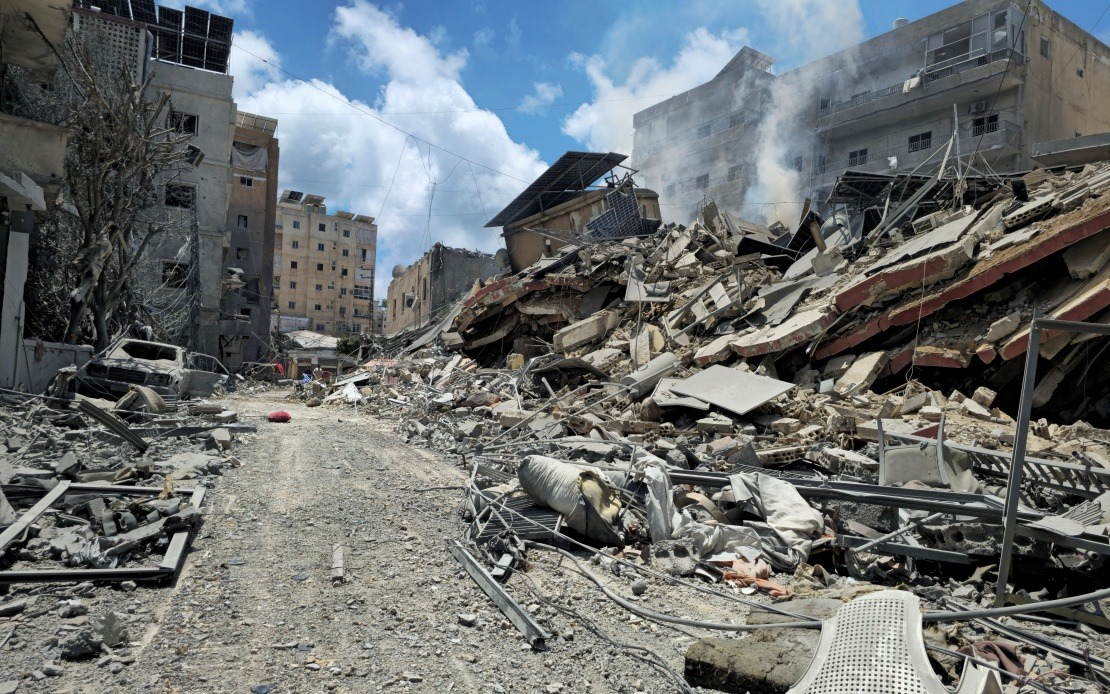
Japan has unveiled a US$15 million emergency humanitarian aid package aimed at alleviating acute suffering across three key regions in West Asia, with Foreign Minister Toshimitsu Motegi announcing the decision at a press briefing in Tokyo on Friday. The allocation reflects Tokyo's strategic commitment to addressing humanitarian crises in an area of significant geopolitical and economic importance to Japanese interests, particularly given Japan's reliance on Middle Eastern energy resources and regional stability for trade flows.
The lion's share of the assistance, approximately US$10 million, will be directed to Iran to support populations affected by ongoing conflict and humanitarian strain. This substantial commitment underscores Japan's willingness to engage diplomatically with Iran despite international tensions, positioning Tokyo as a neutral humanitarian actor concerned primarily with civilian welfare rather than political positioning. The aid reflects Japan's historical role as a bridge-builder in the region, often maintaining pragmatic relations with multiple stakeholders while emphasising non-aligned humanitarian principles.
Lebanon, a nation reeling from economic collapse, political dysfunction, and the fallout from regional conflicts, will receive approximately US$4 million under the package. The Lebanese economy has contracted dramatically in recent years, with currency devaluation and banking sector paralysis leaving vast swathes of the population unable to access basic necessities. Japan's contribution, though modest in absolute terms, carries symbolic weight in demonstrating continued international commitment to Lebanon's survival as a functional state during a period when many international actors have reduced engagement.
Palestinians in the West Bank will receive US$1 million, providing critical resources to populations experiencing chronic instability, restricted movement, and limited economic opportunity. While the smallest component of the package, this allocation maintains Japan's consistent support for Palestinian humanitarian needs and reflects Tokyo's balanced approach to the Israeli-Palestinian conflict, wherein Japan avoids explicit political statements while consistently channeling development and humanitarian assistance to Palestinian communities.
Motegi emphasised that all assistance will flow through established international organisations rather than bilateral government-to-government channels, a mechanism that ensures transparency, reduces administrative overhead, and enables rapid deployment through organisations with existing on-the-ground presence. This approach also mitigates risks associated with direct transfers and allows Japan to partner with multilateral agencies whose neutrality and humanitarian credentials are internationally recognised. Food and medical supplies constitute the primary components of the aid package, addressing the most acute survival needs in populations experiencing conflict-related disruptions to basic services and supply chains.
The foreign minister's statement reinforced Japan's strategic perspective that Middle Eastern peace and stability constitute vital national interests. This framing reflects Japan's economic exposure to regional volatility through energy markets, shipping lanes, and investment commitments. Sustained instability in West Asia threatens Japanese companies operating across the region, drives up energy costs for Japanese consumers, and complicates Japan's broader Indo-Pacific security strategy by creating ungoverned spaces where extremist organisations operate with impunity.
Japan's emphasis on continued collaboration with relevant governments and international bodies signals Tokyo's intention to position itself as a constructive, non-threatening partner committed to humanitarian principles rather than zero-sum geopolitical competition. This stance offers particular advantages in contexts where Japan's pacifist constitution and limited military footprint allow it to engage with diverse actors without triggering the suspicion or resistance that might greet similar overtures from major military powers. For Southeast Asian nations observing Japan's approach, the model demonstrates how middle-power diplomacy can create space for meaningful humanitarian engagement even amid complex geopolitical environments.
The timing of Japan's announcement arrives amid persistent regional tensions and humanitarian deterioration across multiple fronts in West Asia. Japan's decision to commit scarce fiscal resources to humanitarian purposes, despite domestic pressures and competing budgetary priorities, reflects a calculated judgment that regional instability threatens Japanese prosperity and security sufficiently to justify preventive investment. This preventive diplomacy approach aligns with Japan's broader foreign policy doctrine emphasising conflict prevention and human security as more cost-effective than managing crises after they fully materialise.
For Malaysian readers and policymakers, Japan's approach offers lessons in how regional powers can maintain principled humanitarian engagement across fractious geopolitical terrain. Japan's consistent support for multilateral humanitarian mechanisms, its emphasis on neutrality, and its deliberate avoidance of taking explicit sides in regional disputes creates space for constructive engagement. As Malaysia increasingly positions itself as a bridge between developed and developing nations, and between the Middle East and Asia-Pacific, Japan's model of principled humanitarian engagement provides a template for maintaining relationships across diverse constituencies without sacrificing either credibility or principle.

