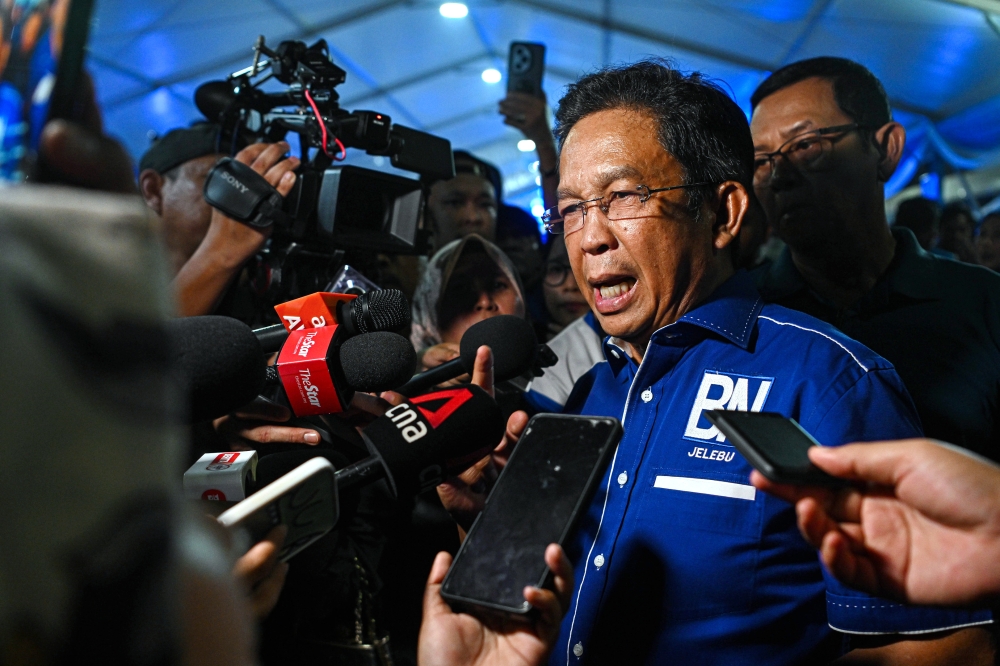
Negeri Sembilan Umno chief Datuk Jalaluddin Alias has publicly recognised Perikatan Nasional's decision to back Barisan Nasional's bid to govern Negeri Sembilan, should their combined coalition secure victory in upcoming polls. The acknowledgement underscores the delicate political balancing act required to maintain the alliance that encompasses both traditional and newer political forces within the state's complex electoral landscape.
Jalaluddin's statement, made in Jelebu, reflects the ongoing negotiations that have characterised Malaysian politics following the 2022 general election. The alignment between BN and PN represents a pragmatic consolidation of right-leaning and Malay-Muslim political interests, though each maintains distinct organisational structures and policy priorities. For Negeri Sembilan specifically, this arrangement carries particular weight given the state's historical significance as a Umno stronghold and a barometer for broader Malaysian political trends.
The gratitude expressed by the Negeri Sembilan Umno leadership must be understood within the context of PN's electoral growth in recent years. Perikatan Nasional, which emerged as a significant force following the 2018 political realignment, has cultivated substantial support among rural Malay voters who traditionally backed Umno. By voluntarily stepping back from its own leadership ambitions in Negeri Sembilan and endorsing BN's lead role, PN demonstrates either confidence in BN's electoral prospects or a strategic calculation that cooperation serves both parties' interests better than competition would.
The decision carries implications for Umno's efforts to rebuild its political machinery and restore its standing among core constituencies. The party faced considerable damage to its organisational capacity and voter trust following the 1MDB scandal and the 2018 general election defeat. Negeri Sembilan, under Jalaluddin's stewardship, represents an important testing ground for whether Umno can reassert its traditional dominance while accommodating newer political actors within a shared framework.
For PN, the strategic calculus appears to involve leveraging its support to establish itself as indispensable to any non-opposition coalition. By backing BN's leadership ambitions, Perikatan Nasional positions itself to negotiate significant cabinet allocations and policy influence should the alliance succeed. This approach mirrors the pattern observed at the federal level, where PN joined the government under Anwar Ibrahim's administration despite ideological differences, prioritising access to power over ideological purity.
Negeri Sembilan's political composition adds another dimension to this arrangement. The state government's performance directly affects the ruling coalition's legitimacy and the opposition's momentum. Any electoral victory would provide the alliance with a fresh mandate, while defeat would strengthen Pakatan Harapan's narrative about the ruling coalition's declining support. The stakes therefore extend well beyond state-level administration to encompass broader questions about the coalition's viability and electoral durability.
The appreciation voiced by Jalaluddin also reflects Umno's broader positioning strategy. The party seeks to consolidate support among Bumiputera voters and present itself as the natural custodian of Malay-Muslim interests while maintaining coalition discipline with PN and other allies. This balancing act has proven increasingly complex as both parties compete for similar voter bases, creating incentives for occasional tension despite their formal partnership.
Politically, the arrangement between BN and PN in Negeri Sembilan exemplifies how Malaysian coalition politics has evolved since the 2018 watershed. Rather than winner-take-all competition, successful political actors increasingly operate within flexible networks where smaller parties or declining giants can retain influence through strategic alliance management. PN's willingness to subordinate its leadership aspirations in one state may be compensated through enhanced roles in others or at the federal level.
The implications for ordinary Negeri Sembilan residents centre on governance continuity and performance. An electoral victory would likely result in continued BN dominance, though with PN occupying key positions. The electorate would expect tangible improvements in service delivery, economic opportunities, and infrastructure development to justify the coalition's continued hold on power.
Looking forward, Jalaluddin's public gratitude serves multiple functions: it strengthens Umno's claim to coalition leadership, acknowledges PN's role in a manner that could facilitate future cooperation, and signals to the Negeri Sembilan electorate that the major political forces have achieved sufficient consensus to govern effectively. Whether this alliance holds firm through an election cycle and beyond remains contingent on both parties' continued electoral performance and their willingness to resolve inevitable disputes through negotiation rather than public confrontation.

