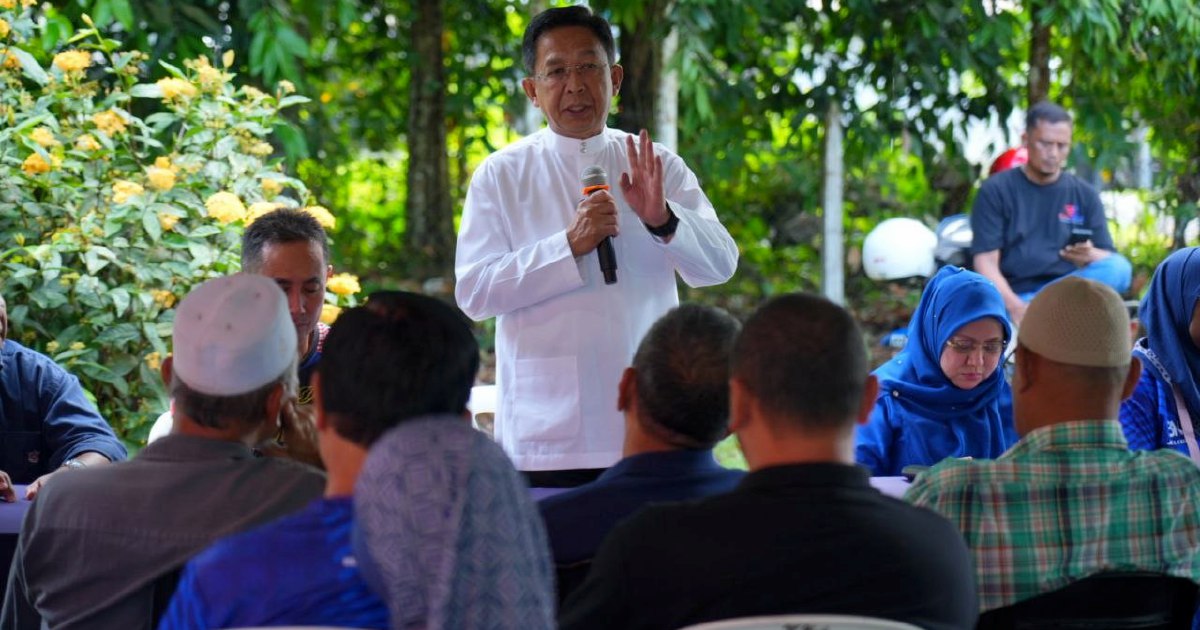
The Perikatan Nasional coalition has signalled its strategic direction for Negri Sembilan's leadership, naming Negri Sembilan Umno chairman Datuk Seri Jalaluddin Alias as a prominent contender for the position of menteri besar should the PN-Barisan Nasional alliance secure victory in the August 1 state election. The announcement underscores PN's efforts to consolidate its political machinery in the state ahead of the crucial electoral contest.
Datak Seri Jalaluddin's elevation to the shortlist represents a recognition of his standing within Umno's Negri Sembilan branch, where he has held the chairmanship and built influence through grassroots party structures. As a longtime political operative in the state, his candidacy reflects PN's intention to leverage established party hierarchies and internal networks to ensure stable governance should the coalition prevail at the polls. The selection process itself demonstrates how pre-election negotiations between PN and BN have extended beyond seat allocations to encompass senior executive positions in state governments.
The strategic framing of potential leadership options—describing Jalaluddin as among candidates rather than the sole choice—signals PN's flexibility in negotiations with its BN partner. This deliberate ambiguity serves multiple purposes: it allows room for discussions with BN counterparts, preserves internal party dynamics, and avoids premature commitments that could alienate other contenders within Umno's state structure. Such measured language is typical of coalition politics in Malaysia, where pre-election announcements about ministerial positions must navigate competing interests and maintain alliance unity.
Negri Sembilan has historically served as a significant political battleground in Malaysian elections, with control of the state government carrying implications for both PN and BN's broader national positioning. The August 1 election represents an important opportunity for the PN-BN alliance to demonstrate electoral viability following their cooperation at federal level. Success in Negri Sembilan would strengthen the coalition's narrative of effective governance and voter confidence, particularly as Malaysia approaches future electoral cycles.
The menteri besar position in Negri Sembilan carries particular significance because the state's Yang di-Pertuan Agong traditionally plays an active role in governance matters. Unlike some other states where the menteri besar operates with substantial autonomy, Negri Sembilan's constitutional framework requires closer coordination between the elected leadership and the Duli Yang Maha Mulia. This institutional dynamic means that PN's choice of menteri besar candidate must consider not merely party political considerations but also the dynamics of state-level governance and institutional expectations.
For Umno specifically, the prospect of retaining or expanding the menteri besar position in Negri Sembilan addresses internal party concerns about its relevance within the PN coalition. Following years of electoral setbacks, Umno has sought to demonstrate that partnership with PN offers tangible advantages in terms of state-level power-sharing and ministerial opportunities. The inclusion of Jalaluddin as a potential menteri besar candidate reinforces this messaging to Umno members and supporters ahead of the election campaign.
The August 1 election's significance extends beyond Negri Sembilan's internal politics to reflect broader patterns in Malaysian federalism. State elections increasingly function as barometers of coalition strength and public sentiment toward particular political arrangements. A PN-BN victory in Negri Sembilan would validate their federal-level cooperation and potentially influence calculations in other state governments where similar coalitions operate or might be contemplated. Conversely, a defeat would raise questions about the alliance's electoral appeal and governance credibility.
Jalaluddin's potential appointment, should it materialise, would position him as a key figure in PN's state governance strategy. His responsibilities would encompass not only executive functions but also the symbolic leadership necessary to maintain coalition cohesion and demonstrate effective administration to voters. The menteri besar's performance in managing state affairs—particularly in policy domains like education, agriculture, and urban development critical to Negri Sembilan's economy—would have direct implications for PN-BN's standing ahead of subsequent electoral contests.
The candidacy announcement also reflects how Malaysian political parties increasingly operate through calculated pre-election messaging designed to shape voter expectations and consolidate internal support. By publicly identifying potential menteri besar candidates prior to voting, PN signals confidence in electoral success while simultaneously managing intra-coalition negotiations. This practice, while common in contemporary Malaysian politics, represents a shift toward greater transparency about post-election power-sharing arrangements, though final decisions remain contingent upon election outcomes.
For Malaysian voters in Negri Sembilan, the identification of potential menteri besar candidates offers a tangible focal point for evaluating coalition quality and proposed leadership. Voters can assess candidates' track records, policy positions, and governing capabilities rather than casting ballots for abstract coalition labels. This personalisation of state-level politics, while potentially increasing individual candidates' accountability, also reflects the personality-driven nature of Malaysian electoral competition where individual leaders often outweigh institutional considerations.
The PN-BN coordination on potential menteri besar candidates in Negri Sembilan demonstrates how coalition politics have become institutionalised across Malaysia's federal structure. Rather than post-election surprises or power struggles, modern coalitions now engage in explicit negotiations about executive positions before votes are cast. Such arrangements, while potentially reducing electoral uncertainty, also raise questions about democratic legitimacy and whether voters genuinely exercise meaningful choice when key leadership positions are effectively pre-determined through inter-party agreements.
Looking forward, the August 1 election will determine whether Jalaluddin's candidacy translates into actual assumption of the menteri besar position or remains merely a speculative possibility. The campaign period will reveal whether voters in Negri Sembilan endorse the PN-BN coalition's proposed direction and whether Jalaluddin's leadership qualities resonate sufficiently with the electorate to secure the necessary electoral base for coalition victory.

