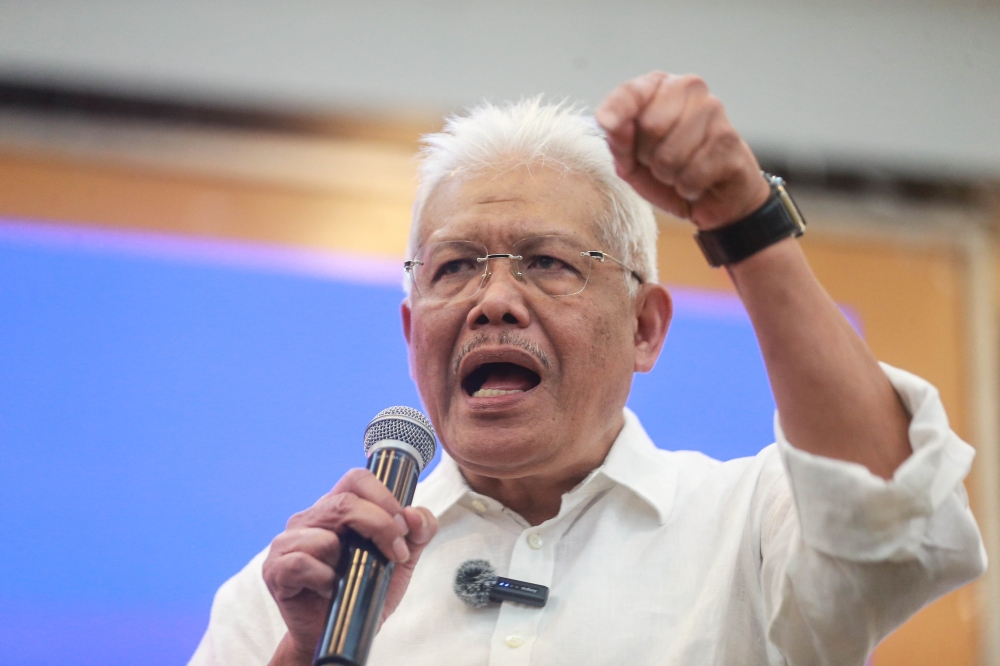
The prospect of leadership change in Negeri Sembilan has come into sharper focus, with Deputy Prime Minister Hamzah Zainudin publicly naming Datuk Seri Jalaluddin Alias as a leading candidate for the Menteri Besar position should the Barisan Nasional-Perikatan Nasional alliance win the state. Jalaluddin, who holds the position of Negeri Sembilan Umno chairman, has emerged as a prominent figure within the coalition's deliberations about potential state leadership following forthcoming electoral contests.
Hamzah's confirmation of Jalaluddin's candidacy represents a significant development in state-level political maneuvering, particularly given the delicate balance that exists between various power structures within the coalition framework. The identification of specific candidates at this juncture signals confidence within the BN-Perikatan alliance regarding electoral prospects, though actual implementation remains contingent on securing sufficient parliamentary seats. This early positioning allows for party consolidation and ensures grassroots support mobilization aligns with centralized leadership preferences.
The Umno contingent in Negeri Sembilan has historically wielded considerable influence over state administration, given the party's organizational strength and electoral performance in several key constituencies. Jalaluddin's background and tenure as party chairman position him within the traditional succession framework where seniority and party loyalty typically translate into executive appointments. His elevation would represent continuity in the state's political establishment whilst signaling renewed commitment from federal leadership to strengthening party structures at state level.
Understanding Negeri Sembilan's political dynamics requires recognition of the state's unique governance arrangement under its constitutional monarchy system, wherein the Yang di-Pertuan Besar holds significant discretionary power in selecting the Menteri Besar from among assemblymen. This distinction from peninsular states with elected governors means that coalition negotiations and consensus-building carry heightened importance, particularly when multiple parties operate under the BN or Perikatan umbrellas. The selection process inevitably involves consultation between party leadership, federal authorities, and the palace.
The timing of Hamzah's statement carries implications for party morale and internal cohesion within Negeri Sembilan Umno, where factional dynamics occasionally surface during sensitive appointments. By publicly endorsing Jalaluddin at this juncture, senior leadership effectively signals backing for his candidacy whilst simultaneously establishing clear expectations for party discipline during electoral campaigns. Such transparency, though potentially contentious, allows for early resolution of competing ambitions that might otherwise destabilize grassroots mobilization efforts.
For Malaysian readers tracking coalition politics, Hamzah's remarks underscore ongoing realignment within the broader BN-Perikatan framework, particularly as various state-level contests approach. The Deputy Prime Minister's willingness to name specific candidates reflects confidence in electoral projections whilst demonstrating how federal leadership actively shapes state governance outcomes. This involvement contrasts sharply with earlier political arrangements where regional strongmen exercised greater autonomy in determining local leadership.
Jalaluddin's potential elevation would carry implications for developmental priorities in Negeri Sembilan, where manufacturing, agriculture, and tourism constitute economic mainstays. A Menteri Besar's policy orientation typically reflects both personal convictions and party-mandated directives, meaning Jalaluddin's track record on economic policy and state development initiatives merits examination by voters concerned about future governance trajectories. His previous statements and administrative decisions provide some indication of likely priorities should he assume the chief minister's office.
The selection of a Menteri Besar remains fundamentally a state-level decision despite federal involvement, particularly given constitutional provisions governing such appointments. However, the increasingly centralized nature of Malaysian politics means federal guidance carries substantial weight in determining outcomes. Hamzah's public statement effectively previews probable developments whilst allowing time for potential challengers to organize counter-positions or seek reconciliation with anticipated outcomes. This managed approach to succession planning reflects mature political strategy designed to minimize post-election instability.
Speaker's identification of Jalaluddin as a frontrunner candidate reflects broader patterns wherein Umno maintains predominance within BN's state-level representation across Peninsular Malaysia. Should the coalition succeed electorally, Jalaluddin would join a cohort of Umno-dominated state leadership, continuing patterns established over decades of BN governance. This continuity appeals to constituencies valuing stability whilst potentially limiting fresh perspectives in state administration.
For stakeholders across Negeri Sembilan, the confirmation of Jalaluddin's candidacy provides clarity regarding likely governance trajectories whilst enabling civil society organizations and business communities to prepare for transitions in administrative relationships. Whether Jalaluddin ultimately assumes the Menteri Besar position depends on coalition electoral performance, palace consultations, and potential developments in inter-party negotiations that remain fluid until formal votes are counted. The trajectory from candidate identification to actual appointment thus encompasses multiple decision points where circumstances may shift.

