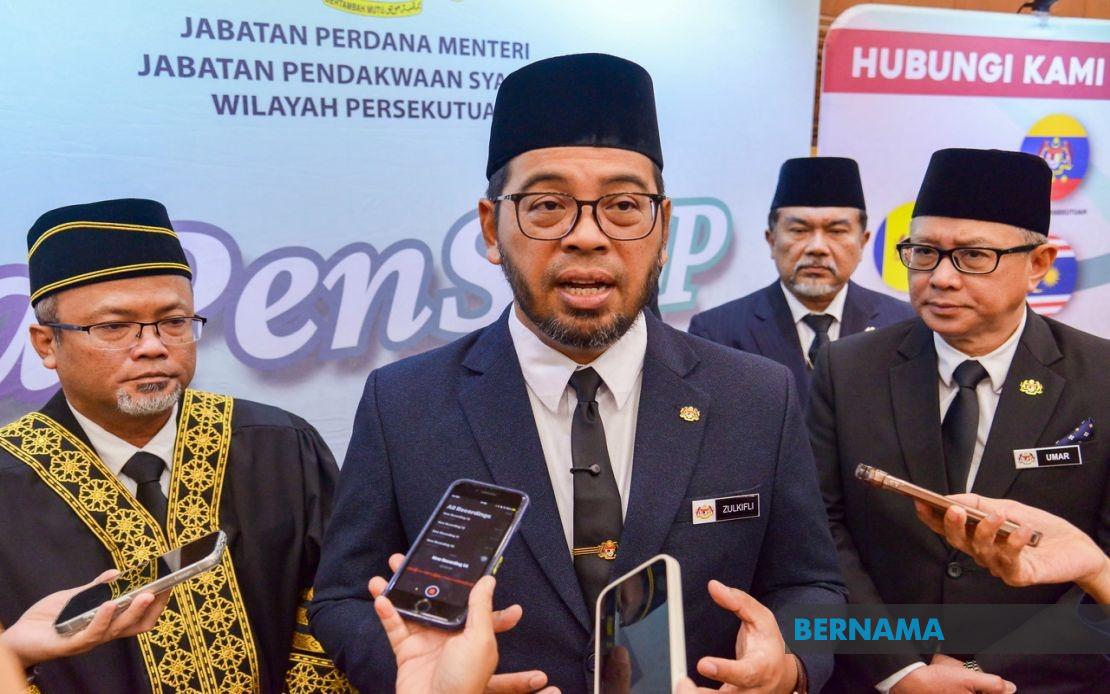
The Prime Minister's Department's Religious Affairs division will launch a formal investigation into allegations that an official JAKIM reference number was improperly utilised in marriage certification documents purportedly issued by the Malaysia Rohingya Ulama Council, according to minister Dr Zulkifli Hasan. The announcement comes as documents bearing the reference "JAKIM.PERH/LN.800-7(5)" have circulated widely across social media platforms, prompting questions about their legitimacy and official status within Malaysia's Islamic regulatory framework.
Dr Zulkifli acknowledged during remarks at the second Malaysian Syariah Prosecutors Conference in Putrajaya on July 15 that the department has not yet compiled complete information on the matter. His cautious approach reflects the sensitive nature of issues involving the Rohingya community, which remains a complex policy area across Southeast Asia. The minister's statement suggests that the investigations will require coordination between multiple agencies and jurisdictional authorities, given the decentralised nature of Islamic administration in Malaysia.
The marriage declaration letters at the centre of this controversy have prompted significant concern among state religious authorities. The Perak Islamic Religious Department specifically clarified that it does not recognise these documents as legally valid instruments for marriage registration. More broadly, the department indicated that marriages involving members of the Rohingya community cannot be formally registered within the state's system, citing ongoing policy reviews being conducted by various state religious authorities. This response highlights the fragmented approach to Rohingya affairs across Malaysia's federal structure, where different states maintain divergent policies.
The emergence of this issue underscores deeper challenges facing Malaysia's religious governance structure. The use of official-sounding reference numbers in potentially fraudulent documents represents a particular vulnerability, especially given the limited ability of ordinary citizens to verify claims about JAKIM's involvement. For the Rohingya community, many of whom lack comprehensive documentation due to their statelessness, the ability to secure legally recognised marriage certificates carries profound implications for family rights and social status. The incident thus intersects multiple layers of Malaysian governance—immigration policy, Islamic law administration, and social welfare provision.
Beyond the specific Rohingya marriage document controversy, Dr Zulkifli also flagged growing concerns about unaccredited religious instruction disseminated through social media channels. This broader issue reflects tension between traditional Islamic institutional authority and the democratisation of religious teaching through digital platforms. While acknowledging the need for oversight, the minister noted that regulatory responsibility for religious teaching accreditation remains primarily with state governments rather than federal authorities. This jurisdictional division has historically complicated enforcement efforts across Malaysia's multi-state system.
The challenge of regulating online religious content presents particular difficulties for enforcement, as Dr Zulkifli indicated. Religious enforcement officers increasingly struggle to identify, monitor, and take action against teachings delivered without proper accreditation across the fragmented landscape of social media platforms. The minister suggested that the government is exploring regulatory approaches, though legal complexities around internet jurisdiction and free speech considerations complicate any solution. His acknowledgment that the matter remains under review suggests that federal and state authorities have not yet reached consensus on appropriate enforcement mechanisms.
At the departmental level, Dr Zulkifli pledged that the Prime Minister's Department enforces accreditation requirements for religious speakers invited to appear on government-affiliated platforms and media channels. This represents one clear area where the federal government can exercise direct control, though it addresses only a fraction of the broader problem. The statement implies a two-tier system: stricter control over government-sponsored religious content, while state authorities grapple with private and non-institutional religious teaching occurring online. For Malaysian citizens seeking reliable religious guidance, distinguishing between accredited and unaccredited sources has become increasingly challenging.
The underlying theme connecting these diverse issues is the inadequacy of Malaysia's current regulatory infrastructure for addressing religious matters in the digital age. Traditional governance mechanisms designed for mosques, seminars, and formal institutions struggle to adapt when religious instruction occurs through WhatsApp groups, TikTok videos, and independent YouTube channels. Dr Zulkifli's comments suggest growing recognition of this gap, though concrete policy solutions remain underdeveloped. The government's ongoing review indicates that federal and state authorities are still formulating appropriate responses.
During his remarks at the Syariah Prosecutors Conference, Dr Zulkifli emphasised the necessity of modernising Malaysia's Islamic legal system to address cyber-related offences and digital crimes. This includes strengthening coordination between the religious affairs apparatus and secular regulatory bodies including the Malaysian Communications and Multimedia Commission, the Royal Malaysian Police, and the Attorney General's Chambers. Such inter-agency cooperation represents a significant shift from traditional siloed approaches to religious regulation, recognising that contemporary challenges demand integrated responses spanning both Islamic and civil law frameworks.
The minister specifically called upon Syariah prosecutors to develop enhanced capabilities in digital forensics, data analysis, and technological expertise. These competencies have become essential for effectively prosecuting emerging categories of religious violations occurring in online spaces. The criminal misuse of official reference numbers, fraudulent certification schemes, and dissemination of unauthorised religious content all require investigators and prosecutors capable of navigating digital evidence and complex technical infrastructure. This represents a substantial capacity-building agenda for Malaysia's religious justice system, with implications for how quickly authorities can address such matters.
The Rohingya marriage document investigation must be viewed within this broader context of institutional adaptation. As Malaysia continues grappling with questions of Islamic governance in an increasingly digital and pluralistic society, individual cases like this one test the system's resilience and legitimacy. For regional observers, Malaysia's approach to these challenges carries significance, as other Southeast Asian nations with Muslim majorities face analogous pressures. The outcomes of current investigations and policy reviews will likely influence how other governments approach similar intersections of religious authority, immigration, and digital governance.

