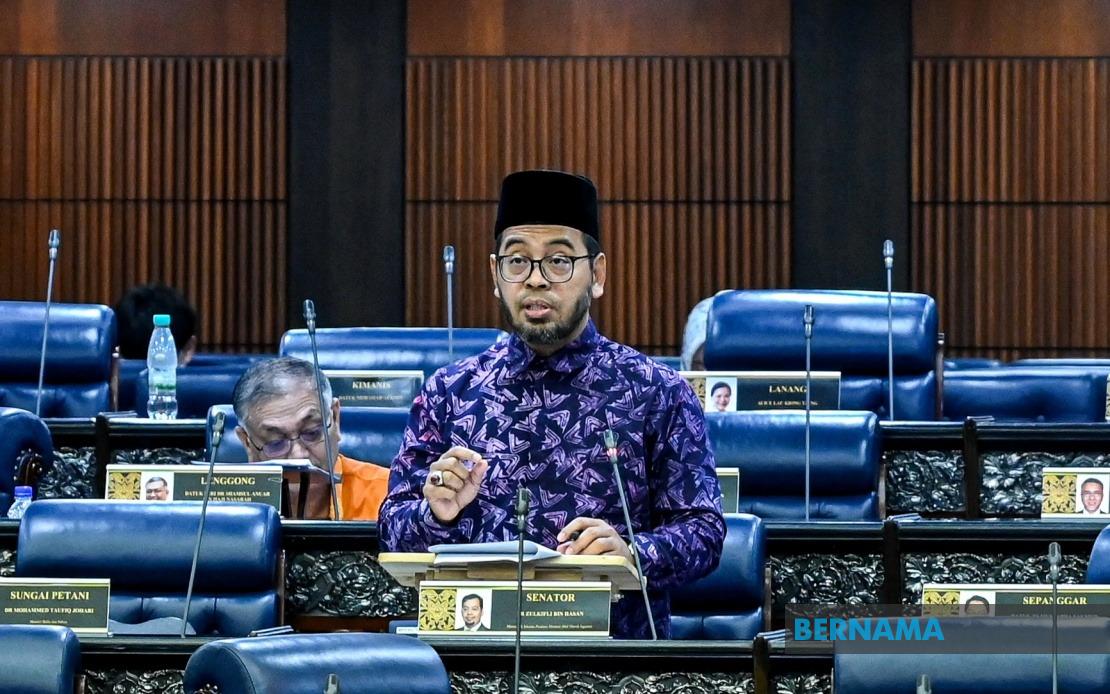
Facing an escalating challenge from heterodox Islamic movements operating through digital channels, Malaysia's government is mobilising a comprehensive inter-agency response to contain teachings that deviate from mainstream Sunni Islamic doctrine. Minister in the Prime Minister's Department (Religious Affairs) Dr Zulkifli Hasan outlined this coordinated approach during a parliamentary question-and-answer session, acknowledging that religious enforcement has become substantially more complex as unconventional groups migrate from traditional clandestine gatherings to online platforms and encrypted messaging applications.
The shift in recruitment and dissemination tactics has created enforcement headaches for authorities tracking these movements. Rather than operating through obvious physical locations, these groups now disguise their theological messaging within personal development workshops, wellness programmes, charity operations and informal study circles, rendering detection and intervention considerably more challenging. Dr Zulkifli identified a troubling pattern whereby proponents employ motivational seminars combined with psychological manipulation, conspiracy narratives and the appeal of charismatic leaders to attract followers, particularly vulnerable individuals seeking spiritual direction.
The Department of Islamic Development Malaysia (JAKIM), alongside state Islamic religious authorities, has positioned itself at the forefront of this enforcement effort, working in tandem with security agencies to identify and counter these movements. The coordination extends across the Malaysian Communications and Multimedia Commission, which monitors digital content distribution, the National Security Council, the police force, the Immigration Department and local administrative bodies. This institutional alignment reflects recognition that combating ideologically motivated groups requires capabilities spanning cybersecurity expertise, theological knowledge and traditional law enforcement.
Recent enforcement operations demonstrate this strategy in practice. In May, authorities detained 288 followers of Ahmadiyya Qadiani, an Islamic sect considered heterodox by Malaysia's Sunni-dominant religious establishment, during an operation in Sabah. Separately, a raid on a Syiah religious centre in Petaling Jaya resulted in the detention of 226 foreign nationals, signalling particular concern about non-Sunni interpretations gaining foothold among migrant communities. These actions represent visible government enforcement, though they also suggest that such movements have achieved sufficient scale to warrant coordinated operations involving multiple jurisdictions.
Beyond enforcement, the government is investing substantially in preventative interventions targeting individuals already influenced by these teachings. JAKIM-supervised counselling programmes work with affected group members and leaders to reorient their religious understanding toward mainstream Islamic interpretation. Syariah courts have authority to order individuals into faith rehabilitation centres where religious education aims to address doctrinal misunderstandings. These rehabilitation frameworks reflect an acknowledgment that purely punitive approaches may prove insufficient; addressing the underlying theological confusion requires sustained educational intervention.
A notable institutional development is the establishment of the National Steering Committee to Address Threats to Faith, assembled to strengthen religious understanding particularly among younger Malaysians vulnerable to alternative teachings. This committee spans the Ministry of Education, Ministry of Higher Education, Ministry of Home Affairs and JAKIM, representing an attempt to embed religious resilience within formal education systems. The broad ministerial participation underscores official assessment that religious vulnerability intersects with educational gaps and suggests that addressing heterodox movements requires systemic educational reform.
The government has launched or expanded several youth-focused programmes as part of this preventative strategy. Institut Pemantapan dan Perkaderan Akidah Malaysia (IPHAM) conducts faith-strengthening initiatives, while the My Insaniah Programme and Rakan Masjid Programme operate in collaboration with the Ministry of Youth and Sports to build religious community engagement. Additionally, authorities have upgraded the KAFA 2.0 curriculum, which covers Quranic recitation and Islamic obligations, specifically to foster stronger religious identity and doctrinal resilience among younger generations. These educational investments suggest official recognition that preventing ideological drift requires sustained positive religious engagement rather than purely defensive enforcement.
The phenomenon reflects broader challenges confronting Southeast Asian Islamic authorities as digital connectivity creates unprecedented opportunities for marginal theological movements to reach audiences across national boundaries. Malaysia's experience demonstrates how religious minorities and unconventional groups exploit online anonymity and encrypted communication to circumvent state monitoring. The borderless nature of digital dissemination complicates enforcement when groups operate across Malaysia, Singapore, Indonesia and beyond, with membership maintained through virtual networks rather than geographical proximity.
The scale of enforcement activity indicates these movements have achieved concerning reach within Malaysia. The detention of several hundred followers in single operations suggests movements like Ahmadiyya and Syiah have established organisational capacity enabling coordinated gatherings detectable through intelligence work. Yet the frequency with which authorities identify new groups and operations suggests the enforcement response remains reactive, responding to movements only after they achieve sufficient visibility. This enforcement-prevention imbalance underscores the challenge authorities face when combating ideological movements that can rapidly reconstitute after enforcement actions disrupt visible operations.
For Malaysian policymakers, the deviant teachings phenomenon intersects with multiple governance challenges including cybersecurity, immigration control, community integration and religious education. Addressing heterodox Islamic movements requires capabilities spanning theological expertise, digital forensics and community engagement. The whole-of-government approach Dr Zulkifli described reflects this complexity, though coordinating diverse agencies toward consistent objectives remains organisationally demanding. Success likely depends less on individual enforcement operations than on sustained institutional investment in religious education, community monitoring and international cooperation to address cross-border dimensions of these movements.
The Malaysian response provides a template for other Southeast Asian nations wrestling with similar challenges. Indonesia, Thailand and Singapore confront comparable issues with heterodox religious movements exploiting digital platforms. However, Malaysia's institutional approach—combining JAKIM expertise with security agency capabilities and educational initiatives—offers one model for integrated response. Whether this coordinated strategy can sustainably counter movements that adapt tactics as quickly as enforcement adapts detection methods remains uncertain, but the government's commitment to systematic intervention suggests recognition that religious heterodoxy represents an enduring governance challenge in digitally connected Malaysia.

