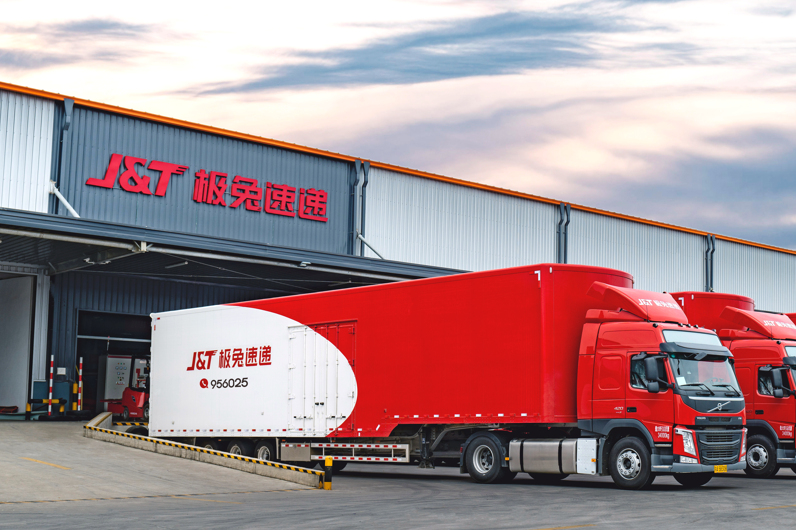
J&T Global Express Ltd, the Hong Kong-listed logistics giant, has reached a historic operational milestone by processing more than 100 million parcels daily during the second quarter, underscoring the company's emergence as a force beyond its traditional Chinese stronghold. The achievement reflects fundamental shifts in regional e-commerce patterns and signals how Southeast Asian growth is reshaping the global parcel delivery landscape in ways that directly matter to Malaysian businesses and traders.
During the three months ending June, J&T Express handled 9.18 billion parcels, representing growth of 24.2 percent compared to the same period last year. More significantly, the company's international footprint expanded dramatically, with non-China volumes reaching 2.97 billion parcels and climbing 66.9 percent year-on-year. This outsized international growth now accounts for nearly one-third of the company's entire global throughput, illustrating how rapidly J&T Express is transforming from a predominantly domestic Chinese operator into a genuinely multinational logistics enterprise.
Southeast Asia has emerged as the company's primary growth engine. The region processed 2.76 billion parcels in the second quarter alone, up 63.2 percent annually, with daily volumes averaging 30.3 million parcels. For the first six months of the year, Southeast Asian parcel volumes totalled 5.52 billion, up 71.2 percent year-on-year. These figures carry particular relevance for Malaysian exporters, small businesses, and e-commerce platforms, as regional logistics capacity and efficiency directly influence their competitiveness and ability to serve customers across borders.
To support this accelerating Southeast Asian momentum, J&T Express has been substantially investing in regional infrastructure. The company expanded its network of sorting centres across Southeast Asia by six facilities during the first half of 2026, bringing the total to 127 centres. Equally important, the company commissioned eleven additional automated sorting lines in the region, raising the total to seventy-five. This infrastructure buildout demonstrates management confidence in sustained regional demand and positions J&T Express to handle higher volumes with greater precision and speed, benefiting businesses relying on cross-border logistics.
China remains J&T Express's largest market by absolute volume despite slower growth rates. The company processed 6.21 billion parcels domestically during the second quarter, representing 10.6 percent growth year-on-year and generating average daily volumes of 68.2 million parcels. Within China, J&T Express has pivoted toward optimising its network efficiency and customer composition rather than chasing pure volume expansion. The company added eight automated sorting lines domestically during the first half of 2026, bringing the total to 346, reflecting a quality-over-quantity strategic approach as China's e-commerce market matures.
J&T Express is simultaneously establishing meaningful operations in markets geographically distant from its core Asian base. Latin America and the Middle East combined processed 211 million parcels during the second quarter, representing 136.5 percent growth year-on-year. Though these markets remain relatively small in absolute terms, the acceleration demonstrates how J&T Express is strategically deploying capital to build footholds in emerging logistics corridors. These expansion efforts include deepening partnerships with major e-commerce platforms and establishing dedicated cross-border infrastructure to facilitate international trade flows.
The company's diversified geographic footprint provides insulation against regional economic downturns and regulatory uncertainty in any single market. For Malaysian businesses dependent on logistics networks, this geographic spread means greater reliability and competitive alternative options. The expansion also suggests that J&T Express sees durable, long-term opportunities in Southeast Asian e-commerce growth that justify substantial infrastructure investment, providing confidence to regional companies evaluating logistics partners for expansion plans.
Wall Street's investment community has taken notice of J&T Express's transformation. Morgan Stanley recently upgraded the company to overweight status, citing stronger prospective growth compared to competitors. The investment bank specifically highlighted the company's exposure to high-growth e-commerce markets in Southeast Asia and South America as rationale for the upgrade. This institutional validation from a major global bank enhances the company's credibility among international investors and suggests that the market recognises genuine competitive advantages in J&T Express's geographic and operational positioning.
The milestone of crossing 100 million daily parcels reflects broader regional trends that extend well beyond a single company's commercial success. Southeast Asia's surging e-commerce adoption, driven by rising middle-class incomes and increasing digital commerce penetration, is fundamentally reshaping logistics demand patterns. J&T Express's aggressive regional investment strategy positions the company to capture growing volumes as consumers across Malaysia, Indonesia, Thailand, Vietnam, and the Philippines increasingly shop online and purchase goods from neighbouring countries. For Malaysian businesses, this expansion in regional logistics capacity and competition creates genuine opportunities for cost reduction and service improvement when executing cross-border commerce strategies.
The company's infrastructure investments signal confidence that current growth trajectories will persist rather than represent temporary spikes. Building and equipping 127 sorting centres and maintaining 75 automated lines represents substantial fixed capital expenditure that only makes financial sense if management believes demand will justify the capacity for years ahead. Malaysian logistics users, e-commerce platforms, and export-oriented businesses should monitor such infrastructure expansion as an indicator of where global and regional capital is flowing and where competitive pressures will likely intensify in coming years.
Looking forward, J&T Express appears positioned at an inflection point where international volumes may soon exceed Chinese volumes in absolute terms, completing a remarkable strategic pivot. This transition underscores how Southeast Asian economic growth and rising consumption are reshaping the geography of global commerce and where opportunities exist for regional players. For Malaysian stakeholders engaged in cross-border trade, this evolution in the logistics landscape creates both competitive pressure on existing providers and new opportunities to partner with a truly global logistics operator increasingly focused on regional expansion.

