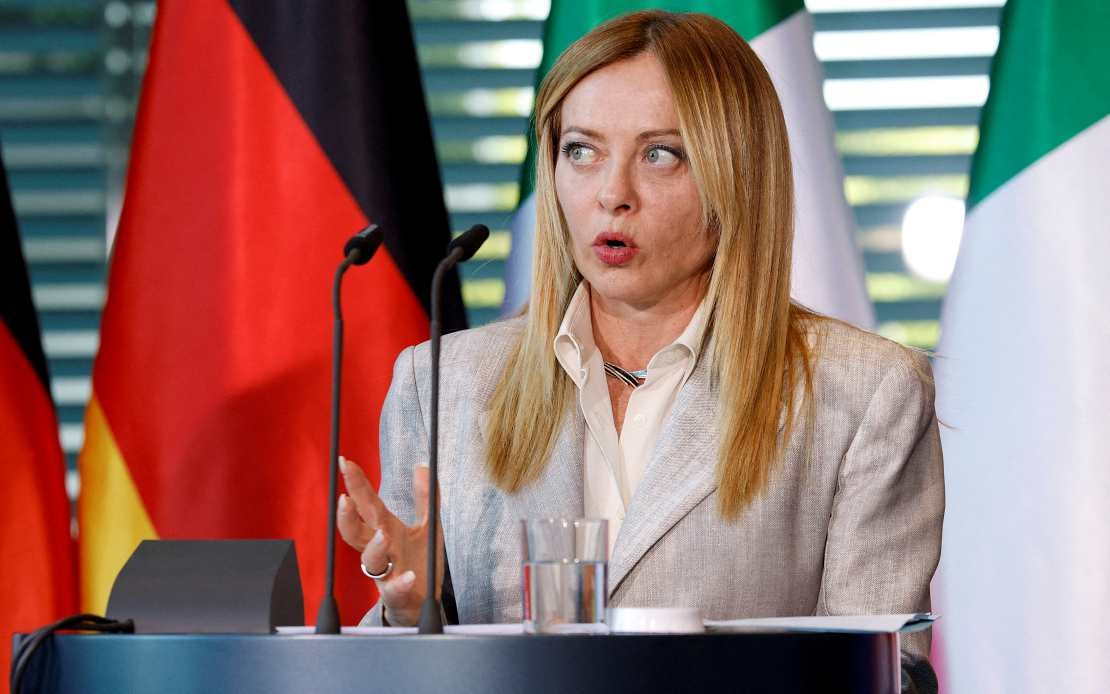
Italian Prime Minister Giorgia Meloni has initiated fresh discussions within the European Union around an ambitious—and contentious—scheme to relocate migrant processing operations and deportation centres to countries outside the bloc's borders. Under this proposal, the first of these facilities could become operational as early as 2027, reflecting Rome's determination to fundamentally reshape how Europe manages irregular migration. The initiative will feature prominently during an informal online gathering of EU home affairs ministers on Tuesday, with Italy's delegation led by Interior Minister Matteo Piantedosi.
The timing of Meloni's proposal is no coincidence. In late July, the Spanish enclave of Ceuta on Morocco's doorstep experienced a humanitarian and administrative shock when approximately 60,000 migrants crossed into the city within a single 24-hour period—a figure that dwarfs Ceuta's entire resident population of around 85,000 people. Spain responded by dispatching additional police, Civil Guard units, and military personnel to the North African territory in a bid to reassert control and deter further crossings. This episode crystallised the urgency that several European capitals feel regarding border management and has lent political momentum to Meloni's initiative.
The Italian government's vision builds directly on its existing relationship with Albania, which has served as a testing ground for offshore processing operations. Rome now aims to negotiate similar bilateral agreements with additional third countries, ideally concluding these arrangements by year's end. The financial burden of establishing and maintaining these centres would fall to the EU budget rather than individual member states, a key inducement designed to broaden political support. Already, Denmark's Prime Minister Mette Frederiksen has signalled backing for the scheme, while Rwanda and Uganda are described as the African nations furthest advanced in negotiations with their European counterparts on such arrangements. Nations including Denmark, Austria, the Netherlands, and Germany are driving the diplomatic push forward.
The scale of institutional backing underscores the depth of concern among European policymakers. A letter signed by representatives from twenty-two EU member states has been transmitted to European Commission President Ursula von der Leyen and European Council President Antonio Costa, urging consideration of enhanced protection mechanisms against undocumented migration. Greece, another frontline state that has similarly pencilled in 2027 as the launch date for its own experimental offshore processing model, is actively championing the broader initiative.
Yet the Italian experience reveals significant practical and legal obstacles to such schemes. Italy currently operates migrant detention and processing facilities abroad at its own expense and under its own legal jurisdiction, tasked with evaluating asylum claims while managing the detention and removal of those found to lack valid immigration status. However, Italian courts have repeatedly intervened to block the detention of migrants within these offshore centres, issuing orders for their return to Italian territory. These judicial decisions reflect a running constitutional dispute between the judiciary and the executive over the legality of expedited border procedures applied to nationals of countries deemed safe by the government.
The statistics from Italy's Albanian venture illuminate both the ambition and the reality gap. During the second operational phase spanning from May 2025 through mid-July 2026, just 685 migrants were transferred to Albania for processing. Of this cohort, fewer than fifteen per cent were ultimately repatriated, suggesting that the vast majority either won asylum status or remained in the system without deportation. These figures indicate that offshore processing alone does not necessarily accelerate removals or reduce irregular arrivals. The financial commitment has been staggering: maintaining the centre in Gjader during 2025 alone was budgeted at €50 million (US$57.67 million), raising questions about cost-effectiveness when repatriation rates remain modest.
For Malaysian and Southeast Asian observers, this European debate carries instructive implications. The region has long grappled with irregular migration flows, particularly involving maritime arrivals and transit smuggling networks. Malaysia's own experiences managing large populations of undocumented workers and refugee communities underscore the complexity of enforcement divorced from durable solutions addressing root causes. The Italian and broader European struggle demonstrates that legal barriers, judicial review, and humanitarian concerns continue to constrain even well-resourced governments attempting to operationalise deterrence-based migration policies.
The proposal also reflects a shift in European political discourse toward viewing migration management through a security and sovereignty lens rather than one centred on humanitarian obligation or development cooperation. This ideological repositioning, championed by right-wing governments across the continent, contrasts sharply with earlier EU migration frameworks that emphasised burden-sharing and asylum protection standards. The relocation of processing functions to non-EU jurisdictions effectively outsources not only the administrative burden but also potential legal and reputational costs to third countries—a dynamic that raises questions about the fairness and sustainability of such arrangements.
From a geopolitical perspective, the proposal creates new opportunities and risks for countries negotiating these arrangements with European governments. Nations such as Rwanda and Uganda gain leverage to extract financial commitments and technical support from wealthy EU capitals, yet they also face domestic scrutiny regarding their treatment of detainees and the appropriateness of hosting European migration enforcement operations on their soil. The arrangement effectively converts these countries into extensions of European border management, raising sovereignty considerations that deserve greater international attention.
The Ceuta crisis, while dramatic, may not prove representative of future migration patterns. Climate change, economic inequality, and regional instability across North Africa and the Middle East will continue driving migration pressure regardless of processing facility locations. European governments investing heavily in offshore detention infrastructure might find these facilities underutilised if diplomatic agreements with origin countries yield improved emigration controls, or conversely overwhelmed if push factors intensify. The sustainability of such schemes depends not merely on infrastructure but on coordinated international efforts addressing the underlying drivers of forced displacement.
Looking forward, the success or failure of Italy's offshore proposal will hinge on whether the EU can secure genuine cooperation from third countries willing to host these operations long-term, whether judicial challenges can be satisfactorily addressed, and whether repatriation rates improve beyond the modest fifteen per cent achieved in Albania. The Rome government's optimism about concluding agreements by year's end faces a credibility test, as does the projected 2027 operational timeline. For migration-affected nations globally, including those across Southeast Asia, the European experience offers a cautionary narrative about the limits of enforcement-heavy approaches in managing complex human displacement phenomena.

