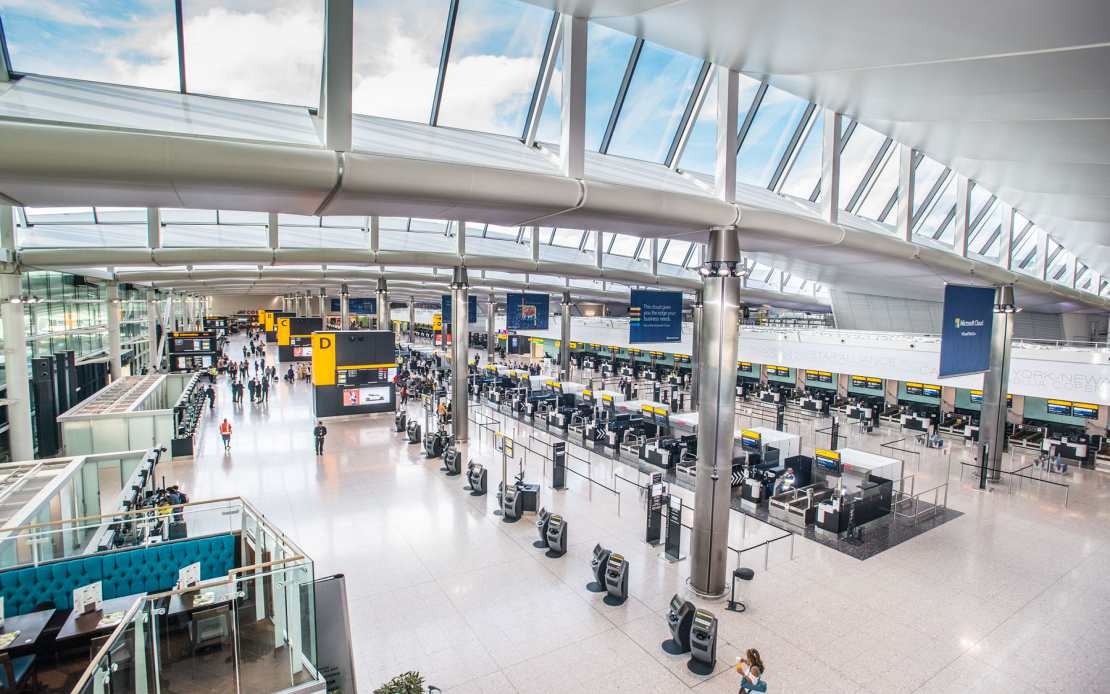
Istanbul airport has overtaken London's Heathrow as Europe's busiest aviation hub, marking a significant reversal for the British airport that had dominated the continent for two decades. The Turkish carrier processed 8.15 million passengers during July, edging ahead of Heathrow's 7.86 million travellers across the same month, a result that airport officials say underscores the urgency of expanding Britain's aviation infrastructure.
Heathrow's loss of the top ranking represents more than mere statistical displacement—it signals shifting patterns in global air travel and raises questions about Britain's competitive position in the post-pandemic aviation landscape. The airport had consistently held Europe's leading position from 1996 until the coronavirus pandemic disrupted international travel in 2020. Despite briefly ceding ground, Heathrow reclaimed the title in 2023 and maintained it through the following year, suggesting the latest slip may indicate deeper structural challenges rather than temporary volatility.
The momentum disparity between the two hubs is particularly telling. While Heathrow experienced a contraction of 1.5 per cent in monthly passengers compared to July of the previous year, Istanbul registered growth of 2.3 per cent during the same comparison. This divergence points to differing regional advantages and strategic positioning within European aviation networks. For Malaysian and Southeast Asian readers, this development illustrates how geopolitical disruptions and shifting trade routes can fundamentally alter aviation patterns across continents.
Geopolitical factors have directly impacted Heathrow's performance. The escalating tensions between the United States and Iran have particularly dampened traffic on western Asian routes, where Heathrow experienced a steep 20.2 per cent year-on-year decline in July passengers. This vulnerability to Middle Eastern instability reveals the airport's heavy reliance on established trade corridors and connection routes that serve the Gulf region and beyond. Istanbul, by contrast, benefits from geographic positioning that allows it to capture traffic flows between Europe, the Middle East, and Asia without the same exposure to specific bilateral disputes.
Despite operating at near-maximum capacity with just two runways, Heathrow continues to argue forcefully for expansion. The airport's owners have proposed adding a third runway that would ultimately accommodate 150 million passengers annually, more than double current levels. Airport leadership contends that the July displacement by Istanbul provides definitive proof that expansion is not merely advantageous but essential for maintaining Britain's standing as a major aviation hub.
The UK government has initiated formal consideration of the expansion proposal. Transport Secretary Heidi Alexander launched a consultation process in June regarding the revised Heathrow expansion national policy statement, which outlines prerequisites for project approval. Meanwhile, then-Chancellor Rachel Reeves signalled commitment to beginning construction during the current parliamentary session, with completion targeted for 2035—a timeline that would require rapid regulatory clearance and sustained political consensus.
However, political support for expansion remains contested within government circles. Prime Minister Andy Burnham, who previously sacked Reeves, has articulated reservations about the project, arguing that concentrating additional aviation infrastructure investment in London diverts resources from peripheral regions. This tension between southern economic dominance and regional development priorities adds complexity to what might otherwise be a straightforward infrastructure decision.
Heathrow has emphasised signs of underlying demand and airline confidence in its future. The airport recorded its busiest day of 2024 on July 19, when summer holiday travel peaked and 267,000 passengers moved through terminals. Several international carriers recently initiated service at Heathrow, including Italy's ITA Airways, Alaska Airlines from the United States, and Riyadh Air from Saudi Arabia. These additions suggest airlines anticipate that Heathrow will successfully expand and that securing strategic positions now positions them advantageously for future growth.
Thomas Woldbye, Heathrow's chief executive, has framed expansion as essential to preserving Britain's position within European aviation networks while maximising economic returns. He characterises the current period as an opportunity for growth in route development and passenger services, with expansion enabling substantially enhanced international connectivity. The airport leadership's messaging increasingly emphasises not just competitive necessity but the broader economic implications—suggesting that failure to expand could cost Britain trade relationships, inbound investment, and tourism revenue.
For Southeast Asian travellers and businesses, Heathrow's potential expansion carries practical significance. London serves as a major gateway for connections to Asia, Australia, and the Middle East. Reduced capacity or loss of competitive status could translate into fewer direct flight options, higher ticket prices, or less convenient connections for the region's frequent international travellers. Conversely, Istanbul's ascendancy as Europe's primary hub might incentivise some Southeast Asian airlines and passengers to establish alternative routing patterns through Turkish networks.
The broader implications extend beyond aviation statistics. This development reflects how infrastructure constraints in developed nations can progressively shift global transportation patterns and economic geography. Istanbul's geographic position straddling Europe and Asia, combined with Turkish government investment in aviation infrastructure, has created a compelling alternative to traditionally dominant Western European hubs. For Malaysia and other Southeast Asian economies pursuing global connectivity and trade expansion, Heathrow's struggle illustrates the importance of sustained infrastructure modernisation and the risks of allowing established advantages to erode through underinvestment.
The coming months will prove decisive for Heathrow's future trajectory. Transport Secretary Alexander's consultation process will determine whether the third runway receives regulatory endorsement, and Prime Minister Burnham will ultimately decide whether to commit government support to the project. If expansion fails to progress, the likelihood increases that Istanbul, Dubai, and other regional competitors will progressively consolidate their advantages, reshaping how international aviation networks function across Europe and Asia for decades to come.

