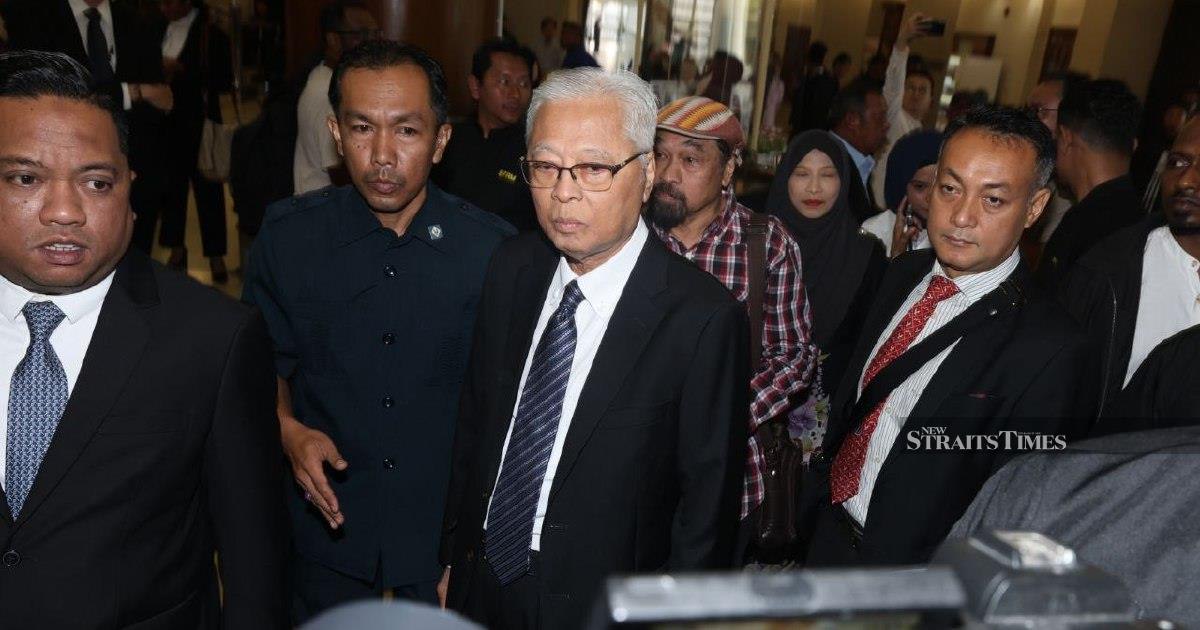
Former Prime Minister Datuk Seri Ismail Sabri Yaakob departed the Kuala Lumpur court complex on Wednesday after his son successfully posted RM300,000 bail on his behalf, bringing a temporary conclusion to his court appearance. The bail arrangement represents a pivotal moment in the ongoing legal proceedings against the former Umno stalwart, whose tenure as Prime Minister ended in August 2022 amid political turbulence.
The decision to allow bail underscores the judiciary's assessment of the case at hand, though specifics regarding the charges or allegations remain procedurally sensitive at this stage of proceedings. The posting of bail by his immediate family demonstrates the support structure surrounding Ismail Sabri during this challenging period, with his son taking responsibility for ensuring his appearance at future court dates. Such family involvement in legal matters, particularly among Malaysia's political elite, often carries significant symbolic weight.
Ismail Sabri's legal troubles reflect a broader pattern affecting Malaysian politicians across the political spectrum in recent years. Following political upheaval that reshaped the nation's leadership landscape, numerous high-profile figures have faced scrutiny from investigating authorities. The former Prime Minister, who held office during a tumultuous period marked by competing political factions and governance challenges, has now become part of this widening wave of legal accountability affecting senior political figures.
The bail sum of RM300,000, while substantial for ordinary Malaysians, represents a manageable amount for a former Prime Minister with established financial resources and political connections. The court's willingness to grant bail at this level suggests authorities do not regard Ismail Sabri as an immediate flight risk or pose to public safety, a standard consideration in bail determinations. His compliance with such conditions will likely be monitored closely as the case progresses through the judicial system.
For Southeast Asian observers, Ismail Sabri's situation exemplifies the unpredictable nature of Malaysian politics, where transitions in power frequently trigger legal investigations into predecessors. Unlike jurisdictions with stronger institutional safeguards, Malaysia's political system has historically witnessed alternating cycles of investigation and prosecution following leadership changes. This pattern raises questions about the consistency and impartiality of Malaysia's law enforcement agencies across different administrations.
The former Prime Minister's experience also highlights the intersection between political leadership and legal accountability in a nation navigating complex governance questions. During his premiership from 2021 to 2022, Ismail Sabri steered the country through Covid-19 economic recovery challenges while managing internal party rivalries that ultimately contributed to his government's downfall. His transition from office to courtroom proceedings underscores the precarious position occupied by Malaysian leaders once their political utility diminishes.
Family involvement in securing bail arrangements, as demonstrated here, frequently shapes public perception of legal processes involving political elites. The ability to post substantial bail amounts quickly often contrasts sharply with experiences of ordinary citizens navigating Malaysia's criminal justice system. This disparity fuels broader conversations about equality before the law and whether Malaysia's legal framework adequately protects against privilege-based advantages during prosecution.
The continuation of these legal proceedings against Ismail Sabri will likely generate sustained media attention given his prominence within Umno and Malaysian politics generally. His case potentially influences how the party positions itself regarding governance and accountability in future political campaigns. Umno's organisational response to his legal challenges may offer insights into the party's evolving priorities and factional dynamics.
As Ismail Sabri transitions to managing his legal obligations while remaining active within political circles, observers will monitor whether his situation establishes precedents affecting how similar cases involving former leaders proceed through Malaysia's courts. The bail condition requires his appearance at subsequent hearings, making him effectively subject to court oversight during the investigation and prosecution phases. This arrangement, while granting him temporary freedom, also constrains his movements and represents an ongoing acknowledgement of the seriousness of matters under investigation.
The posting of bail by his son ultimately permits Ismail Sabri to continue his personal affairs and political engagement outside custodial settings. However, the shadow of pending legal proceedings will inevitably influence his public standing and political relevance as Malaysia's political landscape continues evolving. The former Prime Minister now occupies an ambiguous position between elder statesman status and defendant in ongoing judicial processes.

