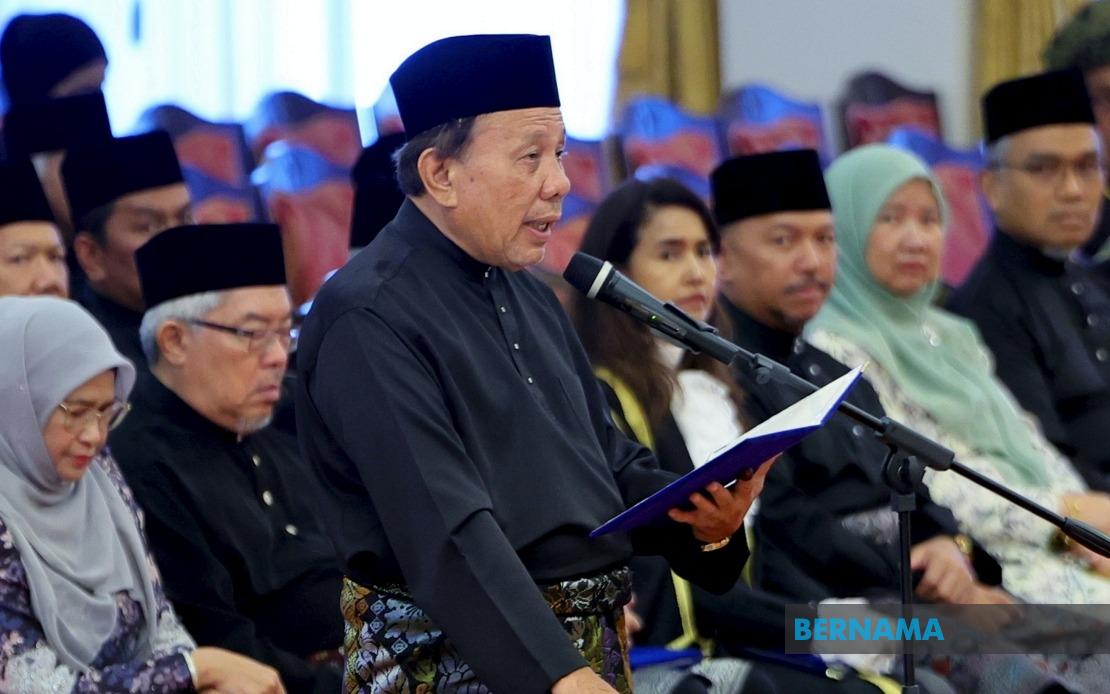
Datuk Ismail Lasim took the oath of office as Negeri Sembilan's new Menteri Besar on August 2 in a swearing-in ceremony at Istana Besar Seri Menanti before Yang Dipertuan Besar Tuanku Muhriz Tuanku Munawir. The appointment follows the 16th Negeri Sembilan State Election, which delivered a fresh mandate to the incoming administration. Ismail's ascension marks a significant transition in the state's political leadership and sets the stage for a new governing agenda aimed at advancing regional interests within Malaysia's broader developmental landscape.
In his oath of allegiance speech, the new Menteri Besar emphasised that the electoral mandate represents far more than ceremonial recognition. He framed it as a weighty responsibility that demands unwavering commitment to serve the public interest with integrity and effectiveness. The language of his remarks underscored a philosophy wherein governance derives its legitimacy not merely from winning an election, but from consistently demonstrating that trust through measurable action. This framing is particularly relevant for Malaysian voters who have increasingly scrutinised government performance against campaign pledges.
Ismail committed to establishing administrative systems grounded in fairness and transparency—principles that have gained prominence in Malaysian political discourse following recent governance challenges. He pledged that his government would listen attentively to public aspirations while executing state responsibilities with diligence and accountability. These commitments extend beyond rhetorical flourish; they represent concrete promises to safeguard public confidence in state institutions, a concern that resonates across Malaysian society as citizens demand higher standards of public administration.
Crucially, Ismail reaffirmed his commitment to upholding the constitutional framework governing Negeri Sembilan. He pledged to preserve the sovereignty and dignity of the Yang Dipertuan Besar, demonstrating respect for the state's unique monarchical system and the Federal Constitution. This emphasis carries particular significance in Negeri Sembilan, where the institution of constitutional monarchy remains deeply woven into the social and political fabric. By explicitly acknowledging the paramount authority of Tuanku Muhriz and committing to honour royal counsel and guidance, Ismail positioned his administration within the established constitutional order.
The new Menteri Besar also highlighted Negeri Sembilan's distinctive heritage, particularly the Adat Perpatih customary system that distinguishes the state from its Malaysian counterparts. He committed to preserving and transmitting this unique cultural and institutional legacy to future generations. The Adat Perpatih framework, founded on principles of consensus, justice, unity and wisdom, offers an alternative governance philosophy that Ismail indicated would inform his administration's policy direction. This cultural grounding provides a meaningful context for understanding how Negeri Sembilan's development agenda will be calibrated differently from other Malaysian states.
Economic development and job creation featured prominently in Ismail's vision for the state's future. He pledged that his government would strengthen Negeri Sembilan's economic foundation, attract quality investments and generate sustainable employment opportunities. These commitments address concrete concerns affecting residents across the state, from urban professionals to rural communities dependent on agriculture and traditional livelihoods. The emphasis on inclusive development—ensuring progress reaches both urban and rural areas—suggests an awareness that uneven growth patterns can undermine social cohesion and public satisfaction.
Beyond conventional metrics of progress, Ismail articulated a holistic conception of development that encompasses social well-being, institutional strength and public confidence in government systems. He rejected the notion that infrastructure projects and economic growth figures alone constitute meaningful advancement. Instead, he advocated for measuring success through improvements in education, healthcare, housing and social services alongside environmental sustainability. This perspective aligns with evolving Malaysian expectations that governing administrations address quality-of-life concerns rather than focusing narrowly on GDP expansion.
Ismail emphasised that executing this ambitious agenda requires cultivating unity and consensus within Negeri Sembilan society. He pledged to remain receptive to diverse viewpoints and constructive criticism, recognising that durable progress depends on broad-based buy-in and collaborative problem-solving. This commitment to inclusive dialogue carries significance in Malaysian politics, where polarisation has sometimes hindered effective governance. By positioning his administration as willing to listen and adapt, Ismail signalled an approach that could potentially transcend partisan divisions in pursuit of collective state interests.
The new Menteri Besar also stressed the importance of strengthening relationships among the Royal Institution, state and federal governments, civil service, private sector and community stakeholders. This emphasis on institutional coordination reflects awareness that siloed governance produces inefficiencies and undermines policy coherence. In the Malaysian context, where federal-state relations sometimes generate friction, Ismail's commitment to harmonious cooperation with the Federal Government and alignment on shared objectives could facilitate smoother policy implementation across administrative levels.
Ismail acknowledged the contributions of his predecessor, Datuk Seri Aminuddin Harun, characterising previous developmental initiatives as a valuable foundation rather than something to be dismantled. This continuity approach suggests an administration focused on building incrementally upon established progress rather than pursuing radical restructuring. For Negeri Sembilan residents and investors, this signals policy stability and demonstrates that transition between administrations need not entail disruption to ongoing projects or long-term strategic directions.
The swearing-in ceremony itself embodied Negeri Sembilan's distinctive constitutional arrangements, with the Yang Dipertuan Besar's presence underscoring the state's commitment to constitutional monarchy principles that distinguish Malaysian governance. Ismail's repeated invocations of royal guidance and the constitutional framework reinforced these foundational commitments. For Malaysian observers, this ceremonial affirmation of constitutional values carries broader significance during a period when Malaysia's democratic institutions face scrutiny and demands for renewal.
Moving forward, the test of Ismail's administration will centre on translating these pledges into substantive policy outcomes. Negeri Sembilan faces opportunities in economic diversification, talent retention and sustainable development, alongside challenges common to Malaysian states including infrastructure demands and fiscal sustainability. The new Menteri Besar's initial framing emphasises accountability, inclusivity and adherence to constitutional principles—a foundation upon which his government's record will ultimately be judged by residents and observers alike.

