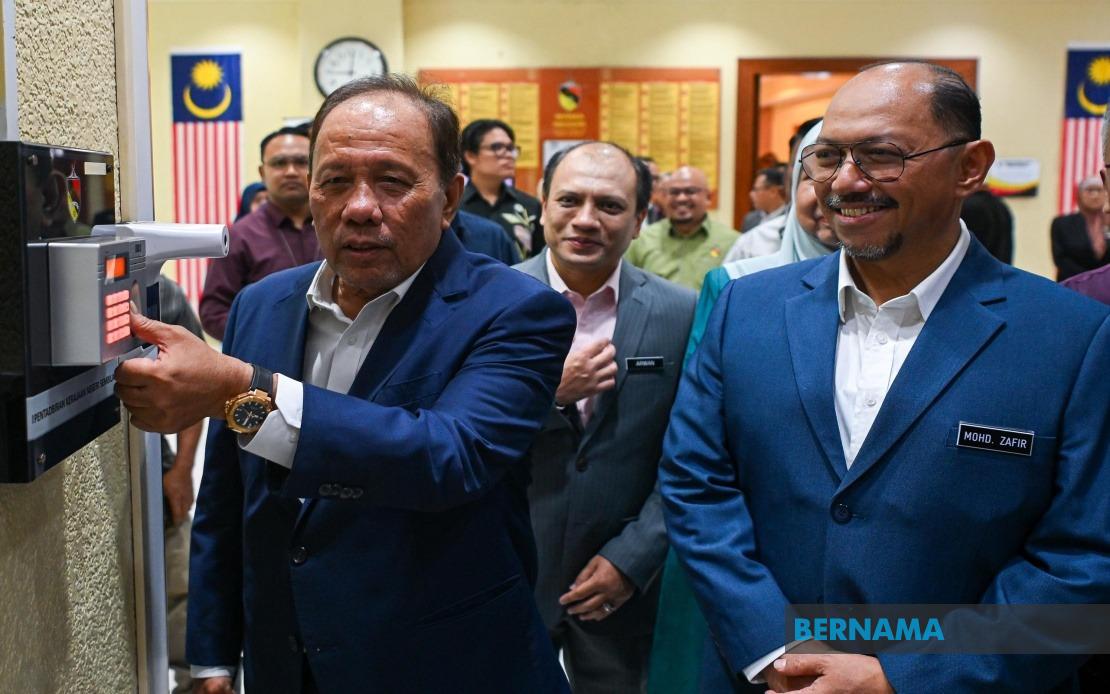
Negeri Sembilan's newly installed Menteri Besar Ismail Lasim has moved swiftly to address concerns surrounding his elevation to the state's top executive position, insisting that his appointment adhered strictly to established constitutional frameworks and administrative protocols. Speaking from Wisma Negeri in Seremban on August 4, Lasim expressed confidence that the process governing his selection as chief minister met all required standards.
The appointment process had attracted scrutiny from prominent figures beyond the state government. Wawasan chairman Tan Sri Rais Yatim had raised questions about the mechanisms through which Lasim was appointed to lead Negeri Sembilan, with particular concern directed towards allegations of external pressure exerted on matters falling within the state's constitutional domain and customary jurisdiction. Such questions touch on sensitive issues of state autonomy and the proper observance of constitutional procedures in Malaysia's federal framework, where states retain considerable powers over their own governance structures.
Lasim's path to the top position began with his electoral victory in the Juasseh state constituency during the recent Negeri Sembilan state election. The broader electoral outcome provided a strong mandate for his appointment, with Barisan Nasional capturing 18 of the state assembly's 36 seats in the contest. Perikatan Nasional secured seven seats, though this was insufficient to challenge BN's position. Combined, these two coalitions command more than two-thirds of the state legislature, a substantial majority that provides considerable political stability for government formation and legislative business.
Lasim was formally sworn into office before Yang Dipertuan Besar of Negeri Sembilan Tuanku Muhriz Tuanku Munawir at Istana Besar Seri Menanti the preceding Sunday, in a ceremony that followed traditional protocol. This formal investiture by the state's constitutional ruler underscores the legal foundation underpinning his appointment and lends it the weight of monarchical endorsement, a critical element in Malaysia's constitutional monarchy system where such ceremonial acts carry substantive legal significance.
The questions raised by Rais Yatim reflect broader concerns about transparency and proper procedure in state-level political transitions. In Malaysia's federal system, each state maintains its own constitution and customs governing how its chief minister is selected and appointed. External pressure, whether from federal authorities or other political actors, on such fundamentally state-level matters raises constitutional questions about the proper separation of powers between Putrajaya and state capitals. These concerns resonate across Malaysia's political spectrum, as safeguarding state autonomy remains a concern for leaders across different coalitions and regions.
For Negeri Sembilan specifically, the appointment occurred at a critical juncture for the state's political trajectory. The electoral results demonstrated voter preference for continuity under BN stewardship, and Lasim's elevation represents the coalition's assertion of control over state policy and governance priorities. His designation also reflects BN's broader strength across the peninsula, though the coalition's challenge of maintaining internal coherence across multiple component parties remains an ongoing concern in state administration.
Lasim's public defence of the appointment process serves both practical and symbolic purposes. Practically, it seeks to establish the legitimacy of his administration in the eyes of both state bureaucracy and the public, potentially deflating concerns that might otherwise undermine his authority or invite legal challenges. Symbolically, his insistence on proper procedure speaks to his commitment to constitutional governance and may serve as a counterweight to broader perceptions about political manipulation in Malaysia's electoral and governmental processes.
The appointment of state chief ministers carries implications that extend beyond individual states in Malaysia's interconnected federation. BN's performance in Negeri Sembilan, combined with its electoral successes in other peninsular states, shapes the coalition's overall political momentum and its capacity to drive a national agenda through the Council of Rulers and inter-state coordination mechanisms. The stability of BN-controlled states like Negeri Sembilan provides crucial support for the federal government's policy initiatives and enhances its negotiating position in complex multi-party coalitions.
Moving forward, Lasim must navigate the practical challenges of governing a diverse state while maintaining the internal cohesion of Negeri Sembilan's diverse constituencies. The Juasseh seat he represents carries expectations from his electorate, and his capacity to deliver on state development priorities will be closely watched by both supporters and critics. Early assertions of procedural propriety may prove either reassuring or inadequate depending on the substantive outcomes his administration produces in economic development, education, and social services across Negeri Sembilan.

