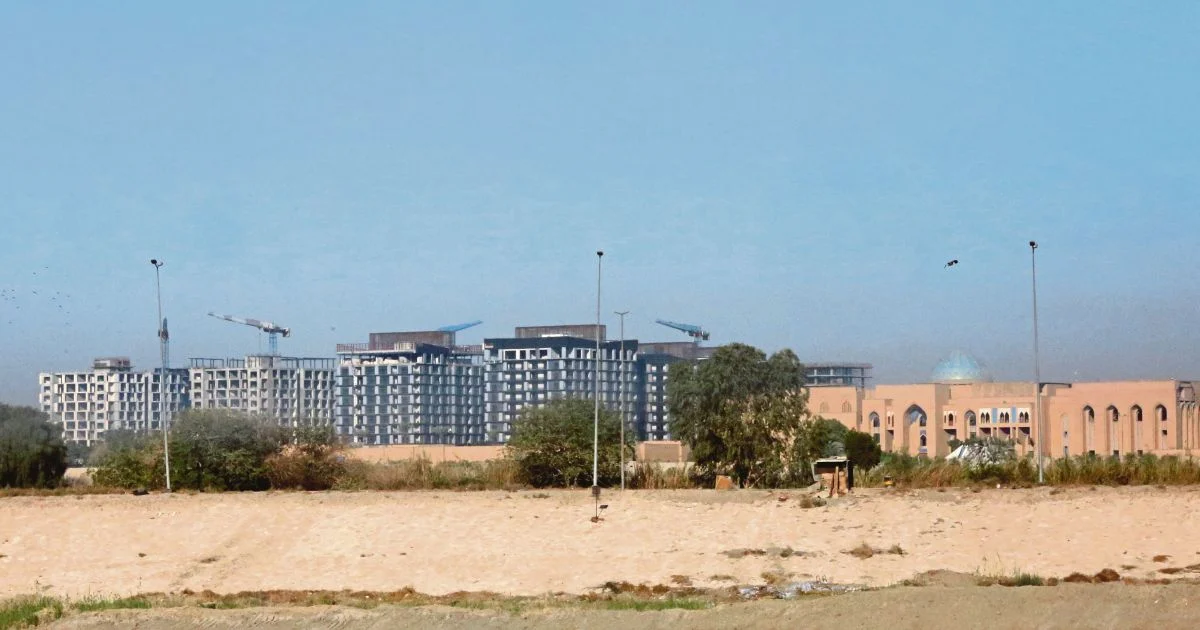
Iraq's security apparatus moved decisively against alleged corruption in the highest echelons of government on Sunday morning, executing coordinated raids throughout Baghdad's fortified Green Zone. The operation resulted in the detention of multiple parliamentarians and public officials implicated in graft, underscoring mounting pressure within Iraq's political establishment to address endemic corruption that has plagued the country's post-2003 institutions.
The Green Zone, a heavily secured enclave housing parliament, ministerial offices and foreign embassies, witnessed an unprecedented scale of security operations. Armed forces maintained a visible presence across the compound throughout the day, disrupting normal governmental functions and signalling the gravity of the anti-corruption initiative. This deployment reflected the serious nature of the allegations being pursued, with authorities treating the operation with heightened tactical intensity.
The targeting of sitting MPs represents a notable escalation in Iraq's intermittent anti-corruption efforts. Historically, parliamentary immunity has provided substantial protection to legislators, making prosecutions exceptionally rare and politically fraught. The willingness to arrest lawmakers despite occupying the legislature suggests either a fundamental shift in political will or mounting public pressure that even ruling coalitions cannot easily ignore. Such actions carry significant risks within Iraq's fractious political environment, where detention of prominent figures frequently sparks factional tensions.
Corruption has emerged as one of Iraq's most intractable governance challenges, with transparency indices consistently ranking the country among the world's most corrupt nations. The phenomenon extends across multiple sectors, from military procurement to customs administration, and has reportedly diverted billions in resources intended for reconstruction, security services and public services. This systematic pillaging has undermined state capacity and contributed to persistent grievances among the Iraqi population, particularly as infrastructure deficits and service delivery failures mount.
The targeting of government officials alongside parliamentarians suggests authorities are casting a wider net than previous, more selective enforcement efforts. Previous anti-corruption campaigns in Iraq have often been weaponised for factional advantage, with political rivals selectively prosecuted while allies received protection. The scope of Sunday's operations hints at either a more impartial prosecutorial approach or reflects shifting political alignments within Iraq's complex power-sharing structure that traditionally allocates ministries along sectarian and ethnic lines.
International observers and governance experts have long emphasised that systemic corruption represents an existential threat to Iraq's stability and democratic development. Diversion of state revenues fuels grievances that extremist organisations have historically exploited for recruitment and legitimacy. Demonstrating genuine commitment to accountability could theoretically enhance state legitimacy and reduce recruitment pipelines for insurgent groups, though sceptics note that cosmetic enforcement actions without fundamental institutional reform rarely achieve lasting impact.
The timing of these raids occurs against a backdrop of broader Iraq political developments. The country has navigated complex coalition negotiations and constitutional processes over preceding months. Anti-corruption rhetoric features prominently in Iraqi political discourse, with competing factions frequently accusing rivals of graft whilst deflecting scrutiny from their own networks. Whether Sunday's operation represents authentic institutional reform or tactical manoeuvring within factional competition remains uncertain without examining the specific individuals targeted and the evidence supporting allegations.
For Malaysia and broader Southeast Asia, Iraq's struggles with corruption and weak institutional safeguards offer instructive cautionary lessons. Regional countries face comparable challenges as developing economies seek to balance rapid growth with governance standards. The difficulty Iraq experiences in enforcing accountability across its political elite demonstrates how corruption roots itself deeply within patronage networks and factional structures, making isolated enforcement actions insufficient without comprehensive institutional redesign and leadership commitment.
Security forces' capacity to execute raids on parliament itself signals confidence in physical control and suggests the initiative enjoys backing from key security leadership. However, the longevity of such enforcement depends on sustained political consensus. Previous Iraqi anti-corruption initiatives have waned as factional calculations shifted and institutional opponents mounted resistance. Without independent judicial oversight and transparent prosecutorial standards, these operations risk appearing selective or politically motivated regardless of actual intent.
The detention of MPs and officials will inevitably trigger political recriminations as their respective parliamentary blocs mobilise to secure their release or challenge the evidence against them. Such dynamics could destabilise governing coalitions if detainees come from critical coalition partners. Parliamentary responses, including potential votes on confidence or procedural challenges, may emerge as political factions contest the legitimacy of the enforcement action and compete to claim credit or deflect responsibility.
Successful institutional reform in Iraq would require moving beyond episodic enforcement toward structural changes: establishing truly independent anti-corruption agencies, implementing transparent procurement systems, separating investigating bodies from political pressure, and creating credible whistleblower protection mechanisms. The current operation signals intentions but cannot alone transform governance culture without accompanying institutional innovations. Observing whether these raids lead to convictions, whether legal proceedings prove fair and transparent, and whether politicians face genuine consequences will determine whether Sunday's enforcement action represents meaningful progress or merely political theatre.

