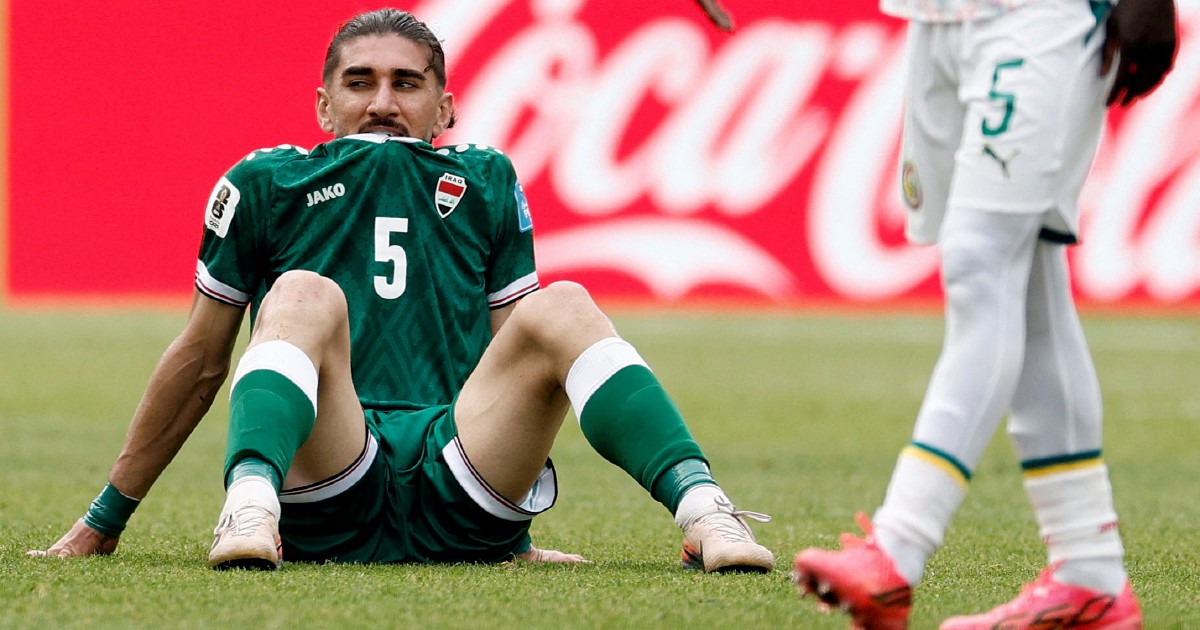
Iraq's Olympic Committee has committed to a comprehensive examination of the national football team's underperformance at the World Cup, signalling a determination to address systemic weaknesses that led to the disappointing campaign. The announcement, made on Monday, represents an acknowledgment that the team's poor showing demands more than superficial adjustments, with officials indicating that substantive institutional changes will be necessary to restore competitiveness on the international stage.
The decision to conduct a formal investigation reflects growing frustration within Iraqi football circles over the team's inability to perform when it matters most. Rather than accept the results as mere misfortune, the Olympic Committee has chosen to examine the root causes underlying the defeat, suggesting that leadership recognises deeper problems within the national programme. This approach indicates a shift towards accountability, with officials willing to scrutinise coaching decisions, player selection, tactical approaches, and preparation methodologies that may have contributed to the failure.
For Malaysian sports observers, Iraq's situation resonates with broader challenges facing Southeast Asian and West Asian football programmes. Like many developing football nations, Iraq faces the constant struggle of balancing limited resources with the ambitions required to compete against better-funded teams. The investigation will likely uncover familiar obstacles: inadequate training infrastructure, inconsistent financial support, brain drain of talented players to foreign leagues, and the difficulty of maintaining squad cohesion across competitions.
The Olympic Committee's commitment to implementing preventive measures signals an intent to build institutional memory and create lasting change rather than cycling through temporary fixes. This forward-looking stance suggests officials understand that sporadic investments in football infrastructure yield mediocre results. A structured overhaul would encompass youth development systems, coaching education programmes, domestic league quality improvements, and strategic planning for talent identification and retention.
Iraq's football environment presents unique complications beyond those typical for developing nations. Political instability, security concerns, and limited commercial football investment have historically constrained the national programme's ability to function optimally. These contextual factors will inevitably shape the scope and feasibility of any proposed reforms. Successful implementation will require not only Olympic Committee support but also coordination with the Iraqi Football Association, government backing, and possibly international technical assistance.
The timing of this investigation matters significantly. Coming in the aftermath of failure, it represents a critical juncture where momentum for change typically peaks. History demonstrates that organisations which act decisively during such moments achieve greater transformation than those that delay. However, sustaining reform efforts beyond the initial enthusiasm period poses a separate challenge that many football programmes struggle to overcome.
Regionally, Iraq's approach may influence how other West Asian footballing nations respond to their own tournament disappointments. Should the investigation produce tangible improvements and the national team demonstrates measurable progress in subsequent competitions, Iraq could establish a model for institutionalised self-assessment that other developing programmes might emulate. Conversely, if the investigation concludes without substantive follow-through, it risks reinforcing cynicism about the capacity for meaningful change within the regional football ecosystem.
The proposed overhaul must address both immediate tactical concerns and longer-term strategic positioning. While investigating specific World Cup performance failures remains important, the Olympic Committee's parallel commitment to mapping comprehensive reforms suggests recognition that isolated improvements will prove insufficient. Building a sustainable competitive football culture requires coordinated development across multiple dimensions simultaneously.
International partnerships could prove valuable in facilitating Iraq's reconstruction efforts. Many nations have benefited from technical cooperation with established football programmes, whether through coaching exchanges, training partnerships, or administrative expertise transfer. The investigation phase may identify specific areas where foreign expertise could accelerate institutional development and provide fresh perspectives on stubborn structural problems.
For Iraqi football supporters, the announcement provides cautious grounds for optimism. Visible commitment to systematic improvement, backed by genuine investigative rigour, demonstrates that officials take both the sport's importance and their accountability seriously. However, managing expectations remains crucial, as transforming football performance typically requires sustained effort across multiple years before meaningful results manifest on the international stage.
The investigation's outcomes will likely reveal whether Iraq's World Cup failure stemmed primarily from isolated circumstances or reflected deeper systemic dysfunction. This distinction will fundamentally shape the nature and scope of required reforms. If problems concentrate within specific areas such as coaching effectiveness or player fitness levels, targeted interventions may suffice. However, if the investigation reveals fragmented institutional structures and inadequate long-term planning, comprehensive overhaul becomes unavoidable.
Ultimately, Iraq's commitment to investigating and addressing its World Cup campaign failure demonstrates the Olympic Committee's willingness to prioritise sustainable improvement over comfortable denial. Whether this investigative process translates into meaningful progress for the national team will become apparent through subsequent tournament results and the demonstrable strengthening of Iraq's football infrastructure in coming years.

