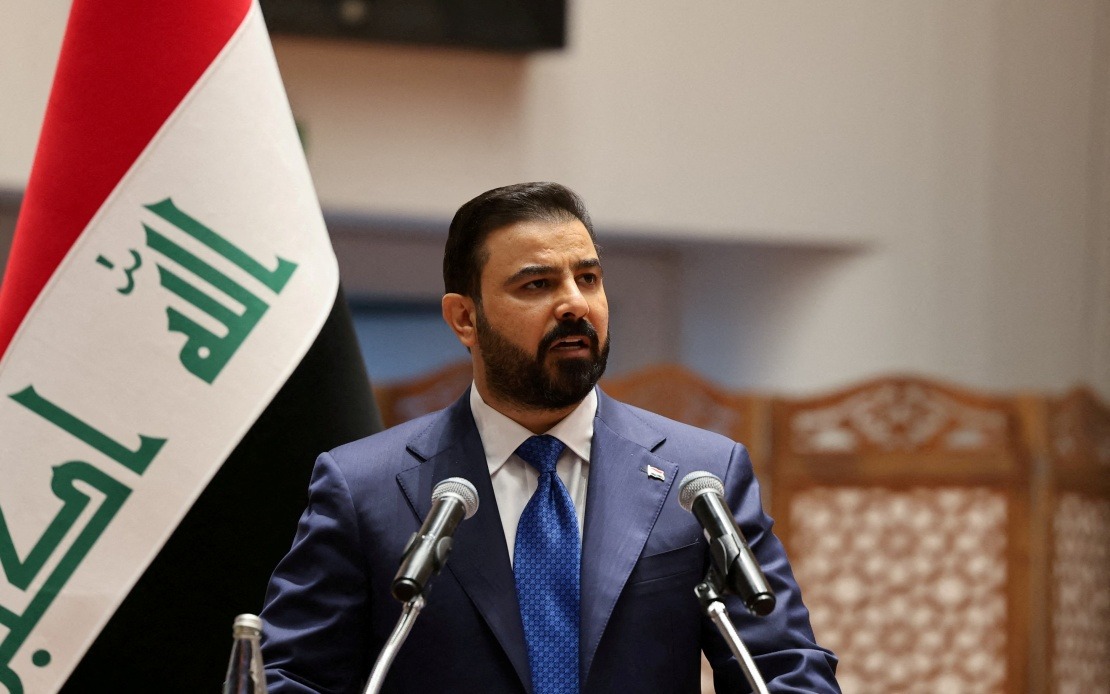
Iraq will remain a steadfast member of the Organization of the Petroleum Exporting Countries despite ongoing tensions over production quotas, Prime Minister Ali Al-Zaidi declared on Thursday in remarks that underscore Baghdad's strategic commitment to the cartel even as it seeks more generous allocation terms. Speaking to Al-Hadath broadcaster, Al-Zaidi emphasized that Iraq's future lies within OPEC's framework, though the nation expects the organization to recognize its contributions and potential with a production ceiling that reflects its capabilities and economic needs.
The statement comes as Iraq navigates a delicate balancing act within OPEC, where member states frequently clash over the distribution of permitted oil output. Baghdad has long contended that its assigned quotas fail to account for the country's substantial proven reserves and production capacity, a grievance that resonates across Iraq's oil-dependent economy. With crude oil revenues constituting the vast majority of government income, fluctuations in production allowances directly impact Iraq's ability to fund reconstruction efforts and social spending in a nation still recovering from years of conflict and instability.
OPEC's June 5 announcement revealed a modest adjustment to Iraq's position within the cartel's output framework. The organization authorized an increase of 26,000 barrels per day, bringing Iraq's ceiling to 4.405 million bpd, whilst simultaneously adjusting quotas for other members including Kuwait and Oman. Kuwait received permission to raise its production by 16,000 bpd to 2.66 million bpd, whilst Oman's allocation rose by 5,000 bpd to 836,000 bpd. These incremental adjustments reflect OPEC's careful management of global oil supplies and the organization's attempt to balance members' competing demands.
The broader context for Al-Zaidi's remarks involves OPEC+ reassessing member states' actual production capacities, a process that holds significant implications for Iraq. In June, the Iraqi Oil Ministry's spokesman Salim Al-Ruqabi indicated that the cartel had initiated a comprehensive evaluation of Baghdad's oil production capabilities, suggesting that OPEC+ recognized the need for a more thorough understanding of Iraq's technical and infrastructural capacity. Such assessments typically precede quota adjustments, as OPEC members seek to align production limits with realistic operational capabilities rather than arbitrary political agreements.
For Malaysian readers and Southeast Asian observers, Iraq's position within OPEC carries broader regional significance. Iraq remains one of the world's largest proven oil reserves holders, and its production decisions influence global energy prices that directly affect import-dependent economies throughout Asia. When OPEC members debate quotas, the outcomes ripple across maritime trade routes, regional energy security arrangements, and the economic calculations of countries like Malaysia that depend on stable and affordable energy inputs for manufacturing and power generation.
Al-Zaidi's reaffirmation of OPEC membership loyalty represents a measured diplomatic stance that avoids confrontation whilst signalling Iraq's determination to improve its position. This approach reflects lessons learned from other attempted departures or threats within OPEC's history, where members discovered that withdrawal rarely yielded benefits and frequently isolated nations from the collective bargaining power that cartel membership provides. By explicitly ruling out departure whilst advocating for fairness, Iraq positions itself as a cooperative but assertive member.
The production capacity assessment currently underway carries particular importance for Iraq's long-term energy strategy. Iraq's oil sector has experienced substantial development and investment in recent years, with international oil companies operating alongside state entities to enhance extraction capabilities. If OPEC recognizes increased Iraqi production capacity, subsequent quota adjustments could provide Baghdad with additional revenue streams needed for reconstruction, military spending, and infrastructure investment. Conversely, delayed recognition of Iraq's growing capabilities frustrates policymakers who see potential revenues remaining unrealized.
Within OPEC's complex internal politics, Iraq represents a middle power with legitimate grievances but limited leverage compared to Saudi Arabia or Russia. The organization functions through a consensus-driven system where larger members exercise disproportionate influence, meaning Iraq must build coalitions and demonstrate patience to advance its interests. Al-Zaidi's measured language reflects this reality, avoiding provocative rhetoric whilst clearly stating Baghdad's expectations for more equitable treatment within the cartel structure.
The economic implications for Iraq extend beyond oil revenues alone. Production restrictions constrain Baghdad's capacity to invest in downstream petroleum infrastructure, attract foreign investment, and develop alternative economic sectors. When production quotas limit output below what Iraq could technically produce, the opportunity cost accumulates across the broader economy. This dynamic explains why successive Iraqi governments maintain principled commitment to OPEC membership whilst persistently arguing for quota adjustments.
OPEC's June 5 decision to increase Iraq's quota by 26,000 bpd, whilst numerically modest, suggests the organization acknowledges Baghdad's claims to greater production room. However, Iraq likely views this increase as insufficient compensation for its proven reserves and capacity. The ongoing capacity assessment provides an opportunity for Baghdad to present technical data demonstrating that further quota increases remain justified by objective production capabilities rather than mere political preference.
Looking ahead, Iraq's diplomatic efforts will likely intensify as the OPEC+ assessment concludes. Al-Zaidi's public statements serve dual purposes: reassuring international markets and OPEC partners that Iraq remains a stable, cooperative member whilst simultaneously positioning Baghdad for negotiations over future quota adjustments. This careful balancing act reflects Iraq's recognition that both OPEC membership and equitable treatment remain essential for national interests.
For regional energy security and global oil market stability, Iraq's continued OPEC participation matters significantly. Iraqi withdrawal would disrupt cartel coordination, create unpredictability in global supply, and potentially destabilize the Middle East energy landscape further. Al-Zaidi's commitment to OPEC membership, therefore, represents reassurance that Baghdad views long-term cooperation as preferable to confrontation, even whilst pressing legitimate claims for improved quota arrangements.

