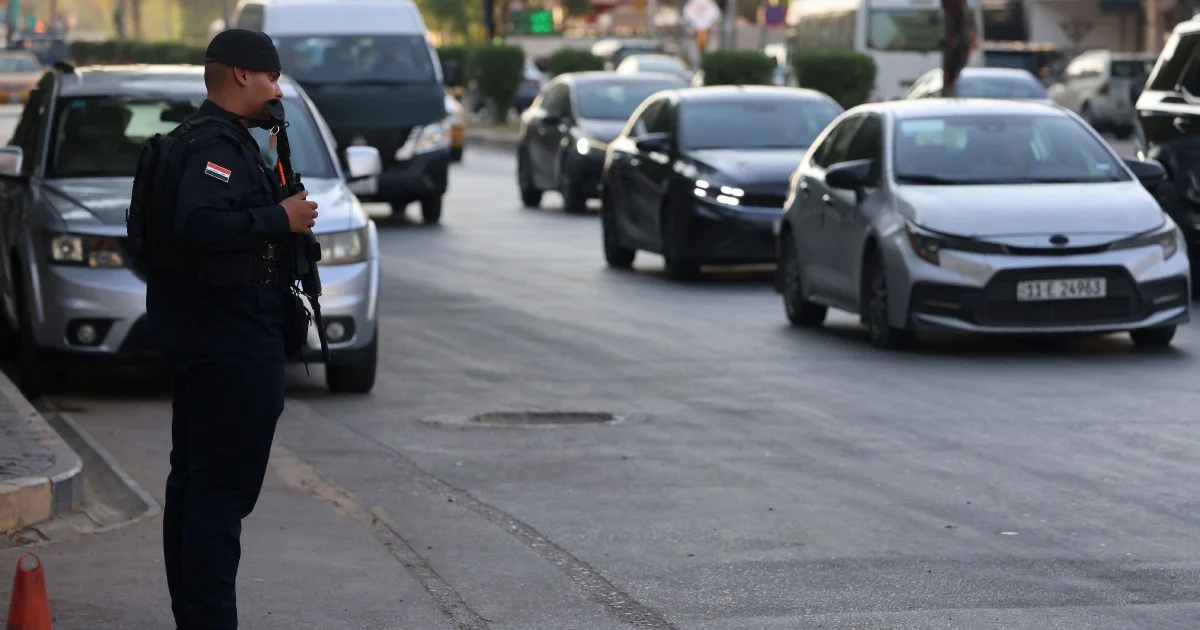
Iraq's security forces mounted a substantial enforcement operation on Sunday, apprehending 47 public officials across multiple government departments in what represents one of the more visible efforts to address endemic corruption in the Middle Eastern nation. The detentions included sitting members of parliament, signalling that the campaign has reached into the country's legislative branch—a development that observers see as either a genuine commitment to accountability or politically motivated targeting, depending on one's perspective of Iraqi governance.
The crackdown comes at a critical juncture for Iraq, which has struggled with institutional corruption for decades. Since the 2003 invasion and subsequent reconstruction, graft has permeated virtually every level of the public sector, from local municipal administrations to federal ministries. International transparency indices consistently rank Iraq among the world's most corrupt nations, with informal estimates suggesting that tens of billions of dollars have been diverted from state coffers through kickback schemes, inflated procurement contracts, and phantom payroll positions.
Including lawmakers in the sweep indicates that authorities are attempting to project an image of impartiality, though the targeting of parliamentary figures introduces complex questions about judicial independence and whether such prosecutions reflect genuine wrongdoing or are weaponised for political purposes. Iraq's parliament has long been criticised as a breeding ground for patronage networks, with seats often distributed along sectarian and ethnic lines following election results. The inclusion of MPs therefore carries symbolic weight in demonstrating that no institution remains above investigation.
The timing of the operation aligns with broader regional and international pressure on Iraq to strengthen governance. Foreign investors, the International Monetary Fund, and neighbouring states have all expressed concerns about the sustainability of Iraq's economy and institutional capacity when corruption siphons resources at such scale. The central government's ability to deliver public services—electricity, clean water, healthcare—remains severely compromised partly because funds allocated for infrastructure projects frequently disappear through corrupt channels.
Iraq's anti-corruption infrastructure has expanded in recent years with the establishment of specialised courts and investigative bodies tasked with pursuing high-profile graft cases. However, these institutions face significant operational constraints, including political pressure, insufficient funding, and a judiciary that itself has been compromised by corruption. Successful prosecution requires not only detecting violations but assembling evidence that withstands legal challenge—a technically demanding process in any system, and exponentially more difficult in one where institutional safeguards have been eroded.
The nature of corruption in Iraq differs meaningfully from Western models and reflects the country's political economy structure. Patronage networks operate along sectarian lines, with senior government positions and ministry budgets distributed to reward political factions and their constituencies. This system, entrenched since 2005, means that corruption is not merely individual criminality but embedded within the broader political settlement. Prosecuting individual officials while leaving the structural framework intact produces limited systemic change.
For Malaysia and other Southeast Asian nations observing Iraq's governance challenges, the case offers cautionary lessons. Countries throughout the region have grappled with similar dynamics—the intertwining of political patronage, weak institutional checks, and resource extraction through networks of corruption. While Malaysia has developed more robust anti-corruption institutions than Iraq possesses, the underlying tensions between political power and independent enforcement remain pertinent across developing economies.
The practical impact of such arrests depends heavily on conviction rates and sentencing severity. In previous Iraqi anti-corruption campaigns, many detainees faced extended pre-trial detention yet ultimately received light sentences or were released due to legal technicalities. Public confidence in enforcement erodes when visible arrests generate no tangible consequences. Sustained prosecution momentum and transparent court proceedings become essential for the current operation to constitute genuine systemic reform rather than a temporary spectacle.
International observers will monitor whether this Sunday's sweep represents an escalation in sustained enforcement or a periodic gesture designed to satisfy donors and international scrutiny before reverting to business-as-usual governance. The presence of parliamentary members among detainees suggests either serious commitment or calculation that targeting some opposition figures while avoiding the most entrenched power brokers provides plausible deniability of selective persecution. Distinguishing between these scenarios requires monitoring subsequent legal proceedings and examining which officials face prosecution versus which ultimately escape consequences.
Meanwhile, Iraq's population continues experiencing acute service deficits and economic pressures that corruption exacerbates. The country's oil-dependent economy, weakened by regional instability and price volatility, cannot afford massive resource leakage through graft. Each dollar lost to corruption represents foregone investment in electrical generation, water treatment, healthcare delivery, and education. The human cost of institutional failure manifests in suffering populations rather than abstract governance metrics, making anti-corruption reform not merely a technical matter but a question of state survival and legitimacy.

