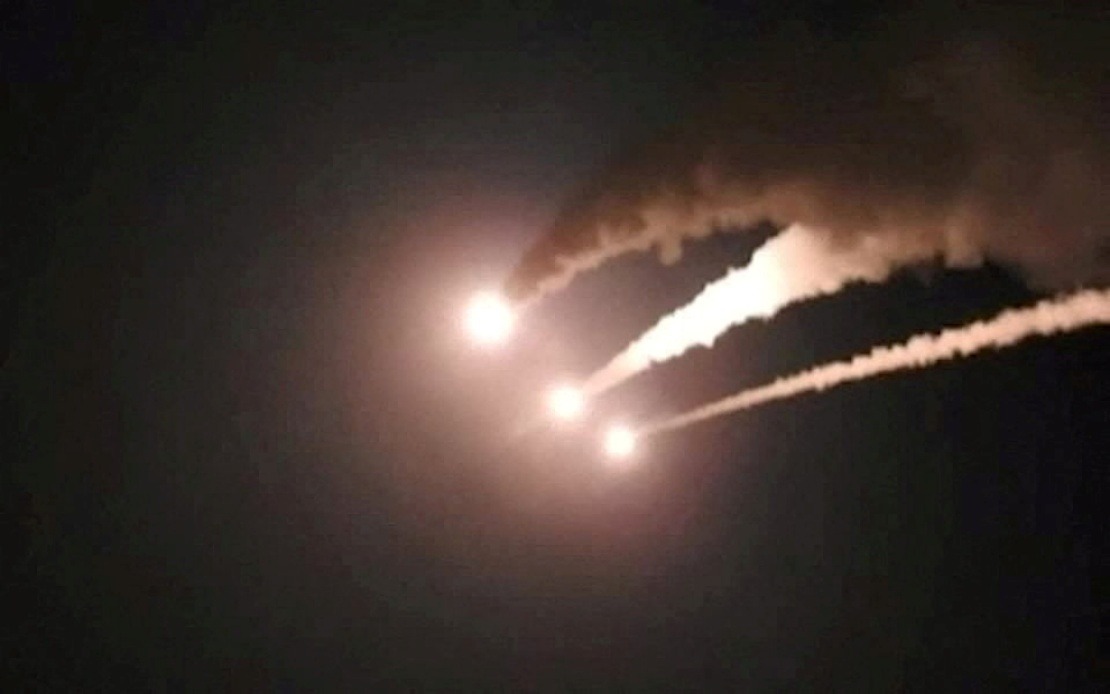
Tensions in the Middle East have reached a critical juncture as Iran's military escalated rhetoric on Wednesday, warning that every American military installation across the region could become fair game for Iranian drone attacks should Washington persist in breaching ceasefire commitments. The Iranian armed forces, speaking through state broadcaster IRIB, framed the threat as a direct consequence of what it characterised as sustained American military aggression and repeated violations of a fourteen-point ceasefire agreement that appears to be rapidly unravelling.
The escalation follows a particularly volatile operational tempo over the past 24 hours. Iran's Islamic Revolutionary Guard Corps claimed responsibility for launching coordinated missile and drone operations targeting 85 American military positions throughout the region, according to reporting from the semi-official Tasnim news agency. Among the alleged targets were strategically significant installations including Salman Port and the headquarters of the US Navy's Fifth Fleet in Bahrain, as well as Ali Al-Salem Air Base in Kuwait. The Iranian military also announced it had conducted strikes against what it described as gathering centres for American forces at Sheikh Isa Air Base in Bahrain during the same day, framing these actions as retaliatory measures against what it claims were American attacks on Iranian military and civilian infrastructure in the country's southern regions.
The Iranian position represents a significant hardening of stance, moving beyond conventional military response into explicit strategic messaging that treats the entire American military footprint across the Gulf and surrounding areas as potential targets for future operations. This represents a departure from previous Iranian threats, which have typically focused on specific bases or response to particular incidents. The sweeping nature of the declaration suggests Iranian military leadership is signalling a willingness to expand the scope and scale of potential future operations should diplomatic de-escalation fail.
Regional air defence systems were activated across the Gulf in response to the reported Iranian operations. Kuwait's Ministry of Defence confirmed that its air defences successfully intercepted incoming missiles and drones, while Bahrain experienced air raid sirens signalling the presence of inbound threats. These defensive activations underscore the genuine military danger posed by the current situation and the immediate risks faced by civilian populations in the densely populated Gulf states that host significant American military presence.
The American response was swift and proportionate in scale. The United States Central Command announced that American forces had conducted fresh strikes against Iranian targets, hitting more than 80 positions in direct retaliation for what Washington characterises as Iranian attacks on commercial shipping transiting the Strait of Hormuz. This tit-for-tat dynamic mirrors Cold War-era brinkmanship, with each side responding to perceived provocations with military action of comparable magnitude. The American strikes were officially justified as immediate defensive reactions to Iranian maritime attacks rather than preemptive operations, though the scale of the response suggests a broader strategic objective of degrading Iranian military capabilities.
The involvement of commercial shipping in the conflict represents a concerning escalation with potential ramifications extending well beyond direct Iranian-American military competition. The Strait of Hormuz represents one of the world's most critical chokepoints for global energy markets, with roughly a third of maritime oil trade passing through its waters. Any sustained disruption to shipping in this waterway could trigger significant economic consequences affecting energy prices and supply security globally, with particular implications for Asian markets heavily dependent on Persian Gulf oil and liquified natural gas supplies.
For Malaysian readers and policymakers, the escalating situation in the Gulf demands careful attention. Malaysia's energy security and economic prosperity remain substantially dependent on stable maritime trade and reliable access to Middle Eastern energy resources. Any sustained military confrontation between Iran and the United States risks disrupting these critical supply chains, potentially driving up energy costs and creating uncertainty for Malaysian businesses and consumers. The situation also underscores the vulnerability of Southeast Asian economies to geopolitical shocks originating outside the region.
The ceasefire agreement that Iran references appears to be the subject of competing interpretations and accusations of violations from both sides. Rather than serving as a stabilising framework, the agreement has become a focal point for mutual recriminations, with each party claiming the other has repeatedly breached its fourteen articles. This pattern suggests the agreement lacks sufficient enforcement mechanisms or political will from either party to maintain compliance, raising serious questions about whether any diplomatic framework can effectively constrain military action when underlying strategic interests remain in conflict.
The current crisis also reflects deeper structural tensions in the Middle East that transcend the immediate Iranian-American rivalry. The presence of substantial American military forces throughout the region, coupled with Iran's asymmetric military doctrine emphasising drones, missiles, and irregular warfare, creates inherent instability. Neither side possesses clear military dominance, yet both maintains significant offensive capabilities, producing a precarious balance that could tip toward wider conflict if escalation dynamics accelerate beyond current levels.
International diplomatic intervention appears conspicuously absent from current accounts, suggesting that traditional mediators may lack influence or incentive to broker de-escalation. The absence of active third-party diplomacy increases the risk that military logic will dominate strategic decision-making on both sides, with each escalatory action generating pressure for counter-escalation in an increasingly dangerous cycle.
For regional stability and global economic health, the current trajectory remains deeply concerning. The pattern of tit-for-tat strikes, coupled with explicit threats targeting entire categories of military installations, suggests we may be witnessing the transition from contained military competition toward more generalised regional conflict. Whether diplomatic off-ramps exist at this stage remains unclear, but the window for de-escalation appears to be narrowing rapidly.

