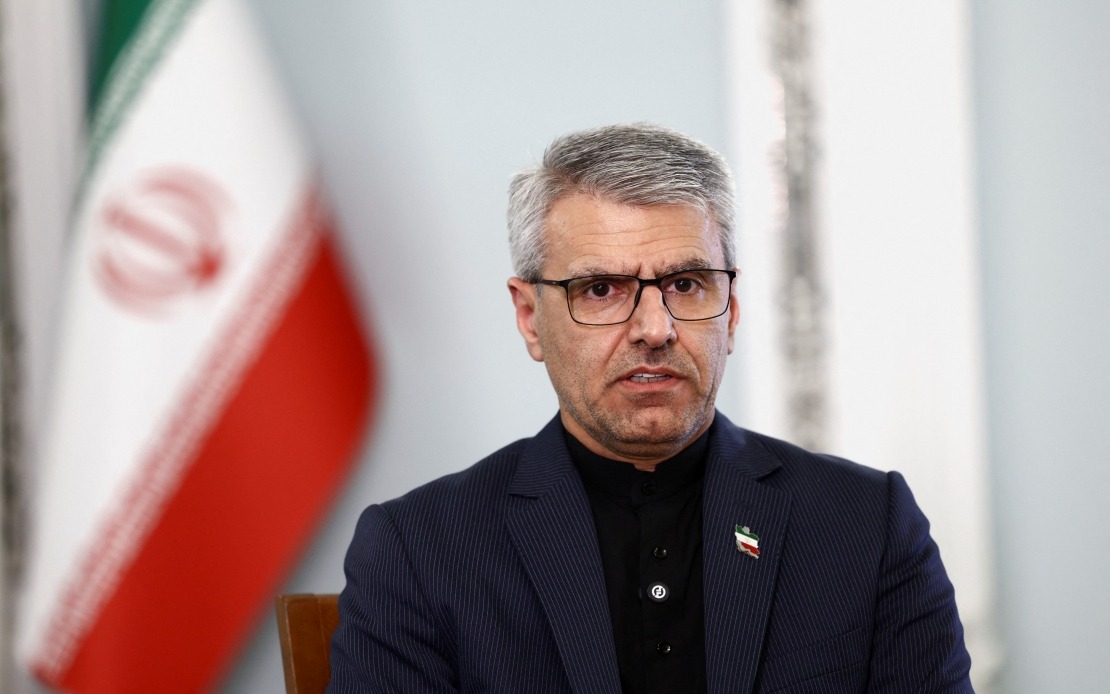
Iranian officials said Monday that intensive negotiations held in Burgenstock, Switzerland, have produced concrete progress toward finalising a comprehensive agreement with the United States. Foreign Ministry spokesman Esmaeil Baghaei told reporters that the discussions yielded what he characterised as "important steps" capable of creating the necessary conditions for substantive negotiations on a final accord between the two nations. The announcement comes as regional tensions remain elevated and diplomatic channels remain one of the few mechanisms through which the adversarial powers attempt to resolve fundamental disagreements.
Baghaei's comments indicate that negotiators have moved beyond preliminary positioning to discuss specific technical and operational arrangements. He explicitly stated that one of the four-party talks' primary achievements was the agreement to establish what has been termed a "deconfliction cell," a monitoring structure designed to operate with the participation of mediating nations. This mechanism would specifically oversee the continuation of a ceasefire and the maintenance of a cessation in hostilities, with particular emphasis on the situation in Lebanon, where cross-border tensions and proxy activities have long complicated broader regional stability.
The establishment of such a monitoring body signals recognition among all parties that previous agreements have foundered partly due to disagreements over implementation and verification. By creating a formal structure staffed by neutral mediators, the negotiating parties appear to be attempting to reduce ambiguity about whether each side is complying with its obligations. This approach reflects lessons learned from earlier failed attempts to achieve lasting diplomatic breakthroughs in the region.
Regarding Iran's primary economic concerns, Baghaei reported that the negotiating parties exchanged substantial communications about mechanisms governing the issuance of licences permitting Iranian oil exports to international markets. He also noted that discussions progressed on the question of releasing or unfreezing Iranian assets that have been subject to international restrictions and sanctions. These two issues—oil sales capacity and access to frozen reserves—directly address the economic consequences Iran has endured as a result of international sanctions regimes, making them central to any comprehensive settlement that Tehran might view as acceptable.
Another substantive area of agreement involved maritime security and freedom of navigation. The delegations reached understanding on establishing operational mechanisms intended to guarantee the safe and unimpeded passage of commercial vessels through the Strait of Hormuz, one of the world's most strategically critical waterways. Through which roughly one-third of all seaborne traded oil passes, control of access to and transit through the Strait has long represented a leverage point in broader geopolitical competition. Ensuring predictable maritime commerce through the channel serves the interests of multiple powers and energy-dependent economies, including those in Southeast Asia and beyond.
Baghaei emphasised that despite these breakthroughs, substantial work remains. He noted that technical working groups would continue their deliberations on the specific issues he had outlined, as well as on additional matters necessary to implement what negotiators have termed a memorandum of understanding. This phrasing suggests that the Switzerland talks produced a preliminary framework rather than a final agreement, setting parameters within which more detailed negotiations would proceed.
Qatar and Pakistan, serving as principal mediators in these discussions, jointly announced their assessment that the first round of high-level talks at the Lake Lucerne Summit had achieved significant progress. The mediators indicated that the participating parties have accepted a roadmap with the explicit objective of concluding a comprehensive peace agreement within sixty days. The establishment of such a timeframe reflects both the mediators' confidence that substantive momentum exists and the recognition that protracted negotiations risk losing political support.
The timing of these negotiations carries particular significance given the broader regional context. The talks are formally framed as implementing a memorandum of understanding signed the previous week with the stated purpose of ending what Iranian officials characterise as the "US-Israeli war" that commenced on February 28. This framing reflects how each side continues to describe events differently, yet both proceeded toward negotiation, suggesting mutual recognition that military escalation alone cannot resolve the underlying disputes.
For Southeast Asian observers and policymakers, these developments carry meaningful implications. The region's economic wellbeing depends substantially on stable global energy markets and unimpeded maritime trade. Iranian oil exports and maritime security in critical chokepoints directly affect energy costs and supply reliability throughout Asia. Additionally, the diplomatic machinery being assembled in Switzerland—involving mediation from Qatar and Pakistan—represents a model of regional conflict management that Southeast Asian nations might reference as they navigate their own complicated geopolitical environment.
Baghaei's statement that the negotiating team "hopes" to witness seriousness from the American side during implementation of any agreed framework reveals an underlying persistence of mutual suspicion. Despite apparent progress on establishing monitoring mechanisms and outlining preliminary agreements, deep distrust continues to characterise the relationship. Previous episodes in which agreements were signed but subsequently abandoned or reinterpreted have created legitimate concerns on both sides about commitment and veracity.
The concentration of focus on technical implementation mechanisms—the deconfliction cell, maritime security arrangements, and licensing procedures—reflects a mature negotiating approach that recognises that broad political declarations prove insufficient without operational detail. Yet the success of these mechanisms ultimately depends on whether negotiators can resolve the fundamental questions of trust and verification that have historically bedeviled great power negotiations in this region.