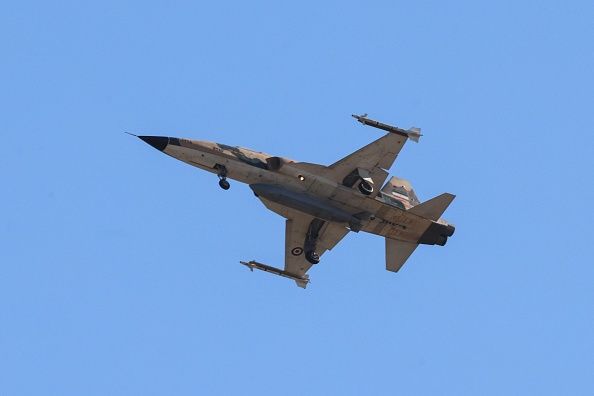
Tehran's military establishment has stepped up its confrontation with Gulf neighbours Qatar and Kuwait, insisting on direct access to investigate the circumstances surrounding Iranian military personnel it claims have been detained in both countries. Mohammad Baqerzadeh, who heads the Committee for the Search for Missing Persons within Iran's Armed Forces General Staff, issued sharp accusations on Sunday that Qatari authorities have systematically obstructed efforts to establish the truth about pilots whom Iran maintains were apprehended by Doha's forces.
At the centre of the dispute lies the incident from March when Iranian aircraft crossed into Qatari airspace and subsequently went missing. While Qatar's account emphasises that its search and rescue operations recovered human remains following the aircraft's incursion, Iranian officials reject this narrative wholesale. Baqerzadeh has characterised Qatari conduct as deliberately evasive, claiming that months have passed without Doha permitting an Iranian fact-finding delegation to enter the country and conduct its own examination of the circumstances. This standoff reflects the high stakes surrounding missing military personnel—a sensitive matter across the Middle East where families and governments alike demand transparency and accountability.
Qatar has positioned itself as acting in good faith, having reportedly reached out to Iran multiple times to arrange the transfer of the recovered remains and to invite Iranian officials to review details of the search operations that led to their discovery. Doha's assertion that it has received no substantive response from Tehran adds another layer to what appears to be a widening communications breakdown between the two neighbours. The gulf between the two accounts suggests that mistrust runs deep, with each side questioning the other's motives and veracity.
The situation grows more complicated when considering the broader regional tensions between Iran and its Gulf state neighbours. For Malaysian observers and broader Southeast Asian audiences, this dispute underscores how quickly diplomatic incidents can escalate when military personnel are involved and when institutional pride intersects with geopolitical rivalry. The standoff also highlights the vulnerability of airspace and maritime boundaries in heavily trafficked regions, where navigation errors or communication failures can quickly spiral into international incidents with lasting diplomatic consequences.
Parallel to the Qatar dispute, Iran has levelled separate accusations against Kuwait regarding four Iranian military personnel it claims are being unlawfully detained. According to Tehran's version of events, these individuals were engaged in routine maritime patrol operations when a navigation disruption caused them to inadvertently cross into Kuwaiti waters. However, Kuwait presents a markedly different account, asserting that the four were suspected of planning hostile actions against the country and were apprehended on security grounds. This fundamental disagreement over the nature and intent of the incursion reveals how incidents at sea can be interpreted in drastically different ways depending on which side presents the narrative.
The Iranian military official has now called upon the International Committee of the Red Cross to intervene urgently in both matters, signalling Tehran's willingness to involve an internationally respected neutral body in resolving what it views as unjust detention. This appeal to the ICRC represents a significant step, as it effectively bypasses direct bilateral channels that have apparently broken down. Such moves are often calculated diplomatic gestures designed to internationalise a dispute and pressure the opposing party through global opinion and established humanitarian mechanisms.
For the wider region, these incidents carry troubling implications. The inability of Iran, Qatar, and Kuwait to resolve such matters through conventional diplomatic channels raises questions about the effectiveness of regional dialogue mechanisms and the Gulf Cooperation Council's capacity to mediate between member states and non-members. The frequency with which military incidents now appear to test international boundaries suggests that existing protocols for managing airspace and maritime violations may be inadequate or poorly enforced.
The detained personnel matter also touches on deeper regional anxieties about military operations and intelligence activities. Qatar and Kuwait may be genuinely concerned about hostile intent, particularly given Iran's complex relationship with Gulf Arab states. Conversely, Iran may reasonably expect that accidents and navigation errors should be treated as such rather than as pretexts for detention. Without transparency and credible third-party verification, both sides risk escalating the situation further.
From a Southeast Asian perspective, this dispute carries lessons about how regional powers navigate diplomatic crises when military and national security concerns are involved. Malaysia and other ASEAN nations, which maintain delicate balances between various powers and navigate their own maritime sensitivities, can observe how institutional responses—or lack thereof—to such incidents either defuse or inflame regional tensions. The Iranian appeal to international humanitarian mechanisms suggests a template for conflict management that transcends bilateral hostility.
The presence of missing or detained military personnel creates ongoing pressure on all parties involved. Families of the missing pilots and personnel have legitimate interests in knowing the fate of their relatives, and governments face domestic pressure to account for their personnel. This human element, often overlooked in purely diplomatic analyses, frequently drives governments to take harder positions than they might otherwise adopt. The longer such situations persist unresolved, the greater the risk of miscalculation or further incidents.
Looking ahead, whether the ICRC intervention can break the current deadlock remains uncertain. Qatar and Kuwait may resist internationalisation of what they view as bilateral security matters, or they may welcome international scrutiny if they believe it will vindicate their positions. Iran, meanwhile, faces pressure to demonstrate to its domestic audience that it is vigorously pursuing the interests of its military personnel. This combination of institutional pride, national security concerns, and humanitarian obligations creates a complex negotiating environment where quick resolution appears unlikely.

