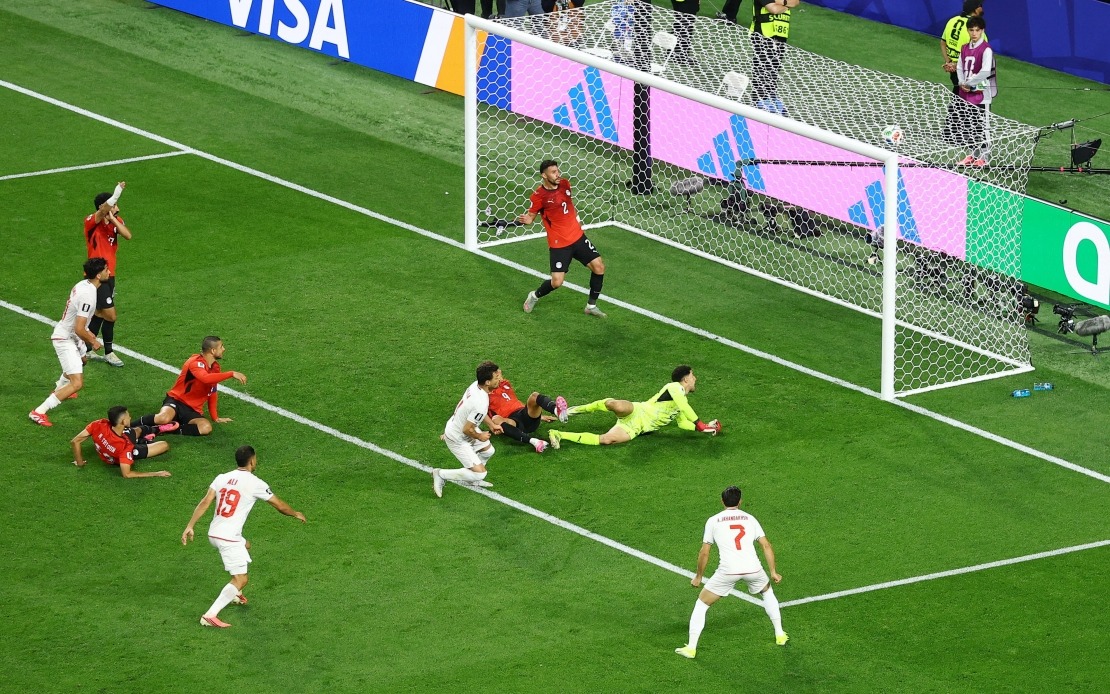
Iran's national football federation has levelled serious accusations against World Cup organisers, characterising their experience as marked by "unfair and unsportsmanlike" conduct as the delegation prepared to leave the tournament. The complaints emerged following Saturday's drawn encounter with Egypt that delivered the Iranian side's elimination from the competition, despite their efforts to force their way into the knockout round. The result—a 1-1 stalemate in which Iran saw a goal overturned following an extended video assistant referee consultation—ultimately proved insufficient to overturn their group-stage exit.
The Iranian federation's formal statement, released as players and officials began their journey home, represented a pointed rebuke to tournament administrators and host authorities. Beyond acknowledging the professionalism of international media coverage, the federation specifically noted appreciation for the journalistic integrity displayed in documenting what they characterised as systemic mistreatment. This framing—positioning media reporting as a counterbalance to alleged organisational inequity—underscores the depth of Iranian grievance regarding their World Cup experience.
Iran's involvement in this tournament was shadowed from the outset by geopolitical considerations rooted in broader US-Iran tensions. The original accommodation arrangements, which designated Arizona as the team's base, were abandoned in favour of Tijuana, Mexico, a decision that fundamentally altered logistical preparations and created operational challenges. This relocation, whilst removing the delegation from US soil to a Mexican location, nonetheless entailed complications for travel and movement, particularly regarding matches scheduled within American territory.
The restrictions imposed on Iranian team mobility during the competition extended beyond typical tournament protocols. These constraints appear to have affected training preparations, match-day logistics, and general freedom of movement—inconveniences that competitors from other nations did not experience to comparable degrees. The federation's public airing of such grievances signals that Iranian officials view these impediments as having crossed a threshold from reasonable security concerns into discriminatory practice.
From a Southeast Asian perspective, Iran's experience offers sobering illustration of how international sporting events can become entangled with diplomatic and geopolitical friction. Malaysia and other regional nations have occasionally faced analogous complications at major tournaments, though the intensity of US-Iran tensions renders the Iranian case particularly stark. The incident underscores how host nations and FIFA must navigate the tension between legitimate security requirements and ensuring equitable treatment for all participating delegations.
The VAR decision that disallowed Iran's goal against Egypt crystallises another dimension of Iranian frustration. Whether the video review system operated with consistency and fairness across all nations became, in Iranian eyes, emblematic of broader structural disadvantages their team faced. The extended deliberation process, rather than resolving doubt transparently, may have amplified perceptions of technical arbitrariness among players and management alike.
Iran's explicit gratitude toward Mexico and specifically toward Tijuana and its residents carries symbolic weight. By contrasting their experience in Mexico—characterised as warm, generous, and hospitable—with treatment in the United States and within World Cup administrative structures, the federation reinforced a narrative of political exclusion. This messaging strategy, whilst veiled in diplomatic courtesy, clearly positions Mexican hosts as understanding and humane counterparts to less sympathetic authorities elsewhere.
The federation's decision to release such a formal statement upon departure, rather than lodging quiet complaints through official channels, indicates a strategic choice to internationalise their grievances. By documenting these allegations publicly and thanking media organisations for coverage, Iranian officials have created a permanent record of what they view as discriminatory conduct. This approach may influence how future World Cup hosts approach delegation management, particularly regarding nations with complicated diplomatic relationships with tournament locations or major stakeholder nations.
For tournament organisers, the Iranian situation presents uncomfortable questions about neutrality and fairness. FIFA's capacity to insulate sporting competition from political reality has always been constrained, yet the scale and visibility of Iran's complaints suggest that organising committees must develop more robust frameworks for managing sensitive geopolitical contexts. The risk extends beyond one nation's satisfaction; unresolved perceptions of inequity can undermine tournament legitimacy and fuel narratives about whether football's supposed universality can genuinely transcend national and ideological divisions.
The implications for future tournaments organised in geopolitically significant locations deserve careful consideration. Should competitions rotate among nations with substantial historical tensions, organisers must establish transparent protocols ensuring all delegations receive comparable treatment regardless of diplomatic relationships. Iran's experience demonstrates that even technical sporting decisions, when combined with logistical restrictions and visible constraints on team mobility, can coalesce into perceptions of systematic disadvantage that transcend the pitch.

