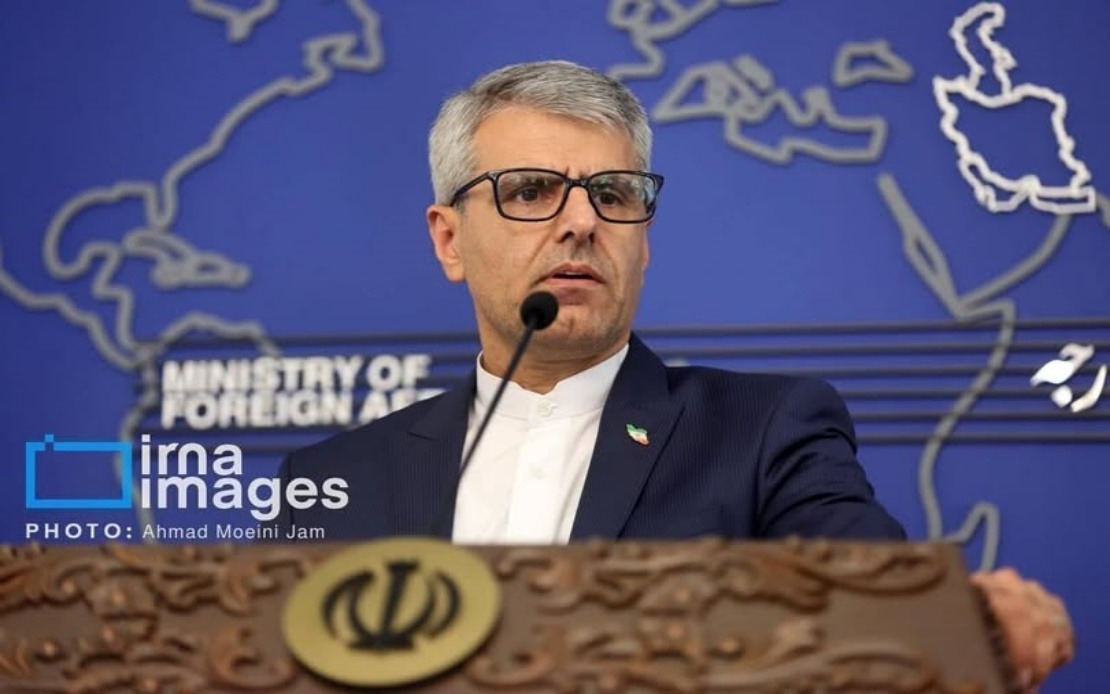
Tehran's foreign ministry escalated diplomatic pressure on Washington this week, insisting that the Israeli military must vacate all occupied Lebanese lands on an unconditional basis under the framework of recent peace negotiations. Speaking at a news conference, Iranian Foreign Ministry spokesman Esmaeil Baqaei positioned the withdrawal as non-negotiable, arguing that without it, no durable regional settlement can take root. His comments reflect a significant hardening of Iran's stance as it seeks to translate informal understandings reached with the United States into binding commitments with specific deadlines.
The Iranian demands centre on two separate agreements signed between Tehran and Washington. The first, reached in April, addressed immediate ceasefire measures, while a second memorandum concluded on June 18 broadened the scope to encompass longer-term stability arrangements. Baqaei emphasised that Iran has consistently prioritised the dual objectives of halting Israeli military operations in Lebanon and securing the withdrawal of occupation forces from Lebanese territory. In Iran's diplomatic framing, these conditions are interlinked—neither can be adequately resolved without addressing the other, and both remain prerequisites for any agreement's sustainability.
Beyond the simple withdrawal of troops, Iran has articulated a broader vision for Lebanon's future that extends to restoration of the country's sovereignty and safeguarding what Tehran describes as the dignity and security of the Lebanese population. This rhetorical emphasis reflects Iran's positioning as a champion of Lebanese interests and its attempt to consolidate support among Lebanese political actors and civil society. By tying Israel's departure directly to Lebanon's stability, Iran seeks to frame its negotiating stance as protective of a neighbouring nation rather than driven solely by its own strategic interests.
A critical element of Iran's approach involves monitoring mechanisms. Mohammad Bagher Qalibaf, who serves as both Iran's Parliament Speaker and chief negotiator, recently outlined discussions with American counterparts in Switzerland concerning implementation safeguards. According to Iranian media accounts, both sides have agreed to establish a conflict-control unit comprising representatives from Iran, the United States, and Lebanon. This trilateral body would oversee compliance with the memorandum's first clause, which specifically addresses the termination of Israeli military operations in Lebanese territory. The creation of such a monitoring structure suggests that verification concerns—rooted in Iranian scepticism about Israeli compliance—have become a major focal point in negotiations.
Qalibaf's separate conversations with Lebanese Parliament Speaker Nabih Berri signal that Iran is cultivating direct relationships with Lebanese leadership outside the formal US-brokered framework. These parallel discussions serve multiple purposes: they reassure Lebanon that Iran remains committed to its interests, they create additional pressure points on Washington to enforce Israeli compliance, and they position Tehran as a stakeholder in Lebanese affairs. The emphasis on returning displaced persons to their homes and ending occupation touches on humanitarian dimensions that resonate widely across Lebanon's fractured political landscape.
The broader context involves a 14-point understanding that emerged from weeks of regional military escalation and intensive diplomatic negotiations. That agreement attempted to address multiple outstanding grievances and provide a pathway toward de-escalation across the Middle East. However, Iran's current insistence on concrete timelines for Lebanese issues suggests that the initial agreement may have been vague or insufficiently binding on the Israeli withdrawal question. By now demanding specificity, Iran is effectively seeking to upgrade informal understandings into formal obligations with verifiable benchmarks.
For Malaysian and Southeast Asian observers, this dispute illuminates how regional powers use foreign mediation to advance national interests while maintaining plausible deniability about intransigence. Iran's public positioning—demanding that the US pressure Israel—cleverly shifts responsibility for implementation failure onto Washington while simultaneously demonstrating to domestic audiences that Iran pursued maximalist objectives at the negotiating table. This diplomatic theatricality reflects broader patterns of regional statecraft where public declarations and private understandings often diverge substantially.
The unresolved question of timelines also hints at potential fractures in the nascent agreement. If Iran and the US cannot align on whether Israeli withdrawal should occur within weeks, months, or years, the entire framework risks unravelling. Such breakdown would likely prompt renewed military escalation and further destabilise an already volatile region. For nations outside the immediate conflict zone, including those with economic interests in Middle Eastern stability and maritime security, such deterioration carries indirect but significant consequences.
Iraq and Syria, as transit corridors and as nations harbouring Iranian allies, have particular stakes in how this dispute resolves. Lebanon itself, already devastated by civil conflict and economic collapse, requires sustained international engagement rather than another cycle of military confrontation. The proposed conflict-control unit may prove inadequate if the underlying political will for enforcement is absent. Washington's willingness to pressure Israel on a specific withdrawal timeline remains the pivotal variable, and Iran's public demands suggest that Tehran doubts American resolve on this issue.

