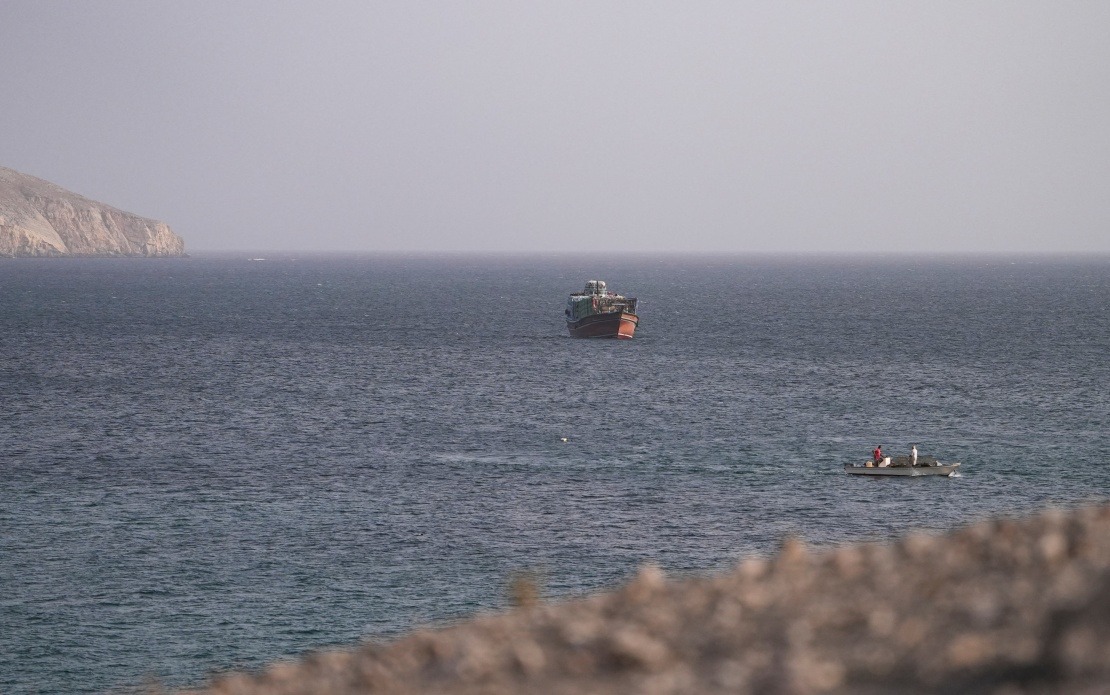
The Iranian government has signalled that a long-negotiated accord with Oman governing maritime traffic through the Strait of Hormuz is approaching finalisation, according to remarks by Deputy Foreign Minister Kazem Gharibabadi on Wednesday. The senior diplomat indicated that the bilateral understanding would introduce a fundamentally different framework for commercial vessels transiting one of the world's most strategically vital waterways, reshaping decades of established practice in the region.
Gharibabadi's announcement comes at a particularly sensitive moment for Middle Eastern geopolitics. The Strait of Hormuz, a 54-kilometre-wide passage between Iran and Oman at the mouth of the Persian Gulf, remains essential to global energy markets, with approximately one-third of all seaborne traded oil passing through its waters. Any shift in how shipping is managed along this corridor carries immediate implications for energy prices, maritime security, and the balance of power in the region. For Malaysian businesses and energy consumers, developments affecting the strait directly influence fuel costs and supply chain stability across Southeast Asia.
The proposed arrangement with Oman represents a significant departure from the status quo that has prevailed for the past six decades. Rather than maintaining the established shipping patterns that have characterised the strait, the new model would channel a substantial volume of commercial traffic directly through Iran's territorial waters. This reorientation of maritime routes signals Tehran's intention to exercise greater control over one of the world's most critical chokepoints, though Gharibabadi cautioned that the arrangement should not be mischaracterised as a full closure and reopening of the strait. The distinction matters considerably: the strait remains open to international navigation, but under revised conditions that place Iranian waters at the centre of the passage.
The question of transit fees represents another dimension of the emerging framework. Gharibabadi stated that any decision by Iran to impose charges on vessels moving through the strait would ultimately rest with the country's highest authorities, signalling that supreme leadership approval would be required for such a consequential step. He further linked this decision to the conduct of the United States, suggesting that Washington's actions and posture toward Iran would materially influence whether Tehran pursues revenue collection from transiting ships. This conditional language indicates that transit fees may serve as either a bargaining chip or a retaliatory measure depending on how US-Iran relations evolve.
The timing of these developments suggests acceleration in diplomatic efforts. Gharibabadi's comments came as Tehran and Oman worked simultaneously to complete their bilateral accord and as Iranian officials anticipated imminent progress in negotiations with the United States. He disclosed that Iran had received communications from Washington signalling American willingness to "return to its commitments," though he declined to elaborate on which specific obligations were referenced or through what channels these messages were transmitted. The vague formulation leaves room for interpretation about whether discussions concern the 2015 nuclear agreement, broader sanctions relief, or other outstanding disputes between the two countries.
For regional stakeholders including Malaysia, the emerging Oman-Iran arrangement carries both opportunities and risks. On one hand, successful formalisation of new shipping rules could enhance predictability and stability in transit operations through the strait, benefiting merchants and shipping companies whose vessels regularly navigate these waters. The involvement of Oman, a country with strong historical ties to maritime commerce and a reputation for pragmatic diplomacy, suggests that the agreement may be designed to balance Iranian interests with the needs of international shipping.
Conversely, if the new framework incorporates transit fees or enhanced Iranian inspections, these mechanisms could incrementally raise the cost of goods moving through Southeast Asia's supply chains. With Malaysia serving as a major regional hub for trade and petrochemical industries, any disruption or increased expense in Strait of Hormuz transit would reverberate through local port operations, manufacturing sectors dependent on imported energy inputs, and consumer prices. The Malaysian business community has longstanding exposure to volatility in this corridor and would closely monitor whether the Iran-Oman agreement enhances or destabilises maritime passage.
The broader geopolitical context adds additional layers of complexity. The Iranian government's emphasis on conditioning decisions about transit fees on American behaviour reflects Tehran's desire to use control over the strait as leverage in negotiations with Washington. This approach echoes past Iranian rhetoric about its capacity to disrupt global energy markets, though practical exercise of such leverage remains constrained by international law, regional opposition, and the economic costs Iran would incur from prolonged shipping disruptions. The delicate balance suggests that while Tehran may assert greater control through the new Oman accord, actual implementation is likely to reflect continued pragmatism rather than confrontational policies.
Gharibabadi's reference to anticipated progress in talks with the United States within days signals that multiple tracks of diplomacy are advancing in parallel. Success on the Oman front could create momentum for broader reconciliation, or alternatively, progress with the US could render the Oman agreement less central to Iranian strategy. The interconnected nature of these negotiations underscores how maritime arrangements, nuclear concerns, and sanctions relief have become intertwined in Middle Eastern diplomacy, with implications extending far beyond the immediate region.
For Malaysian policymakers and commercial stakeholders, the key consideration is whether the Iran-Oman agreement ultimately stabilises or destabilises the Strait of Hormuz as a transit corridor. Historical experience suggests that when Iran has exercised pressure on shipping, even through non-military means, global energy markets respond swiftly and significantly. Malaysia's reliance on stable energy supplies and functioning trade routes makes it a stakeholder in the success of these negotiations, even though it sits thousands of kilometres away. Continued diplomatic engagement and the demonstrated willingness of both Iran and Oman to work toward formalised arrangements rather than confrontation offer modest grounds for optimism that the emerging framework will prioritise commercial stability.

