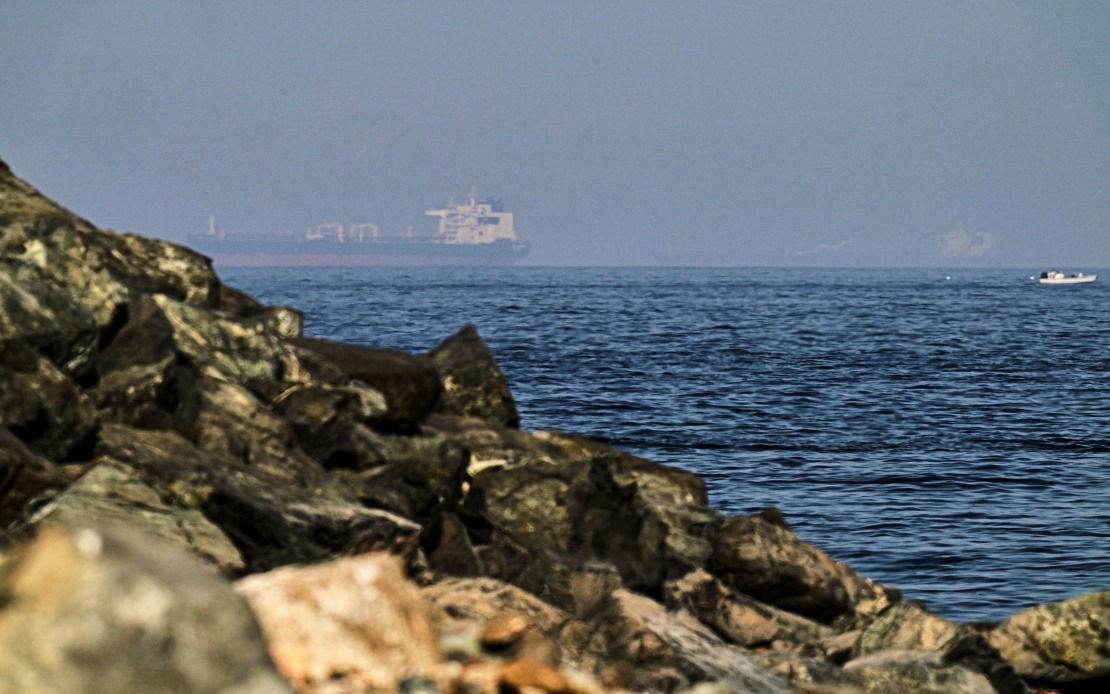
Iran and Oman have agreed to establish a temporary shipping corridor through the Strait of Hormuz, according to Major General Mohsen Rezaei, Secretary of Iran's Supreme National Security Council. The arrangement represents a significant development in maritime commerce through one of the world's most strategically critical waterways, with the corridor running through the centre of the strait and straddling territorial waters of both nations.
The corridor's design reflects a carefully negotiated agreement between Tehran and Muscat, with the Iranian official emphasizing that the passage lies partly in Iranian waters and partly in Omani waters, with both countries sharing responsibility for managing vessel transit. Rezaei disclosed details of the arrangement during an exclusive interview with Al-Manar TV, presenting the initiative as a measured response to ongoing tensions affecting regional shipping. The specific location of the corridor has been clearly demarcated, enabling maritime traffic to proceed along a defined route that maintains the interests of both coastal states.
However, any permanent restoration of full maritime access through the Strait of Hormuz remains contingent on broader diplomatic outcomes. Iran has prepared a comprehensive list of conditions for the United States, with the temporary corridor currently serving as a preliminary measure pending American compliance with Tehran's demands. The most significant preconditions centre on ending military conflicts across West Asia, particularly the wars in Lebanon and Gaza, alongside Israeli withdrawal from occupied Lebanese territory and cessation of attacks on Syria. Rezaei positioned these requirements not as negotiating points but as fundamental prerequisites for rebuilding trust between Washington and Tehran.
The Iranian security chief framed the Strait of Hormuz issue within the broader context of regional instability, rejecting any attempt to compartmentalize maritime disputes from wider geopolitical conflicts. He emphasized that the United States must "prove its seriousness" through tangible implementation of these commitments before confidence between the adversaries can be restored, describing the current relationship as characterized by a "deep chasm of mistrust." This linkage strategy underscores Iran's approach of leveraging control over critical maritime chokepoints as leverage in achieving its regional objectives.
For Southeast Asian readers and shipping industries dependent on Hormuz transit, this development carries substantial implications. Malaysia, as a major trading nation with significant petroleum and liquefied natural gas interests, relies heavily on freedom of navigation through the strait. The temporary corridor arrangement provides some reassurance that maritime commerce can continue, though the precarious nature of the agreement and its dependence on geopolitical developments creates ongoing uncertainty for regional shipping and energy security. The establishment of a jointly-managed passage also sets a potential precedent for cooperative maritime management between regional powers.
Rezaei's comments regarding Turkey revealed the multifaceted nature of Iran's diplomatic positioning. The security official rejected any possibility of Turkish economic pressure on Tehran, highlighting the historical depth of commercial ties between Ankara and Tehran, including Turkey's role as a critical trade conduit during the Iran-Iraq War of the 1980s. This emphasis on Turkish relations suggests Iran is consolidating support among neighboring states while preparing for potential escalation of confrontations with Western powers and Israel.
On military readiness, Rezaei adopted a deliberately calibrated stance, asserting that Iran does not pursue conflict but remains prepared for intensified confrontation should current hostilities resume. He characterized Iran's previous military responses as graduated and increasingly sophisticated, noting that Tehran initially showed restraint by avoiding strikes on American bases in Persian Gulf states before subsequently expanding operations to include broader targets across multiple countries. This incremental approach, he argued, reflected humanitarian considerations while building regional legitimacy for Iranian actions and expanding the base of international support.
The Iranian official identified the United States' shift toward economic pressure tactics as an implicit acknowledgment of military force's limited effectiveness in achieving American objectives. Simultaneously, he warned that Tehran would respond to any economic escalation with countermeasures targeting American economic interests throughout the region, establishing a framework for economic confrontation alongside military posturing. This dual-track approach reflects Iran's strategy of maintaining multiple instruments of pressure and resistance against perceived American dominance.
Rezaei articulated Iran's regional vision as an interconnected security ecosystem where deterioration in any single country's stability directly threatens prosperity and investment across the broader Middle East. He specifically emphasized Iran's historic relationship with Lebanon, tracing connections between Shia scholars from Jabal Amel and Iranian centers of learning across centuries, and pledged Iran's continued comprehensive support for Lebanese stability and development. This framing positions Lebanese security as integral to Iran's own strategic interests rather than merely a proximate concern.
On military developments directly affecting Lebanon, Rezaei claimed the Israeli military had lost the capability to advance toward Beirut or the southern suburbs, attributing this limitation to substantial losses inflicted by Hezbollah over preceding months combined with what he termed the "full impact" of Iranian military deterrence. These assertions, though contested by Israeli and Western assessments, indicate Iran's confidence in its allied forces' resilience and its own strategic value as a regional counterbalance to Israeli military power. The implicit message to potential adversaries and regional observers is that Iran possesses both the will and capability to sustain extended confrontation across multiple theaters simultaneously.
The temporary corridor arrangement thus emerges not as an isolated maritime accommodation but as a calculated chess move within Iran's broader strategy of managing regional tensions while maintaining leverage over critical waterways. For Malaysia and other nations dependent on Hormuz transit, the arrangement provides temporary stabilization without fundamentally resolving underlying tensions. The corridor's future depends entirely on whether the United States and its regional partners can satisfy Iran's expansive list of geopolitical demands, a prospect that remains uncertain given the deep divergence between Tehran's vision for regional order and that of Western powers and their regional allies.

