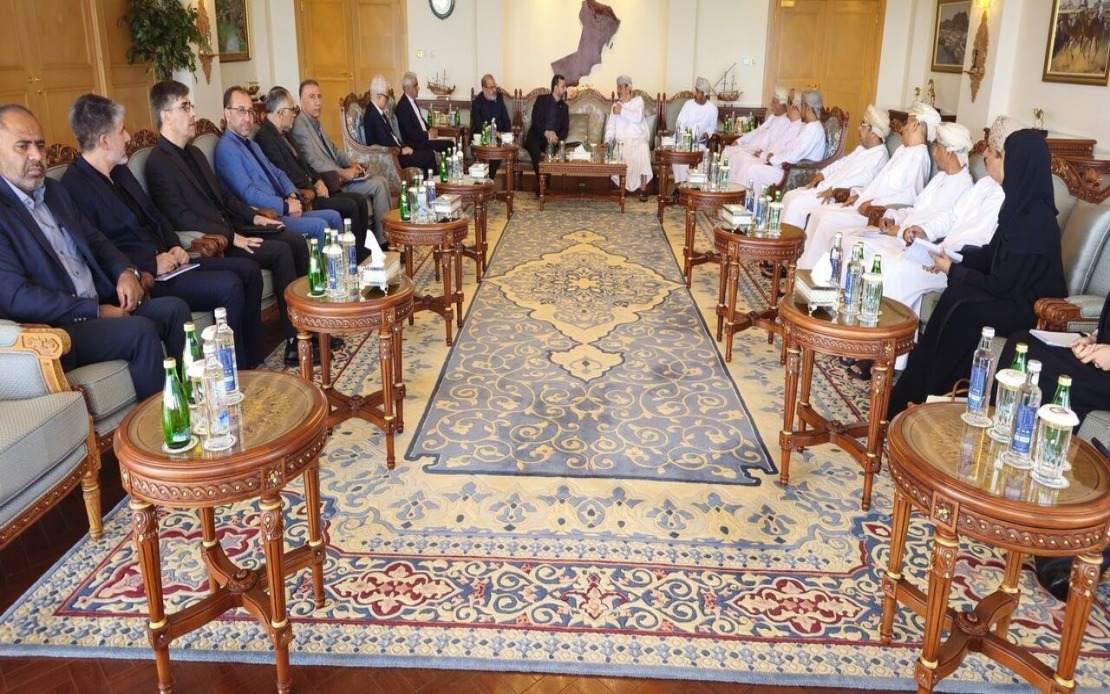
Iran and Oman have taken a significant step toward formalizing their maritime cooperation by holding the inaugural meeting of the Joint Hormuz Committee, a framework established to address governance challenges in one of the world's most economically consequential waterways. Iranian Deputy Foreign Minister for Legal and International Affairs Kazem Gharibabadi announced the milestone following his visit to Muscat on Monday, where he met with Oman's Ambassador-at-Large Abdulaziz Al Hinai to launch the committee's work. The establishment of this institutional mechanism reflects both countries' recognition that the Strait of Hormuz—through which roughly one-third of globally traded oil passes—requires coordinated management grounded in international maritime principles and mutual respect.
The committee's formation represents a diplomatic continuation of earlier high-level engagement between Tehran and Muscat. On June 23, the two nations jointly issued a statement following Iranian Foreign Minister Abbas Araghchi's official visit, during which Mohammad Bagher Ghalibaf, who led Iran's negotiating team, participated in substantive talks. That declaration underscored a shared commitment to ensuring that any arrangements governing the strait would safeguard the sovereignty and legitimate maritime rights of both countries. The subsequent establishment of the Joint Hormuz Committee operationalizes this commitment by creating a dedicated forum where technical and policy discussions can proceed systematically.
During the inaugural session, Iranian and Omani officials examined current maritime challenges affecting the Strait of Hormuz while charting a course for its sustainable future governance. The discussions were explicitly anchored to Paragraph 5 of the Islamabad Memorandum of Understanding and to the foundational principle that littoral states—those bordering the waterway—possess fundamental sovereign rights over these waters. This legal framework provides both countries with a reference point rooted in established international maritime conventions, enabling them to pursue accommodation without compromising their respective security or economic interests. The emphasis on littoral state sovereignty responds to broader regional sensitivities regarding maritime autonomy and the principle that major powers should respect the legitimate governance authority of regional actors.
The committee has been assigned an ambitious agenda focused on achieving consensus regarding future shipping governance in the Strait. Specifically, officials aim to develop mutually acceptable arrangements covering service provision to vessels transiting the waterway and establish transparent mechanisms for allocating associated costs. These discussions carry considerable practical importance for global maritime commerce, since disruptions to Strait traffic can instantly elevate oil prices worldwide and destabilize supply chains. By engaging in structured dialogue now, Iran and Oman signal their intention to prevent ad hoc crises and instead operate within predictable, internationally compliant frameworks that respect everyone's legitimate interests.
For Malaysia and other Southeast Asian nations, this initiative holds relevance beyond its direct geographic scope. The Strait of Hormuz sits within a global maritime system that affects energy security, shipping costs, and trade patterns across the region. Malaysian businesses reliant on stable energy prices and predictable shipping routes have a stake in the strait's peaceful and orderly operation. When regional powers cooperate on maritime governance, they create positive precedent for multilateral frameworks that advance collective interests. Conversely, if major straits become zones of unilateral assertion or geopolitical contestation, shipping becomes more expensive and unpredictable, ultimately raising costs for importers and exporters throughout Asia.
The committee's commitment to alignment with international standards reflects both countries' desire to situate their arrangements within established global maritime law rather than pursuing unilateral claims. This approach builds legitimacy with the international shipping community and reduces the likelihood of confrontation with other maritime stakeholders. International standards for strait governance, as developed through institutions and conventions including those referenced in the Islamabad framework, emphasize balancing the interests of littoral states with the legitimate need for international commerce to flow freely. By explicitly anchoring their discussions to these norms, Iran and Oman are positioning themselves as responsible maritime stakeholders.
The broader context includes years of tension and incidents in the Strait of Hormuz involving various parties. Oil tanker attacks, alleged mine-laying, and naval confrontations have periodically threatened stability. Against this backdrop, the formation of an Iran-Oman committee dedicated to orderly governance represents a step toward reducing such risks through dialogue and mutually agreed protocols. Oman, historically positioned as a neutral broker in regional disputes due to its diplomatic stance and geographic location, brings particular credibility to such cooperation. Its willingness to engage Iran on maritime governance issues suggests confidence that structured engagement can produce workable solutions.
The committee's work will unfold over time, with further discussions planned through the channels established by Iran's and Oman's foreign ministries. The iterative nature of this process—beginning with inaugural meetings and proceeding through continued engagement—reflects realistic expectations about consensus-building on complex maritime questions. Officials will need to address technical questions regarding navigation, emergency response, cost-sharing mechanisms, and dispute resolution while navigating the political sensitivities that historically have complicated straits governance in the Middle East.
The institutional commitment represented by the Joint Hormuz Committee also signals something important about the trajectory of Iran-Oman relations more broadly. Rather than treating maritime issues as episodic crises requiring reactive responses, both countries are investing in permanent structures for ongoing coordination. This institutional deepening can extend to other domains and gradually build the kind of trust and communication channels that reduce misunderstanding and unintended escalation. For regional stability, such mechanisms matter substantially. The Strait of Hormuz will remain a critical chokepoint for global energy commerce regardless of broader geopolitical shifts, making durable governance frameworks essential.

